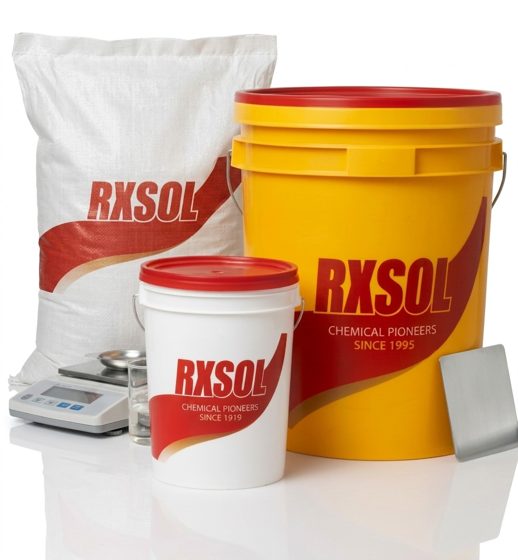
Antifouling Liquid

RXSOL Antifouling Liquid is a liquid, slightly foaming, non-ionic, thermally stable biodisperse that has been developed for use in industrial water supply systems, such as cooling systems, evaporative condenser irrigation systems, hydrostatic sterilizers, autoclaves. Rxsol Antifouling Liquid impro

SKU: RXSOL-40-4038-210 Category:

Description

RXSOL-40-4038-025 (Fouling Preventing Liquid ) is a very effective clear , yellowish green with , anti fungal based dispersing cleaner for the control of fouling by marine growth such as algae, shellfish, mussels, barnacles and micro-organisms and fungal growth in the sea water side of coolings systems. Due to its moleculer firm foaming properties, it also acts as a corrosion inhibitor.


Product Details

Application

Rxsol Antifouling Liquid  ensures the cleanliness of the heat exchange equipment, by dispersing the sediments and deposits of dissimilar substances falling into the system of water supply from the environment, such as sludges, sand, oil products, clays. The Rxsol Antifouling Liquid  the removal from the water supply system of dead organic materials, of natural origin, and enhances the action of microbiocides (oxidizing and non-oxidizing). Rxsol Antifouling Liquid is a weakly foaming compound and has a thermal stability, even at high temperatures (<+ 120 0 C).
 

Rxsol Antifouling Liquid reduces the risk of Legionella Pneumophilla bacteria by effectively removing biofilms in the water supply system. When used in sterilizers and autoclaves, the reagent provides clean and shiny surfaces near the loaded glass containers, by emulsifying fats, oils, proteins and other organic residues.
 

Dosage & Procedure


Rxsol Antifouling Liquid may be supplied, directly from the product tank, or as an aqueous solution, to any suitable point in the water supply system. The exact dosage of Rxsol Antifouling Liquid will depend on a number of factors, such as the nature and concentration of suspended solids in the water, and the already existing degree of contamination of the internal surfaces. Preventive control of the technical state of the water supply system can be provided by dosing the reagent in the range 25-100 mg / l in continuous mode, or in a batch mode by the impact method. In water systems that are seriously polluted, the reagent should be cleaned in a concentration range of 1000 to 5000 mg / l. To receive special recommendations, customers should contact the official representatives of  Rx Marine International .


A suitable option, for specific heat exchange equipment, can be the equipment of local reagent injection points on incoming pipelines.

Technical Specifications

Physical Proeprties : 

Appearance : Clear or slightly turbid aqueous solution, colorless or slightly yellow in color
Density (kg / m 3 ) :1020
pH : 8.5 - 12.5
Flash Point None
Freezing Point : <+ 2 0 C
Solubility in Water : Cpmpletely soluble in water
 

Notes & Precautions

Regulatory and Legal Information: Please review the contents of the Safety Data Sheet or contact your authorized sales representative for any additional information, regulatory or environmental.


Safety: Rx Marine International develops Material Safety Data Sheets for all chemical products of her production. The safety data sheet of a commercial product contains information concerning the protection of health and safety of production activities. Before starting the application of the reagent in your company, the supervisor should read the Safety Data Sheet and communicate the information therein to the attention of the subordinate staff.
 

Packaging : Rxsol Antifouling Liquid is supplied packed in PE canisters of 25 kg, in PE drums of 210 kg or in 1000 kg containers.

Safety Data (MSDS)

Product Name RXSOL-40-4038-210
Product Type Antifouling Liquid

Company Details:

RX MARINE INTERNATIONAL
105, A wing , BSEL , TECH PARK.
VASHI ,NEW BOMBAY 400703 INDIA

Phone +91 22 65113333 / 5555 / 9999
Fax +91 22 2781 1318 :::AOH :0091 9821214367
Email mail@rxmarine.com

Components    CAS-No. Concentration
Sodium oleate  143-19-1   2.5 - 5% 
Sodium Hydroxide 1310-73-2 15-20%
Propylene Glycol 57-55-6  5-10%
Proprietory blend of biocides - >75%

Does not content any hazardous data


General Information

First aid is not normally required. If symptoms develop, seek medical attention.
Eyes Flush eyes with water at least 15 minutes. Get medical attention if eye irritation develops or persists.Remove contact lenses.

Skin

Take off contaminated clothing and shoes immediately. Wash off immediately with plenty of water.

Ingestion

Do not induce vomiting without medical advice. Never give anything by mouth to an unconscious person. Consult a physician if necessary.
Inhalation Move to fresh air. If symptoms persist, call a physician. In case of shortness of breath, give oxygen.


Suitable extinguishing media

ABC powder, Dry chemical, Water mist, Carbon dioxide (CO2)

Unsuitable extinguishing media

DO NOT USE: Halons
Hazardous combustion products carbon dioxide and carbon monoxide

Thermal decomposition

no data available


Precautions for fire-fighting

Do not allow run-off from fire fighting to enter drains or water courses. Keep containers and surroundings cool with water spray. Prevent fire extinguishing water from contaminating surface water or the ground water system. Fire residues and contaminated fire extinguishing water must be disposed of in accordance with local regulations.
Personal protective equipment In the event of fire, wear self-contained breathing apparatus. Use personal protective equipment.


SECTION VI: TOXICOLOGICAL DATA

Personal precautions Persons not wearing protective equipment should be excluded from area of spill until clean-up has
been completed.

Environmental precautions

Prevent further leakage or spillage if safe to do so.
Methods for cleaning up

Methods for cleaning up

Neutralise with acid. Large spills should be collected mechanically (remove by pumping) for disposal. Keep in suitable, closed containers for disposal.
Other information Comply with all applicable federal, state, and local regulations.


Handling Do not breathe vapours or spray mist. For personal protection see section 8. Avoid exceeding of the given occupational exposure limits (see section 8). Smoking, eating and drinking should be prohibited in the application area. No special handling advice required. Normal measures for preventive fire protection.
Storage Store in original container. Keep containers tightly closed in a dry, cool and well-ventilated place.
Containers which are opened must be carefully resealed and kept upright to prevent leakage. Stable under recommended storage conditions. Protect from frost.


Exposure Guidelines 


General advice

These recommendations provide general guidance for handling this product. Personal protective equipment should be selected for individual applications and should consider factors which affect exposure potential, such as handling practices, chemical concentrations and ventilation. It is ultimately the responsibility of the employer to follow regulatory guidelines established by local authorities. Ensure that eyewash stations and safety showers are close to the workstation location. Always have on hand a first-aid kit, together with proper instructions.

Exposure controls

Provide sufficient mechanical (general and/or local exhaust) ventilation to maintain exposure below level of overexposure (from known, suspected or apparent adverse effects).
 

Eye protection

Safety glasses with side-shields


Skin and body protection

 
Wear as appropriate Safety shoes
Wear resistant gloves such as Nitrile rubber
Respiratory protection No personal respiratory protective equipment normally required.


Physical 

liquid

Form

Aqueous solution

Colour 

colourless


Odour

no data available
Boiling point/boiling range 100.00 °C @ 760.00 mmHg
Melting point/range no data available
pH (+/- 1.8) 10.5
Flash point no data available
Evaporation rate (>) 1 (Ethyl Ether)
Lower explosion limit/Upper explosion
limit
2.6 %(V) / 12.6 %(V)
Vapour pressure 17.50 mmHg @ 68.00 °F
Vapour density (>) 1 (AIR=1)
Density  (+/- 0.01) 1.010 g/cm3 @ 68 °F / 20 °C
Solubility Water soluble
Partition coefficient: n-octanol/water no data available
log Pow no data available
Autoignition temperature no data available
Viscosity, dynamic no data available
Viscosity, kinematic no data available


Stability

No hazards to be specially mentioned.
Conditions to avoid

None known.

Incompatible products

Strong oxidizing agents

Hazardous decomposition products

 carbon dioxide and carbon monoxide
Hazardous reactions Hazardous polymerisation does not occur.


Exposure routes

Skin contact, Eye Contact, Ingestion  
Eye contact

May irritate eyes.


Skin contact

May irritate skin.


Ingestion

 Not known to be harmful if swallowed.  
Inhalation Not known to be harmful if inhaled.  
Aggravated Medical Condition Preexisting disorders of the following organs (or organ systems) may be aggravated by exposure to this material: lung (for example, asthma-like conditions)  
Symptoms Signs and symptoms of exposure to this material through breathing, swallowing, and/or passage of the material through the skin may include: stomach or intestinal upset (nausea, vomiting, diarrhea), irritation (nose, throat, airways)  
Target Organs no data available  
Component data    
Acute oral toxicity    
Sodium oleate no data available  
Acute inhalation toxicity    
Sodium oleate no data available  
Acute dermal toxicity    
Sodium oleate no data available  


Product information

96 h LC 50 Oncorhynchus mykiss (rainbow trout) static test: 412.0 mg/l
Information given is based on data on the components and the ecotoxicology of similar products. 96 h LC 50 Pimephales promelas (fathead minnow) static test: 65.9 mg/l
Aquatic toxicity 48 h LC 50 Daphnia magna (Water flea) static test: 116.6 mg/l Information given is based on data on the components and the ecotoxicology of similar products.

Environmental fate and pathways


Biodegradation

 
BOD5

260,000 mg/l

Based on a similar product formulation.

COD

610,800 mg/l

Based on a similar product formulation.

Bioaccumulation The bioaccumulation potential cannot be determined.


Waste disposal methods

Dispose of in accordance with the European Directives on waste and hazardous waste. Container hazardous when empty. Dispose of in accordance with local regulations.
Empty packaging Empty remaining contents.

European Waste Catalogue

 The Waste code should be assigned in discussion between the user and the waste disposal company.


ADR

Not dangerous goods
ADNR Not dangerous goods

RID

Not dangerous goods
INTERNATIONAL MARITIME DANGEROUS GOODS Not dangerous goods
INTERNATIONAL AIR TRANSPORT ASSOCIATION - CARGO Not dangerous goods
INTERNATIONAL AIR TRANSPORT ASSOCIATION - PASSENGER

Not dangerous goods

Dangerous goods descriptions (if indicated above) may not reflect quantity, end-use or region-specific exceptions that can be applied. Consult shipping documents for descriptions that are specific to the shipment.


Product Use Description

professional use
Hazard symbols none

R-phrase(s)

 
S-phrase(s)  
Contains  

Full text of R-phrases referred to under sections 2 and 3

 
R36/38 Irritating to eyes and skin.

The information accumulated herein is believed to be accurate but is not warranted to be whether originating with the company or not. Recipients are advised to confirm in advance of need that the information is current, applicable, and suitable to their circumstances. This MSDS has been prepared by Ashland's Environmental Health and Safety Department (+31 10 497 5000).

DISCLAIMER OF LIABILITY :The information in this SDS was obtained from sources which we believe are reliable. However, the information is provided without any warranty, express or implied, regarding its correctness. The conditions or methods of handling, storage, use or disposal of the product are beyond our control and may be beyond our knowledge. For this and other reasons, we do not assume responsibility and expressly disclaim liability for loss, damage or expense arising out of or in any way connected with the handling, storage, use or disposal of the product. This MSDS was prepared and is to be used only for this product. If the product is used as a component in another product, this MSDS information may not be applicable.

top