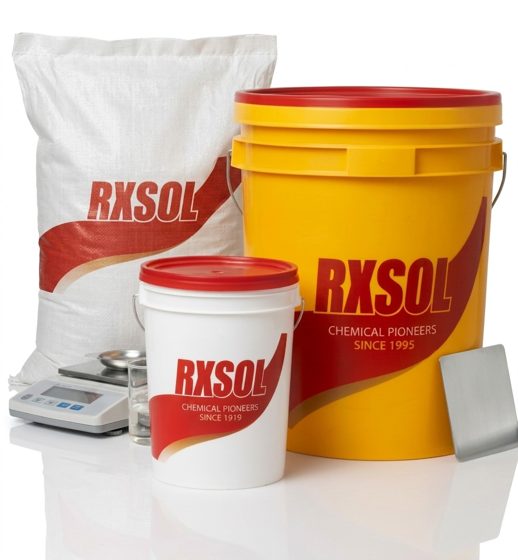
Copper Sulfate LR for passivation test

Detect the presence of metallic iron and iron oxide. Chromium and nickel will not be replaced with the Copper sulfate test solution, forming the distinctive copper color on the surface in this 6 minute test.

SKU: RXSOL-60-6116-500 Category:

Description

The copper sulfate test is used to detect the presence of metallic iron and iron oxide on the surface of materials.

Question – What solution strength is needed to copper sulfate solution can be used to determine if a metal is stainless steel or just steel ? 
Answer    – Copper sulfate (CuSO4*5H2O) + H2SO4 (anywhere from 1% to 50% is specified in various test methods).


Product Details

Application

How does copper sulfate test for passivation work?

ANSWER : Chromium and nickel will not be replaced with the Copper sulfate test solution (which also contains sulfuric acid), only the Fe or other less noble metals. If there is free iron on the surface it will be replaced by the copper, forming the distinctive copper color on the surface in this 6 minute test. Of course, this test should only be used on austenitic stainless steel. Some people use it on other grades, but you can get false failures.


Click here for PASSIVATING LIQUID technical information , to know Other testing methods for PASSIVATION , Passivation Method

Dosage & Procedure

Spray the surface with a solution of copper sulfate in water. If free iron is present, a copper film will form. In this test, the chemical reaction is:

 Fe + CuSO4 = FeSO4 + Cu
The copper film is immediately visible.
 

Copper sulphate test: a galvanic type test in which the more noble copper plays upon less noble iron particles but not on SS.  Patches of copper sulphate shows a poorly passivated surface. Passivated parts are immersed in a Copper Sulfate solution for five minutes, rinsed and visually examined. Any copper (pink) color indicates the presence of free iron and the test is considered unacceptable.

Ferroxyl test: causes coloured iron compounds to appear as specks.

Generic / Chemical Name

Laboratory Grade Copper Sulphate Liquid

Supply Locations

Copper Sulfate LR for passivation test manufacturer supplier distributor in Mumbai, Kandla, Kolkata, Vizag, Chennai, India, Fujairah, Dubai UAE, Muscat Oman, Kenya Africa. Get the best quality of Copper Sulfate LR for passivation test at a competitive price from us. We have ready stock of Copper Sulfate LR for passivation test in India, UAE Gulf, Oman, Kenya Africa. Contact us for bulk as well as small orders.

Safety Data (MSDS)

Product Name Copper Sulfate Liquid LR For Passivation Test
Part Number RXSOL-60-6116-500

Company Details:

RX MARINE INTERNATIONAL
105, A wing , BSEL , TECH PARK.
VASHI ,NEW BOMBAY 400703 INDIA

Stock POINT ::: Mumbai, Kandla, Chennai, Visakhapatnam, Kolkata, Fujairah

Phone  +91 22 27815540 / 41 / 42
AOH : 0091 9821214367
Email mail@rxmarine.com

Chemical Name

Concentration

Percentage

CAS Number

Copper Sulfate

0.20 Gram

0.20 %

7758-99-8

Distilled Water 99.80 Gram 99.8 % 7732-18-5

Standards Solution: Weigh out accurately 0.20 g of copper(II)sulfate pentahydrate (CuSO4⋅5H2O) and dissolve it by adding to it about 99.8 mL of distilled water.

Odour

Odourless

Appearance

Liquid

Contact with eyes

 Hazardous, Irritant

Contact with skin

Irritating to skin.

Inhalation

Repeated inhalation of dust can produce the varying degree of respiratory irritation or lung damage.

Potential Health Effect

The substance may be toxic to kidneys, liver. Repeated or prolonged exposure to the substance can produce target organs damage.


Contact with skin

In case of contact, immediately flush skin with plenty of water. Cover the irritated skin with an emollient. Remove contaminated clothing and shoes. Cold water may be used.Wash clothing before reuse. Thoroughly clean shoes before reuse. Get medical attention.

Contact with eyes

Check for and remove any contact lenses. In case of contact, immediately flush eyes with plenty of water for at least 15 minutes. Cold water may be used. Get medical attention.

Ingestion

Do NOT induce vomiting unless directed to do so by medical personnel. Never give anything by mouth to an unconscious person. If large quantities of this material are swallowed, call a physician immediately. Loosen tight clothing such as a collar, tie, belt or waistband.

Inhalation

If inhaled, remove to fresh air. If not breathing, give artificial respiration. If breathing is difficult, give oxygen. Get medical attention immediately.

General

In case of accident or if you feel unwell, seek medical advice immediately (show the label where possible) .


Flammability of the Product: Non-flammable.
Auto-Ignition Temperature: Not applicable.
Flash Points: Not applicable.
Flammable Limits: Not applicable.
Products of Combustion: Not available.
Fire Hazards in Presence of Various Substances: Not applicable.

Explosion Hazards in Presence of Various Substances:

Risks of explosion of the product in presence of mechanical impact: Not available.
Risks of explosion of the product in presence of static discharge: Not available. Slightly explosive in presence of heat.
Fire Fighting Media and Instructions: Not applicable.
Special Remarks on Fire Hazards: Not available.
Special Remarks on Explosion Hazards: When heated to decomposition it emits toxic fumes. Solutions are acidic and can react with magnesium to evolve flammable hydrogen gas


Personal Precautions

Wear protective clothing as per section 8.

Environmental Precautions

No special precautions are required for this product.

Small Spillage

Use appropriate tools to put the spilled solid in a convenient waste disposal container. If necessary:  Finish cleaning by spreading water on the contaminated surface and dispose of according to local and regional authority requirements.

Large Spillage

Stop leak if without risk. Do not get water inside container. Do not touch spilled material. Use water spray to reduce vapors. Prevent entry into sewers, basements or confined areas; dike if needed. Call for assistance on disposal. Be careful that the product is not present at a concentration level above TLV. Check TLV on the MSDS and with local authorities


Precaution

Keep container dry. Do not ingest. Do not breathe dust. Never add water to this product. Wear suitable protective clothing. In case of insufficient ventilation, wear suitable respiratory equipment. If ingested, seek medical advice immediately and show the container or the label. Avoid contact with skin and eyes.Keep away from incompatibles such as metals, alkalis

Storage

Keep only in the original container in a cool, well ventilated place.


Engineering Control

Use process enclosures, local exhaust ventilation, or other engineering controls to keep airborne levels below recommended exposure limits. If user operations generate dust, fume or mist, use ventilation to keep exposure to airborne contaminants below the exposure limit.

Personal Protection

Splash goggles. Lab coat. Dust respirator. Be sure to use an approved/certified respirator or equivalent. Gloves.

Occupational exposure controls

Splash goggles. Full suit. Dust respirator. Boots. Gloves. A self contained breathing apparatus should be used to avoid inhalation of the product. Suggested protective clothing might not be sufficient; consult a specialist BEFORE handling this product.


               gloves                   suit                goggles 
                  Gloves                       Suit                          Gogle                


Molecular Wight

249.69 g/mole

Odour

Odourless

Appearance of Liq

Light Blue 

pH

Not Available

Boiling point

 150°C (302°F)

Melting Point

110°C (230°F)

Density

1.014 g/cm3 (20 °C)

Vapour pressure

NA

Freezing point

NA

Solubility in Water

 Easly Soluble

Solubility in water: 31.6 g/100 ml @ 0 deg. C.; 203.3 g/100 ml @ 100 deg. C Solubility in methanol:
15.6 g/100 ml @ 18 deg. C. Insoluble in ethanol. It readily forms alkaline complexes at  sufficiently
high concentrations of amines or alkali cyanides.  Practically insoluble in most organic solvents.
Store at +15°C to +25°C.


Stability: The product is stable.
Instability Temperature: Not available.
Conditions of Instability:  Excess heat (high temperatures), incompatible materials, exposure to air
Incompatibility with various substances: Reactive with metals, alkalis.
Corrosivity: Highly corrosive in presence of steel.
Special Remarks on Reactivity: Air Sensitive. Slowly efflorescent in air. Solutions of hypobromite are decomposed by powerful catalytic action of cupric ions, even as impurities. Incompatible with finely powdered metals.
Polymerization: Will not occur.


Routes of Entry

Inhalation. Ingestion

Acute oral toxicity (LD50)

350 mg/kg [Rat]

Acute dermal toxicity (LD50):

>2000 mg/kg  [Rat]

Special Remarks on other Toxic Effects on Humans
 

Acute Potential Health Effects: Skin: Causes skin irritation. May cause skin burns. It may cause an itching allergic eczema. Eyes: Causes eye irritation. May cause eye burns. It may cause conjunctivitis, corneal discolouration, ulceration and turbidity of the cornea. Inhalation: Causes respiratory tract (nose, throat, lung) irritation with coughing and wheezing. May cause ulceration and perforation of the nasal septum if inhaled in excessive quantities. Burning copper sulfate may result in irritating and poisonous gases which may irritate the respiratory tract and lungs, and may cause fume metal fever which is characterized by flu-like symptoms such as fever, chills, muscle aches. Ingestion: Harmful if swallowed. May cause gastrointestinal tract irritation with nausea, vomiting, diarrhoea, metallic taste, burning sensation in the stomach or epigastrium, abdominal pain, and possible gastrointestinal tract bleeding. May affect metabolism(metabolic acidosis), liver (liver damage, jaundice), blood (Methemoglobin, hemolytic anemia), urinary system (kidney damage, hematuria, hemoglobinuria, albuminuria), behavior/nervous systems (somnolence, tremor, psychosis, muscle weakness, coma), cardiovascular system (lowering of blood pressure, dysrhythmia). Oral mucosa, vomitus, stools, and saliva may be stained blue or green following ingestion. Aspiration pneumonia may develop following emesis and CNS depression. Chronic Potential Health Effects: Skin: Repeated or prolonged skin contact may cause thickening of the skin.

Other Toxic Effects on Humans:
 

Hazardous in case of skin contact (irritant), of ingestion, of inhalation.

Carcinogenicity

MUTAGENIC EFFECTS: Mutagenic for mammalian somatic cells. May cause damage to the following organs: kidneys, liver.


Ecotoxicity

Ecotoxicity in water (LC50): 0.1 ppm 48 hours [Goldfish]. 0.1 mg/l 96 hours [Rainbow Trout]. 2.5 mg/l 96 hours [Rainbow Trout].

Mobility

Completely soluble in water

BOD & COD

NA

Product of Biodegradation

Possibly hazardous short term degradation products is not likely. However, long-term degradation products may arise.

Special Remarks on biodegradation

If released to soil, copper sulfate may leach to groundwater, be partially oxidized, or bind to humic materials, clay, or hydrous of iron and manganese. In water, it will bind to carbonates as well as humic materials, clay and hydrous oxides of iron and manganese. Copper is accumulated by plants and animals, but it does not appear to biomagnify from plants to animals. This lack of biomagnification appears common with heavy metals. In air, copper aerosols (in general) have a residence time of 2 to 10 days in an unpolluted atmosphere and 0.1 to >4 in polluted, urban areas.


Copper dust or mist or copper compounds may be disposed of in Group III sealed containers in a secure sanitary landfill.
Copper-containing soluble wastes can be concentrated through the use of ion exchange, reverse osmosis, or evaporators to
the point where copper can be electrolytically removed and sent to a reclaiming firm.  If recovery is not feasible, the copper
can be precipitated through the use of caustics and the sludge deposited in a chemical waste landfill. Be sure to consult with
authorities (waste regulators). Waste must be disposed of in accordance with federal, state and local environmental control
regulations. 

-  Not classified as hazardous for any mode of  transport

Federal and State Regulations:
SARA 313 toxic chemical notification and release reporting: Copper compounds CERCLA: Hazardous substances.: Copper
sulfate pentahydrate: 10 lbs. (4.536 kg)

Other Regulations: OSHA: Hazardous by definition of Hazard Communication Standard (29 CFR 1910.1200).

Other Classifications:

WHMIS (Canada): CLASS D-2B: Material causing other toxic effects (TOXIC).

DSCL (EEC):
R22- Harmful if swallowed. R36/38- Irritating to eyes and skin. R50/53- Very toxic to aquatic organisms, may cause long-term
adverse effects in the aquatic environment. S22- Do not breathe dust. S60- This material and its container must be disposed
of as hazardous waste. S61- Avoid release to the environment. Refer to special instructions/Safety data sheets.

HMIS :
Health Hazard: 2
Fire Hazard: 0
Reactivity: 0
Personal Protection: E
 

The information above is believed to be accurate and represents the best information currently available to us.  However, we make no warranty of merchantability or any other warranty, express or implied, with respect to such information, and we assume no liability resulting from its use. Users should make their own investigations to determine the suitability of the information for their particular purposes. In no event shall be liable for any claims, losses, or damages of any third party or for lost profits or any special, indirect, incidental, consequential or exemplary damages, howsoever arising, even if Rx Marine International  has been advised of the possibility of such damages.

DISCLAIMER OF LIABILITY :The information in this SDS was obtained from sources which we believe are reliable. However, the information is provided without any warranty, express or implied, regarding its correctness. The conditions or methods of handling, storage, use or disposal of the product are beyond our control and may be beyond our knowledge. For this and other reasons, we do not assume responsibility and expressly disclaim liability for loss, damage or expense arising out of or in any way connected with the handling, storage, use or disposal of the product. This MSDS was prepared and is to be used only for this product. If the product is used as a component in another product, this MSDS information may not be applicable.

top