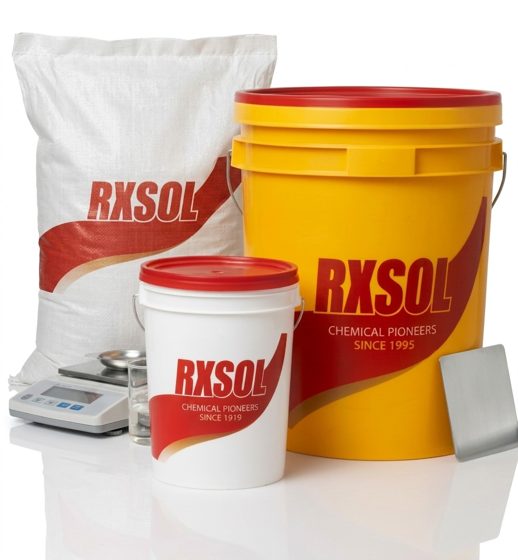
Calcium Hypochlorite Granules

RXSOL Calcium Hypochlorite is a widely used chlorine compound that is highly effective against bacteria, algae, slime, fungi and other harmful and objectionable micro-organisms.

SKU: RXSOL-31-3028-045 Category:

Description

RXSOL Calcium Hypochlorite is a widely used chlorine compound that is highly effective against bacteria, algae, slime, fungi and other harmful and objectionable micro-organisms. Since calcium hypochlorite as a solution is a very efficient killer of virtually all bacteria, algae and other objectionable micro-organisms, it is used as a standard for comparison testing of other sanitizing chemicals. While calcium hypochlorite is used primarily to chlorinate swimming pool, spa and hot tub water, and to treat water supplies and sewage, it is also frequently used as a bleaching agent and sanitizer in industrial applications.


Product Details

Application

RXSOL Calcium Hypochlorite is a widely used chlorine compound that is highly effective against bacteria, algae, slime, fungi and other harmful and objectionable micro-organisms. Since calcium hypochlorite as a solution is a very efficient killer of virtually all bacteria, algae and other objectionable micro-organisms, it is used as a standard for comparison testing of other sanitizing chemicals. While calcium hypochlorite is used primarily to chlorinate swimming pool, spa and hot tub water, and to treat water supplies and sewage, it is also frequently used as a bleaching agent and sanitizer in industrial applications.

Rxsol Calcium Hypochlorite granules can be used for continuous chlorination or applied manually.Swimming Pool, Spa and Hot Tub Operators use calcium hypochlorite as a routine sanitizer to kill and prevent the growth of algae, bacteria, and other microorganisms. It is also widely used as a shock treatment to destroy organic contamination in pool water, thereby improving the water clarity. Strong calcium hypochlorite solutions serve as disinfectants for cleaning pool sides and bottoms, decks, diving boards, ladders, floats, locker and shower room floors and benches, sinks and toilets.

Municipal Water Treatment —


Municipalities use calcium hypochlorite in place of chlorine gas or liquid bleach to purify water. It is also effective for treating wells; sanitizing new water mains; controlling algae, especially sudden growths, in reservoirs, filters and other equipment; treating sewage and controlling odors.

Wastewater Treatment —
Calcium hypochlorite is used to treat wastewater effluents under controlled conditions by textile mills, paper mills, tanneries, food processing plants and more.

Other Applications —

Other uses for alcium hypochlorite include sanitizing food and beverage containers and production equipment in dairies, restaurants, hospitals and farms. Calcium hypochlorite also is used to control algae and slime in commercial and industrial cooling water systems.

Dosage & Procedure

HS Code 28281090


Drinking Water disinfectant easiest process is  to add  1-pound of calcium hypochlorite in granular form in to 10,000 gallons of drinking water.  And Calcium Hypochlorite is widely available for use as swimming pool chlorine tablets or white powder that is much more stable than chlorine.
 

Variety of disease causing organisms including bacteria, yeast, fungus, spores, and viruses growing in water.  RXSOL brand have easiest method to test such polluted water by simple test method.

Technical Specifications

How to Disinfect Water Using Calcium Hypochlorite ?
A.)  Dissolve 1  teaspoon 60-78% granular calcium hypochlorite in 7 - 8 liters of water . B.) Then add this solution 1 part to  disinfect water to 100 parts water to be treated. Finally keep mixed water to settle completely for 20 - 30 minutes before drinking. NOTE ::: Freshly prepared ( A.) solution is recommended to make 2nd step ( B.) drinking water.

Better than Bleach: Use Calcium Hypochlorite to Disinfect Water
Because liquid bleach solution begin to degrade and eventually become useless as a disinfecting agent. While Granual is always effective to treat water as disinfectant.

Notes & Precautions

Typical Properties

Chemical Name : Calcium Hypochlorite
Chemical Formula : Ca(OCl)2
Granular Bulk Density : lb/ft3 64
Chemical Assay of Calcium Hypochlorite
Active Ingredient  Calcium Hypochlorite : 73% nom
Inert Ingredients, Readily soluble salts : 27%
Minimal Available Chlorine : 70%
Solubility in Water Granular calcium hypochlorite dissolves readily at  : 77°F.
Sample Solutions : 1 lb. in 80,000 gallons = 1 ppm AvCl. 2 dry oz. in 1 gallon = 1% solution or 10,000 ppm
pH Solutions
AvCl, ppm : pH
100
200
600
1000
:
:
:
:
9.7
10.00
10.4
10.7

Active Matter

70-80%

Generic / Chemical Name

Chlorine Granuels Powder

Supply Locations

Calcium Hypochlorite Granules manufacturer supplier distributor in Mumbai, Kandla, Kolkata, Vizag, Chennai, India, Fujairah, Dubai, Sharjah, UAE, Gulf, Middle East, Muscat Oman, Kenya Africa. Get the best quality of Calcium Hypochlorite Granules at a competitive price from us. We have ready stock of Calcium Hypochlorite Granules in India, UAE Gulf, Oman, Kenya Africa. Contact us for bulk as well as small orders.

Industry Applications

#CalciumHypochlorite_Granules
#Chlorine_Granules
#ChlorineGranules_supplierMuscatDubai

Safety Data (MSDS)

Product Name RXSOL-31-3028-045
Product Type   Calcium Hypochlorite Granuels

Company Details:

RX MARINE INTERNATIONAL
105, A wing , BSEL , TECH PARK.
VASHI ,NEW BOMBAY 400703 INDIA

Stock Point : Mumbai, Gandhidham, Kolkata, Chennai, Visakhapatnam, Fujairah, Muscat OMAN, Kenya

Phone +91 22 27815540 / 41 / 42
Fax +91 22 2781 1318 :::AOH :0091 9821214367
Email care@rxmarine.com

Ingredients % by Weight Cas No.
Calcium Hypochlorite 60-80% 7778-54-3
Sodium Chloride 10-20% 7647-14-5
Calcium Chloride 0-5% 10043-52-4
Calcium Hydroxide 0-4% 1305-62-0
Calcium Carbonate 0-5% 471-34-1
Calcium Chlorate 0-5% 10137-74-3
Water 5.5-10% 7732-18-5

Inhalation

Dust and mist irritate the nose and throat. In confined areas, mechanical agitation can result in high levels of dust, and reaction with incompatibles materials (e.g., acids and water/moisture) can result in high concentrations of chlorine vapour, either of which may result in burns to the respiratory tract, producing lung edema, shortness of breath, wheezing, choking, chest pains, impairment of lung function, and possible permanent lung damage.

Skin Contact / Absorption

Calcium hypochlorite dust and solutions can cause irritation and in severe cases, chemical burns, which are characterized by redness, swelling, and scab formation. Moisture from perspirations will accelerate tissue destruction.

Eye Contact

Exposure to calcium hypochlorite can cause eye irritation and vision impairment. Contact can produce impairment of vision and corneal damage.

Ingestion

When ingested, there will be burning of the mouth and throat. Can cause abdominal cramps, vomiting, diarrhea, nausea, and/or tissue ulceration which may lead to convulsions, coma, and even death.

Exposure Limits

Ceiling= 3mg/m3 as chlorine (manufacturer's internal standard)

Inhalation

Remove victim to fresh air. Give artificial respiration only if breathing has stopped. If breathing is difficult, give oxygen. Seek immediate medical attention.

Skin Contact / Absorption 

Remove contaminated clothing. Wash affected area with soap and water. Seek medical attention if irritation occurs or persists.

Eye Contact

 Flush immediately with water for at least 20 minutes. Forcibly hold eyelids apart to ensure complete irrigation of eye tissue. Seek immediate medical attention.

Ingestion 

Immediately give large amounts of water. Do not induce vomiting. If vomiting occurs, lean victim forward to prevent breathing in vomitus. Do not give anything by mouth to an unconscious or convulsing person.
Seek immediate medical attention.

Additional Information 

 Not available


Conditions of Flammability Non-flammable. Note calcium hypochlorite is a strong oxidizing agent; may form explosive mixtures with combustibles, organic, or other oxidizable materials.
Means of Extinction Drench with water, and cool surrounding products and area with water. Avoid dry extinguishers containing ammonium compounds.
Flash Point Not Applicable
Auto-ignition Temperature Not Applicable
Upper Flammable Limit Not Applicable
Lower Flammable Limit Not Applicable
Hazardous Combustible Products Chlorine, oxygen, and chlorine monoxide at higher temperatures. Water in contact with hot calcium hypochlorite can release hydrochloric acid or chlorine gas.
Special Fire Fighting Procedures Wear NIOSH-approved self-contained breathing apparatus and protective clothing.
Explosion Hazards Not sensitive to mechanical impact or static discharge.

Leak / Spill.

Wear appropriate personal protective equipment. Ventilate area. Stop or reduce leak if safe to do so. Prevent material from entering sewers. Flush with water to remove any residue. .

Deactivating Materials

Not available


Handling Procedures

Use proper equipment for lifting and transporting all containers. Use sensible industrial hygiene and housekeeping practices. Wash thoroughly after handling. Avoid all situations that could lead to harmful exposure.

Storage Requirements

Store in a cool, dry, well-ventilated place. Keep container tightly closed, and away from incompatible materials. Keep out of the sun. .


Protective Equipment


Eyes

Chemical goggles, full-face shield, or a full-face respirator is to be worn at all times when product is handled. Contact lenses should not be worn; they may contribute to severe eye injury.

Respiratory

Use NIOSH-approved respirator - full facepiece with chlorine and dust/mist cartridges when dust is present. Use a self-contained breathing apparatus should be used for major spills

Gloves

Impervious gloves of chemically resistant material (rubber or PVC) should be worn at all times. Wash contaminated clothing and dry thoroughly before reuse.

Clothing

Body suits, aprons, and/or coveralls of chemical resistant material should be worn at all times. Wash contaminated clothing and dry thoroughly before reuse

Footwear

Impervious boots of chemically resistant material should be worn at all times

Engineering Controls


Ventilation Requirements

Mechanical ventilation (dilution or local exhaust), process or personnel enclosure, and control of process conditions should be provided. Supply sufficient replacement air to make up for air removed by exhaust systems

Other

Emergency shower and eyewash should be in close proximity


Physical State

Solid

Odor and Appearance

White, Granule solid with a strong chlorine odour

Odor Threshold

~ 1.4 mg/m3 based on chlorine

Specific Gravity (Water=1)

Specific Gravity (Water=1)

Vapor Pressure (mm Hg, 20C)

not applicable

Vapor Density (Air=1)

Not available.

Evaporation Rate

Not available.

Boiling Point

not applicable

Freeze/Melting Point

Decomposes at 170-180°C

pH

10.4-10.8 (1% solution)

Water/Oil Distribution Coefficient

Not applicable

Bulk Density

0.8 g/cm3

% Volatiles by Volume

Not available

Solubility in Water

18% at 25°C

Molecular Formula

Ca(OCl)2

Molecular Weight

142.98


Stability

Stable in optimum storage conditions. Heat, sunlight and contamination could cause decomposition

Incompatibility

Acids, reducing agents, combustible materials such as wood, cloth, or organic materials, dry powder fire extinguishers containing monoammonium phosphate, metals such as iron and copper and their alloys, water or steam, ammonia, urea, amines

Hazardous Products of Decomposition


Water in contact with calcium hypochlorite releases chlorine gas. Contact with incompatibles presents an explosion and fire hazard. Toxic or corrosive fumes may be liberated. These include chlorine gas

Polymerization

Will not occur


Irritancy


Causes irritation and burns to eyes and skin

Sensitization

Not available

Chronic/Acute Effects

Skin irritation may occur from repeated or prolonged skin contact. Chronic inhalation exposure may cause impairment of lung function and permanent lung damage. Asthma, respiratory and cardiovascular disease may be aggravated by exposure to this chemical

Synergistic Materials

Not available

Animal Toxicity Data

LC50(inhalation,rat,1 hour)= 1300mg/m3 based on chlorine

LD50(oral,rat)= 850mg/kg

LD50(dermal,rabbit)= > 2000mg/kg

Carcinogenicity

Not considered to be carcinogenic as per IARC, NTP, OSHA, and ACGIH.

Reproductive Toxicity

Not reported to show reproductive toxicity.

Teratogenicity

Results in laboratory analysis show it is not a tetrogen

Mutagenicity

Results in laboratory analysis show it is not a mutagen


Fish Toxicity

LC50(bluegill,96 hour)= 0.088mg/L

LC50(rainbow trout,96 hour)= 0.16mg/L

LC50(daphnia magna,48 hour)= 0.11mg/L

Biodegradability

Not available

Environmental Effects

Not available


Waste Disposal

Dispose in accordance with all federal, provincial, and/or local regulations including the Canadian Environmental Protection Act.


DOT Classification   CLASS 5.1: Oxidizing material.
Identification   Calcium hypochlorite, dry : UN1748 PG: II
Special Provisions for Transport    Not available.

Federal and State Regulations   Pennsylvania RTK: Calcium hypochlorite Massachusetts RTK: Calcium hypochlorite TSCA 8(b) inventory: Calcium
hypochlorite CERCLA: Hazardous substances.: Calcium hypochlorite
 Other Regulations   OSHA: Hazardous by definition of Hazard Communication Standard (29 CFR 1910.1200).
 
Other Classifications    
WHMIS (Canada)   CLASS C: Oxidizing material. CLASS E: Corrosive solid.
DSCL (EEC)   R22- Harmful if swallowed. R38- Irritating to skin. R41- Risk of serious damage to eyes.
 HMIS (U.S.A.)    Health Hazard: 3
     Fire Hazard: 0
     Reactivity: 2
     Personal Protection: j
National Fire Protection Association (U.S.A.):   Health: 3
    Flammability: 0
    Reactivity: 1
    Specific hazard:
Protective Equipment:   Gloves. Lab coat. Vapor and dust respirator. Be sure to use an approved/certified respirator or equivalent. Wear appropriate
respirator when ventilation is inadequate. Splash goggles.

The information contained in this safety data sheet is given in good faith. It is accurate to the best of our knowledge and belief and represents the most up to date information. The information given in this data sheet does not constitute or replace the users own assessment of workplace risk as required by other health and safety legislation.

DOT Classification   CLASS 5.1: Oxidizing material.
Identification   Calcium hypochlorite, dry : UN1748 PG: II
Special Provisions for Transport    Not available.

DISCLAIMER OF LIABILITY :The information in this SDS was obtained from sources which we believe are reliable. However, the information is provided without any warranty, express or implied, regarding its correctness. The conditions or methods of handling, storage, use or disposal of the product are beyond our control and may be beyond our knowledge. For this and other reasons, we do not assume responsibility and expressly disclaim liability for loss, damage or expense arising out of or in any way connected with the handling, storage, use or disposal of the product. This MSDS was prepared and is to be used only for this product. If the product is used as a component in another product, this MSDS information may not be applicable.

top