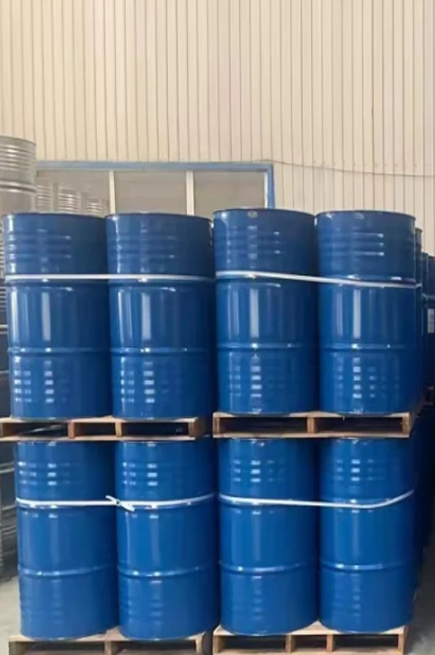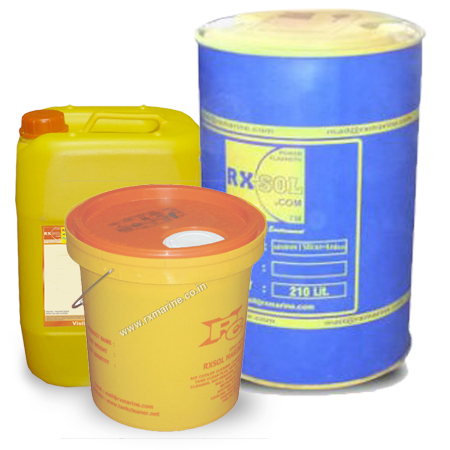
Citric Acid Monohydrate

Citric acid is the most widely used organic acid and pH-control agent in foods, beverages, pharmaceuticals and technical applications.

SKU: RXSOL-19-3064-025 Category:

Description

Citric acid is the most widely used organic acid and pH-control agent in foods, beverages, pharmaceuticals and technical applications. Citric acid monohydrate occurs as colourless crystals or as white, crystalline powder with a strongly acidic taste.


Citric Acid Powder is a high-purity organic acid widely used as a descaling, cleaning, chelating, and pH-adjusting agent. It effectively removes limescale, mineral deposits, rust stains, and hard-water residues. The powder is readily soluble in water and provides consistent cleaning performance. It is suitable for industrial cleaning, water treatment, food processing, and general maintenance applications. Citric acid is biodegradable and offers an effective alternative to stronger mineral acids for many applications.




Product Details

Application

Agricultural uses of citric acid : Citric acid has many uses in agriculture, including:
Improve soil quality. Citric acid acts as a soil conditioner and helps improve soil quality. Its acidic properties can neutralize alkaline substances in the soil, increase the pH value, and promote the growth of bacteria and microorganisms in the soil. It can also increase the organic matter content in the soil, improve the soil structure, and increase the water retention and aeration of the soil.

Dosage & Procedure

Enhance plant disease resistance. Citric acid helps increase plant resistance to disease. By promoting plant metabolism and improving plant immunity, various plant diseases can be effectively prevented and controlled.
 
Increase crop yields. Citric acid effectively improves crop yield and quality by improving soil fertility and plant nutrient absorption efficiency.
 
Prevent plant diseases. Citric acid is used to control common plant diseases such as rust. For example, it can neutralize excess iron in the soil, reduce soil acidity, and reduce the occurrence of iron rust.

Technical Specifications


                Parameter

Test Result

Appearance

Crystalline

Colour

Colourless or White

Assay

99.5%

Solubility (Turbidity) 10% aq. solution

Colourless

Insoluble matter

0.001 % max

Sulphated Ash

0.01 % max

Chloride (CI)

0.005 % max

Sulphate (SO4)        

0.02 % max

Phosphate (PO4)

0.005 % max

Iron (Fe)

0.001 % max

Heavy Metals (Pb)

0.002 % max.

Copper (Cu)

0.005 % max

Oxalate (C2O4)

0.005% max

Readily carbonisable substances

Passes test


Notes & Precautions

CITRIC ACID Adjust water quality. Citric acid is used as an agent to regulate water quality, neutralize excessive metal ions in the water, and increase the pH of the water, making the water quality more suitable for the growth and production of crops.
 
As a complexing agent, citric acid can form complexes with metal ions, accelerate the absorption of metal ions by plants, and promote the growth and development of crops.
 
In short, citric acid, as an effective soil conditioner and organic fertilizer, has broad application prospects in the agricultural field. 

Supply Locations

Citric Acid Monohydrate manufacturer supplier distributor in Mumbai, Kandla, Kolkata, Vizag, Chennai, India, Fujairah, Dubai, Sharjah, UAE, Gulf, Middle East, Muscat Oman, Kenya Africa. Get the best quality of Citric Acid Monohydrate at a competitive price from us. We have ready stock of Citric Acid Monohydrate in India, UAE Gulf, Oman, Kenya Africa. Contact us for bulk as well as small orders.

Industry Applications

Citric Acid Water Soluble Fertilizer is an organic fertilizer with 98% purity. It is a granular fertilizer that can be easily dissolved in water. The release type of this fertilizer is emulsifiable concentrate, which ensures that the nutrients are slowly released into the soil. This fertilizer is perfect for plants that require a pH level between 5.0 to 7.0. It is an eco-friendly fertilizer that is safe for both humans and the environment. This fertilizer helps in increasing the yield and quality of the crop.


FAQs of Citric Acid Water Soluble Fertilizer:


Q: Is Citric Acid Water Soluble Fertilizer an organic fertilizer?

A: Yes, Citric Acid Water Soluble Fertilizer is an organic fertilizer with a purity of 98%.

Q: What is the release type of Citric Acid Water Soluble Fertilizer?

A: Citric Acid Water Soluble Fertilizer has an emulsifiable concentrate release type.

Q: What is the physical state of Citric Acid Water Soluble Fertilizer?

A: Citric Acid Water Soluble Fertilizer is in granular form.

Q: What is the storage requirement for Citric Acid Water Soluble Fertilizer?

A: Citric Acid Water Soluble Fertilizer can be stored at room temperature.

Q: What is the benefit of using Citric Acid Water Soluble Fertilizer?

A: Citric Acid Water Soluble Fertilizer helps in increasing the yield and quality of the crop and is eco-friendly and safe for both humans and the environment.

Safety Data (MSDS)

Product Name :Citric Acid Monohydrate
Part Number :RXSOL-19-3064-025

Company Details:
RX MARINE INTERNATIONAL
105, A wing , BSEL , TECH PARK.
VASHI ,NEW BOMBAY 400703 INDIA

Branch : Kandla, Mumbai, Chennai, Vizag, Kolkata, UAE OMAN & KENYA

Phone +91 22 20871200-1400
Fax +91 22 200871500 :::AOH :0091 9821214367
Email 123@rxmarine.com
Website www.rxmarine.com

Name   of Substance               Cas Number EC No Wt.% Symbol
Citric Acid 5949-29-1  201-069-1 99-100%  --

Signal Word                        Warning
Hazard Statements

May form combustible dust concentrations in air Causes serious eye irritation.

Precautionary statements - prevention Wash face, hands and any exposed skin thoroughly after handling Wear eye/face protection Eyes IF IN EYES: Rinse cautiously with water for several minutes. Remove contact lenses, if present and easy to do. ContinuerinsingIf eye irritation persists: Get medical advice/attention.
Store Store in a well-ventilated place. Keep container tightly closed.
Precautionary statements - response None identified


General Advice If symptoms persist, call a physician.
Eye Contact Rinse immediately with plenty of water, also under the eyelids, for at least 15 minutes. Getmedical attention.
Skin Contact Wash off immediately with plenty of water for at least 15 minutes. If skin irritationpersists,call a physician.
Inhalation:              Remove to fresh air. If not breathing, give artificial respiration. Get medical attentionif symptoms occur.
Ingestion: Clean mouth with water and drink afterwards plenty of water. Get medical attentionif symptoms occur.
Notes to Physicians Treat symptomatically.

Suitable extinguishing media Water spray, carbon dioxide (CO2), dry chemical, alcohol-resistant foam.
Extinguishing media which must not be used for safety reasons:              No information available
Special exposure hazards arising from the substance itself, combustion products, resulting gases:

Dust can form an explosive mixture with air. Keep product and empty container away from heat and sources of ignition. Finedustdispersed in air may ignite. Carbon monoxide (CO). Carbon dioxide (CO2)

Special protective equipment for fire-fighters: As in any fire, wear self-contained breathing apparatus pressure-demand, MSHA/NIOSH (approved or equivalent) and full protective gea.
Additional information Flash Point 173.9 °C / 345 °F

Personal precautions, protective equipment and emergency procedures

Ensure adequate ventilation. Use personal protective equipment as required. Avoiddust formation

Enviromental  Precaution  Should not be released into the environment.
Methods and materials for
containment and cleaning up
Sweep up and shovel into suitable containers for disposal. Keep in suitable, closedcontainers for disposal.

Advice on safe handling Wear personal protective equipment/face protection. Ensure adequate ventilation. Donot get in eyes, on skin, or on clothing. Avoid ingestion and inhalation. Avoid dust formation.
Storage Keep containers tightly closed in a dry, cool and well-ventilated place. IncompatibleMaterials. Strong oxidizing agents. Strong bases.

Engineering Control Ensure that eyewash stations and safety showers are close to the workstationlocation. Ensure adequate ventilation, especially in confined areas.
Personal   Protection Eye/face Protection : Wear appropriate protective eyeglasses or chemical safety goggles as describedbyOSHA's eye and face protection regulations in 29 CFR 1910.133 or EuropeanStandardEN166. Skin and body protection : Wear appropriate protective gloves and clothing to prevent skin exposure. Respiratory Protection : Follow the OSHA respirator regulations found in 29 CFR 1910.134 or EuropeanStandard EN 149. Use a NIOSH/MSHA or European Standard EN 149 approved respirator if exposure limits are exceeded or if irritation or other symptoms are experienced.
Exposure Guidelines
 
This product does not contain any hazardous materials with occupational exposurelimitsestablished by the region specific regulatory bodies.
Hygiene measures Handle in accordance with good industrial hygiene and safety practice.

                                                                                             gloves                suit                

                                                                                               Gloves                       Suit                          


Form         Solid
Colour White
Odour Odourrless
Melting range 135 - 152 °C / 275 - 305.6 °F
Boiling point and boiling range  No Data Available
Flash Point 173.9 °C / 345 °F
pH No information available
Evaporation rate Not aplicable
Flammability (solid, gas) No information available
Upper explosion limit No data available
Lower explosion limit No data available
Vapor pressure No data available
Relative vapor density No data available
Density 1.54 g/cm3 (20 °C)
Solubility in other solvents Soluble in water
Partition coefficient: octanol No data available
Autoignition temperature 345 °C / 653 °F
Decomposition > 170°C
Viscosity, kinematic No data available
Explosive properties No data available
Oxidizing properties No data available
Molecular weight 210.14
Molecular Formula C6 H8 O7 . H2 O

Recativity                                             None known, based on information available
Stability Stable under normal conditions.
Possibility of hazardous reactions None under normal processing.
Incompatible materials Strong oxidizing agents, Strong bases.
Hazardous Decomposition

Carbon monoxide (CO), Carbon dioxide (CO2)

Condition to Avoid Incompatible products. Excess heat. Temperatures above 170°C. Avoid dust formation.

Route of Exposure No data available.
Eyes                                    

No data available.

Skin No data available
Ingestion  No data available
Inhalation No data available
Chronic Exposure No data available
Acute oral toxicity No data available
Acute inhalation toxicity No data available
Acute dermal toxicity No data available
Carcinogenicity The table below indicates whether each agency has listed any ingredient as a carcinogen.
Adverse Effects The toxicological properties have not been fully investigated.

Environmental Effects No data available
Toxicity to fish No data available
Toxicity to daphnia  and others No data available
Toxicity to algae                       No data available
Biodegradability  No information available.
Persistence and degradability Persistence is unlikely
Bioaccumulative potential No data available
Mobility in soil Will likely be mobile in the environment due to its water solubility.


Waste Disposal Chemical waste generators must determine whether a discarded chemical is classifiedasahazardous waste. Chemical waste generators must also consult local, regional, andnational hazardous waste regulations to ensure complete and accurate classification.

UN   Number  Not regulated
Proper shipping name Not regulated
Transport hazard class(es) 8
ADR/RID -
Subsidiary risk IMDG -
Subsidiary risk IATA  -
Packing group
Packing group -
Environmental hazards
Environmental hazards -
Marine pollutant -
ADR/RID
Hazard ID -
Tunnel Category -
IMDG
EmS Code -
IATA
Packing Instruction (Cargo) -
Maximum quantity -
Packing Instruction (Passenger) -
Maximum quantity -

Regulations This product does not contain any Proposition 65 chemicals. This product does not contain any DHS chemicals.
Chemical safety assessment No data available.
Further information No data available.

Other Information

The information above is believed to be accurate and represents the  best information   currently    available  to us.  However,   we   make no warranty of merchantability or any other warranty, express or implied, with respect to such information, and  we assume  no liability resulting from its use. Users should make  their  own  investigations  to determine the suitability of the information for their particular purposes. In no event shall be liable for any claims, losses, or damages of any third party or for lost profits or any special, indirect, incidental, consequential or exemplary damages, howsoever arising, even if RX Marine International  has been advised of the possibility of such damages.

DISCLAIMER OF LIABILITY :The information in this SDS was obtained from sources which we believe are reliable. However, the information is provided without any warranty, express or implied, regarding its correctness. The conditions or methods of handling, storage, use or disposal of the product are beyond our control and may be beyond our knowledge. For this and other reasons, we do not assume responsibility and expressly disclaim liability for loss, damage or expense arising out of or in any way connected with the handling, storage, use or disposal of the product. This MSDS was prepared and is to be used only for this product. If the product is used as a component in another product, this MSDS information may not be applicable.

top