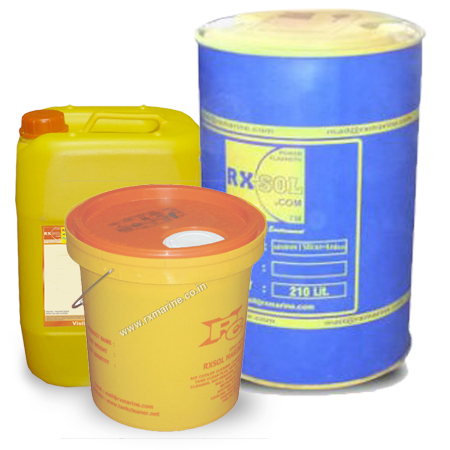
Salt Neutralizer for Plaster

Clear aqueous solution designed to be applied directly to masonry, render or plaster that has been affected by ground water or efflorescing white fluffy salts

SKU: RXSOL-67-6242-025 Category:

Description

Salt Neutraliser is a clear aqueous solution designed to be applied directly to masonry, render or plaster that has been affected by ground water or efflorescing (white, fluffy) salts.

It is also recommended as part of treatment after the insertion of a damp proof course to existing masonry, which should include replastering to an approved specification.







Product Details

Application

How to use Salt Neutralizer for Plaster, Mansonry Construction work

  1. Brush away or remove all loose salts
  2. Thoroughly soak the affected area with clean tapwater
  3. Apply Salt Neutraliser by brush or roller to areas showing salts contamination. Under most circumstances one application will be sufficient. Where heavy salting on old brickwork (eg. chimney breasts) is being treated use Salt Neutraliser as supplied. On new plaster finishes or where the salting is light Salt Neutraliser can be diluted with water up to 50/50.
  4. Some frothing may occur which is due to the reaction of Salt Neutraliser with the salts and you should allow some time for the neutralizing action to be completed. A white deposit may be left on the surface where original efflorescence has taken place and this can be difficult to remove.
  5. If re-decoration is to be applied to the treated surface the area should be washed with water and allowed to dry. Do not re-decorate at any time until all treated areas are thoroughly dry.

Dosage & Procedure

Dosage

Use directly onto old masonry, render or plaster, or dilute 50:50 with water to apply to new plaster suffering from efflorescence.

 
Coverage of Salt Neutralizer

1 litre of concentrate should treat 5 to 10 m²

Notes & Precautions

Reason for Salt formation in plaster, masonry work

As a result of rising dampness, salts contained in ground water are absorbed into the structural masonry of the building and subsequently into the internal plaster finishing coat. If the rising damp has been severe the plaster finish can de-bond and visual evidence of this potential problem can often be noted by the presence of salt deposits on the internal plaster surface. In such severe circumstances the plaster finish must be removed and re-plastering carried out in accordance with the appropriate specification, to prevent any residual salts in the structural masonry migrating into new plaster finishes. There are, however many situations where the type of salts within the masonry are such that the plaster finish remains in good condition.

In these cases Salt Neutraliser can be used to neutralise the salts in the sound plaster finish thus saving considerable time and expense by not having to re-plaster these areas. There are many other occasions where, even after re-plastering, salts efflorescence can be seen on the new plaster finish. This often leads to a concern that the damp proof course has failed when, in fact, in the majority of cases the efflorescence is due to other factors such as drying out, plumbing or rainwater leaks, condensation or salts in construction materials or salty bricks. Under these circumstances Salt Neutraliser is an ideal product to treat the problem.

Supply Locations

Salt Neutralizer for Plaster Masonry Construction work supplier in Mumbai, Kandla, Kolkata Durgapur West Bengal, Varanashi, Patna, Paradip, Howrah, West Bengal, Navi mumbai MIDC, Visakhapatnam, Chennai, Ennore, Dubai, Fujairah, Sharjah, Ajman, Abudhabi, Ruwi Barka, Muscat, Barka, Oman

Safety Data (MSDS)

Product Name RXSOL-67-6242-025
Product Type Salt Neutralizer for Plaster

Company Details:

RX MARINE INTERNATIONAL
105, A wing , BSEL , TECH PARK.
VASHI ,NEW BOMBAY 400703 INDIA

Stock Points: Mumbai, Kandla, Kolkata, Vishakhapatnam, Chennai, Fujairah, Muscat, Kenya, Canada

Phone +91 22 27815540 /  41 / 42
Fax +91 22 2781 1318 :::AOH :0091 9821214367
Email mail@rxmarine.com

SARA 313 Component  CAS Number Percent Comp. Dimension
 
Exposure
 Limits
 
Acetic Acid, Glacial CAS# 64-19-7  20-30  V/V 10 ppm OSHA
TWA, 15 ppm
OSHA STEL
Surfactant blend - 40-50 V/V -

Causes severe irritation and burns. May be harmful if swallowed. Avoid breathing vapor or dust. Use with adequate ventilation. Avoid contact with eyes, skin, and clothes. Wash thoroughly after handling. Keep container closed.

Emergency Overview:Poison! Danger! Corrosive. Liquid and mist cause severe burns to all body tissue. May be fatal if swalowed. Harmful if inhaled. Inhalation may cause lung and tooth damage. Flammable liquid and vapor.

Inhalation:Inhalation of Concentrated Vapors can cause Serious Damage to the Lining of the
Nose, Throat, and Lungs. Breathing Difficulties may occur. Neither Odor nor Degree of Irritation are Adequate to Indicate Vapor Concentration.

Ingestion:Swallowing can Cause Severe Injury Leading to Death. Symptoms Include Sore Throat, Vomiting, and Diarrhea. Ingestion of as Little as 1.0 mL has Resulted in Perforation of the Esophagus.

Skin:Contact with Concentrated Solutions may cause serious damage to the skin. Effects may include Redness, Pain, and Skin Burns. High Vapor Concentrations may cause skin Sensitization.

Eye Contact:Vapors are Irritating and May cause Damage to Eyes. Contact May cause Severe Burns and Permanent Eye Damage.

Chronic Exposure:Long-Term Exposure may cause Darkening of the skin. May cause Erosion of Teeth and Chronic Inflammation or the Nose, Throat, and Bronchial Tubes.

Aggravated by Exposure:Persons with Pre-Existing skin Disorders or Eye Problems, or Impaired Respiratory Function May be more Susceptible to the Effects to this Substance.

Causes severe irritation and burns. May be harmful if swallowed. Avoid breathing vapor or dust. Use with adequate ventilation. Avoid contact with eyes, skin, and clothes. Wash thoroughly after handling. Keep container closed.


SKIN:

In case of contact, immediately flush skin with water for at least 15 minutes while removing contaminated clothing and shoes.

  EYES: Wash eyes with plenty of water for at least 15 minutes, lifting lids occasionally.
Seek Medical Aid.
  INHALATION:

Remove to fresh air. If not breathing, give artificial
respiration. If breathing is difficult, give oxygen 

  INGESTION: Give several glasses of milk or water. Vomiting may occur spontaneously, but DO NOT INDUCE! Never give anything by mouth to an unconscious person.

Fire Extinguisher Type:

Any means suitable for extinguishing
urrounding fire

Fire / Explosion Hazards: Vapor may travel considerable distance to
source of ignition and flash back.
Fire Fighting Procedure: Use water spray to cool fire exposed containers.


Absorb spill with inert material, then place in a chemical waste container. Neutralize with a weak base. Ventilate area of Leak or Spill. Wear Appropriate Personal Protective Equipment as Specified in Section 8. Isolate Hazard Area. Keep Unnecessary and Unprotected Personnel from Entering. Contain and Recover Liquid when Possible. Absorb with an Inert Material (e.g., Vermiculite, Dry Sand, Earth), and place in a Chemical Waste Container. Do Not Use Combustible Materials, such as Saw Dust.

Store in a cool, dry, well-ventilated place away from incompatible materials. Wash thoroughly after handling.

Respiratory Protection

NIOSH/MSHA-approved respirator

Ventilation Local
OTHER Mechanical
Protective Gloves NIOSH Approved Gloves
EYE PROTECTION Goggles and Face
Shield
Other Protective Equipment Wear appropriate clothing to prevent
skin exposure


BOILING POINT 118°C
VAPOR PRESSURE  11mm Hg @ 20°C
MELTING POINT  17°C
VAPOR DENSITY   Information not available
EVAPORATION RATE 0.97
Appearance /Odors Clear liquid,sharp vinegar odor
Flash Point 41°C
Specific Gravity 1.05
Percent Volatile by >99
Evaporation Standard   Water=1
Auto Ignition Temp

Not available

Lower Flamm. Limit in Air

4.0%

Upper Flamm. Limit in Air 19.9%
 
Solubility in Water Soluble

STABILITY

Stable

CONDITIONS TO AVOID

 Avoid contact with heat, sparks, flames,
and incompatible materials.
 

MATERIALS TO AVOID

strong bases, oxidizable materials

HAZARDOUS DECOMPOSITION PRODUCTS

Toxic fumes of: Carbon Monoxide,
Carbon Dioxide

HAZARDOUS POLYMERIZATION

Will Not Occur
 
Conditions to Avoid  None known

Carcinogenic References NTP Carcinogen- Known: No, IARC Category –None

Environmental Fate:When released into the air, this material may be moderately degraded by
reaction with photochemically produced hydroxyl radicals. When released into air, this material is expected to have a half-life between 10 and 30 days. When released into water, this material is expected to readily biodegrade. When released into the water, this material is expected to have a half-life between 1 and 10 days. Standard dilution BOD5/TOD = 58% When released into the soil, this material is expected to readily biodegrade. This material is not expected to significantly bioaccumulate. This material has an estimated bioconcentration factor (BCF) of less than 100. Environmental ToxicityThis material is expected to be slightly toxic to aquatic life. The LC50/96- hour values for fish are between 10 and 100 mg/l.

Whatever cannot be saved for recovery or recycling should be handled as hazardous waste and sent to a RCRA approved waste facility. Processing, use or contamination of this product may change the waste management options. State and local disposal regulations may differ from federal disposal regulations. Dispose of container and unused contents in accordance with
federal, state and local requirements

DOT Classification: UN2789, Acetic Acid, Glacial, 8, (3), PG II

DOT Regulations may change from time to time. Please consult the most recent D.O.T. regulations.

Chemical Inventory Status –
Part 1:Ingrdient
Acetic Acid (64-19-7)
TSCA        Yes
EC            Yes
Japan        YES
Australia    Yes

Chemical Inventory Status –
Part 2:Ingredient
Acetic Acid (64-19-7)
Korea       Yes
DSL         Yes
NDSL       No
Phil.          Yes

Federal, State & International Regulations –
Part 1: Ingredient.
Acetic Acid (64-19-7)
RQ       No
TPQ     No
List       NO
Chemical Catg   No

Federal, State &
International Regulations –
Part 2:Ingredient
Acetic Acid (64-19-7)
CERCLA 5000
261.33     No
8(d)         No

Chemical Weapons Convention: No
TSCA 12 (b):No
CDTA:No PURE/LIQUID
SARA 311/312: Acute: YES
Chronic:    YES
Fire:          YES
Pressure:  No
Reactivity:  YES
Australian Hazchem Code: 2PE
Poison Schedule: S6

Conditions aggravated/target organs: Corrosive! Persons with pre- existing skin, eye and respiratory conditions will be more susceptible. Acute: Severe irritation or burns to skin, eyes, respiratory tract, GI tract. Chronic: Dermatitis, eye damage, lung

                                                              Flammability


Health                                                                                                      Reactivity


Revisions

 NFPA
7/30/2010  0.1 updated msds to 16 section from 10 section msds. STN
  0

The information herein is believed to be accurate and is offered in good faith for the user's consideration and investigation. No warranty either expressed or implied is made for the completeness or accuracy of the information whether originating from the above mentioned company or not. Users of this material should satisfy themselves by independent investigation of current scientific and medical knowledge that the material

DISCLAIMER OF LIABILITY :The information in this SDS was obtained from sources which we believe are reliable. However, the information is provided without any warranty, express or implied, regarding its correctness. The conditions or methods of handling, storage, use or disposal of the product are beyond our control and may be beyond our knowledge. For this and other reasons, we do not assume responsibility and expressly disclaim liability for loss, damage or expense arising out of or in any way connected with the handling, storage, use or disposal of the product. This MSDS was prepared and is to be used only for this product. If the product is used as a component in another product, this MSDS information may not be applicable.

top