Hydrotech 3670 RX

Hydrotech 367 RX is a blend of corrosion inhibitor, and biocide for use in general hydrotesting, packer fluids and completion fluids.

SKU: RXSOL-44-8190-025 Category:

Description

Hydrotech 3670 RX is a new improved combined hydrotest inhibitor, which is a blend of corrosion inhibitor, and  biocide for use in general hydrotesting, packer fluids and completion fluids. Hydrotech 3670 RX affords protection against oxidative corrosion, carbon dioxide induced pitting corrosion and Hydrogen Sulphides as well as controlling the growth and proliferation of micro-organisms, namely sulphatereducing. It should be used in situations where water is to be used in a static environment for long periods of time, such as hydrostatic pipeline testing, packer fluids and completion fluids.
Due to highly concentration Hydrotech 3670 RX  provides a more cost effective treatment than other hydrotest inhibitor chemicals currently available on the market.







Product Details

Application

Hydrotech 3670 RX is use for control the corrosion during leak detection dye for use in general hydrotesting.

Hydrotech 3670 RX is an advanced hydrotest inhibitor formulated with a blend of corrosion inhibitors and biocides. It provides comprehensive protection against oxidative, CO₂-induced, and H₂S corrosion in static water systems. Effective for hydrostatic pipeline testing, packer fluids, and completion fluids. Also controls microbial growth, including sulfate-reducing bacteria, ensuring long-term system integrity.

  • Triple-action corrosion inhibitor, oxygen scavenger and biocide formulation
  • Prevents oxidative, CO₂, and H₂S-induced corrosion
  • Controls microbial activity in static systems
  • Ideal for hydrotesting, packer, and completion fluids

Dosage & Procedure

Hydrotech 3670 RX is generally recommended for use at approximately 350 - 500 ppm depending on the severity of the system. 500 ppm.  Hydrotech 3670 RX   contain sufficient oxygen scavenger to eliminate oxygen from most water systems.

Technical Specifications

Physical Properties :

Appearance : Liquid
Colour : Light / Pale
Odour : Pungent Sulphur
Density   1.045 - 1.075 @ 20 °c
pH : 4.0 - 6.0
Solubility : Miscible with water
 

Notes & Precautions

Features & Benefits : 

  • Cost effective due Highly concentrate.
  • Easy to handle.
  • Biodegradable and eco –friendly
  • 1 Product to stop multifunctional corrosion.

Handling :

No special procedures need to be observed. Normal precautions should be taken and protective clothing, goggles and PVC/rubber gloves should be worn.

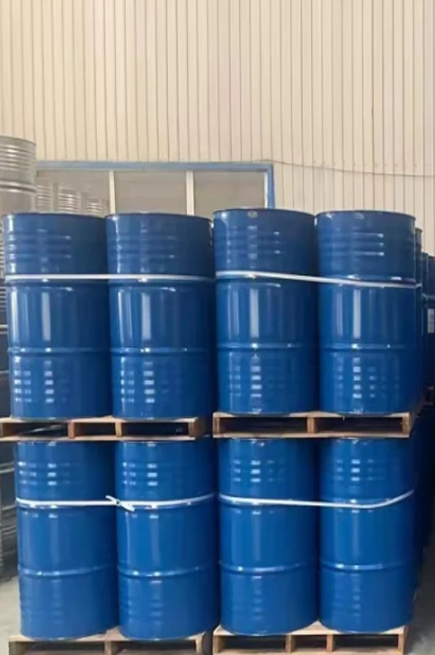
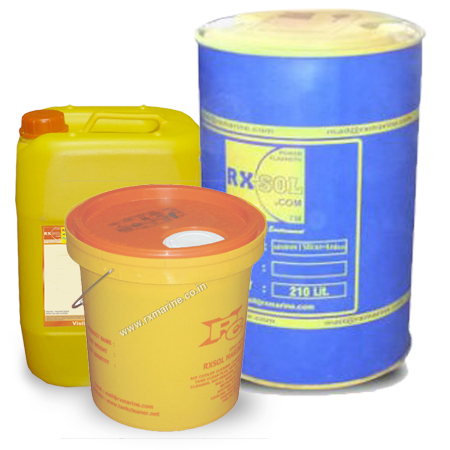
Packing : Available in 25 Litre, Pail, 210 Ltrs drums, 1,000 litre IBC’s capacity.

Active Matter

96-99

Generic / Chemical Name

Hydrotest Inhibitor

Supply Locations

Hydrotech 3670 Rx manufacturer supplier distributor in Mumbai, Kandla, Kolkata, Vizag, Chennai, India, Fujairah, Dubai, Sharjah, UAE, Gulf, Middle East, Muscat Oman, Kenya Africa. Get the best quality of Hydrotech 3670 Rx at a competitive price from us. We have ready stock of Hydrotech 3670 Rx in India, UAE Gulf, Oman, Kenya Africa. Contact us for bulk as well as small orders.

Safety Data (MSDS)

Product Name               Hydrotech 3670  RX
Part Number   RXSOL-44-8190-025 

Company Details:....

RX MARINE INTERNATIONAL
105, A wing , BSEL , TECH PARK.
VASHI ,NEW BOMBAY 400703 INDIA

Branch : Kandla, Mumbai , Chennai, Vizag, Kolkata, UAE , OMAN , CANADA and KENYA  

Phone +91 22 20871200 - 1400
Fax +91 22 27612100 :::AOH :0091 9821214367
Email mail@rxmarine.com
Website www.rxmraine.com

Mixtures

Hazardous components

Chemical Name CAS-No. EC-No. 
Registration
Number
Classification
(REGULATION
(EC) No
1272/2008)
Classification
(67/548/EEC)
Concentration [%] 
Quaternary ammonium
compounds, benzylC12-16-alkyldimethyl,
chlorides
68424-85-1 270-325-2  
Acute Tox. 4;
H302
Skin Corr. 1B;
H314
Aquatic Acute 1;
H400
Xn-C-N; R22-R34- R50 >= 10 - < 25
Ammonium
Hydrogensulphite
10192-30-0 233-469-7 2119537321- 49
Eye Irrit. 2; H319
EUH031
Xi; R31-R36 >= 10 - < 20
(2-methoxy methyl ethoxy)propanol
34590-94-8 252-104-2 01- 2119450011- 60     >= 1 - < 5
Dipropylene Glycol Monomethyl Ether 34590-94-8 252-104-2       >= 1 - < 10
Ethanediol 107-21-1 203-473-3       >= 1

For the full text of the H-Statements mentioned in this Section, see Section 16.

Classification of the substance or mixture

Classification (REGULATION (EC) No 1272/2008)   
Skin corrosion, Category 1B H314: Causes severe skin burns and eye damage.
Acute aquatic toxicity, Category 1 H400: Very toxic to aquatic life.
Classification (67/548/EEC, 1999/45/EC)  
Corrosive
R34: Causes burns.
R31: Contact with acids liberates toxic gas.

Label elements

Signal Word Warning

Hazard Statements

H314 Causes severe skin burns and eye damage.
H400 Very toxic to aquatic life.

Precautionary Statements

Prevention:
P273 Avoid release to the environment.
P280 Wear protective gloves/ protective clothing/ eye protection/ face protection.
Response:
P301 + P330 + P331 IF SWALLOWED: rinse mouth. Do NOT induce vomiting.
P303 + P361 + P353 IF ON SKIN (or hair): Remove/ Take off immediately all contaminated clothing. Rinse skin with water/ shower.
P305 + P351 + P338 IF IN EYES: Rinse cautiously with water for several minutes. Remove contact lenses, if present and easy to do. Continue rinsing.
P310 Immediately call a POISON CENTER or doctor/ physician.
Hazardous components which must be listed on the label Quaternary ammonium compounds, benzyl-C12-16-alkyldimethyl, chlorides
Additional Labelling EUH031 Contact with acids liberates toxic gas.
Other hazards Not Classified as PBT/vPvB by current EU criteria.

Description of first aid measures

If inhaled
Remove to fresh air.
Oxygen or artificial respiration if needed.
If symptoms persist, call a physician
In case of skin contact In case of contact, immediately flush skin with plenty of water for at least 15 minutes while removing contaminated clothing and shoes. Chemical burns must be treated promptly by a physician. Take victim immediately to hospital.
In case of eye contact
Immediately flush eyes for at least 15 minutes. Get medical attention.
Take victim immediately to hospital.
Continue rinsing eyes during transport to hospital.
Remove contact lenses.
In the case of contact with eyes, rinse immediately with plenty of water and seek medical advice.
If swallowed
Never give anything by mouth to an unconscious person.
Clean mouth with water and drink afterwards plenty of water.
Do NOT induce vomiting.
If swallowed, call a poison control centre or doctor immediately.
If vomiting occurs, the head should be kept low so that vomit does not enter the lungs.
Risks If you feel unwell, seek medical advice (show the label where possible).
Treatment No recommendation given, but first aid may still be required in case of accidental exposure, inhalation or ingestion of this chemical. If in doubt, GET MEDICAL ATTENTION PROMPTLY!

Extinguishing media

Suitable extinguishing media
Use extinguishing measures that are appropriate to local
circumstances and the surrounding environment.
Alcohol-resistant foam
Carbon dioxide (CO2)
Dry chemical
Aqueous film forming foam (AFFF).
Specific hazards during firefighting
Burning produces noxious and toxic fumes.
Hazardous decomposition products
In case of fire hazardous decomposition products may be
produced such as:
Carbon oxides.
nitrogen oxides (NOx).
sulphur oxides.
Advice for firefighters
 
Special protective equipment for firefighters
Use personal protective equipment.
In the event of fire, wear self-contained breathing apparatus.
Further information In the event of fire and/or explosion do not breathe fumes. Stay upwind/ keep distance from source. Use water spray to cool unopened containers. Do not allow run-off from fire fighting to enter drains or water courses.

Personal precautions, protective equipment and emergency procedures

Personal precautions
Refer to protective measures listed in sections 7 and 8.
Ensure adequate ventilation.
Use the indicated respiratory protection if the occupational exposure limit is exceeded and/or in case of product release (dust).
Avoid inhalation, ingestion and contact with skin and eyes.
Environmental precautions Do not allow contact with soil, surface or ground water.
Methods for cleaning up
Stop leak if safe to do so.
Contain spillage, and then collect with non-combustible absorbent material, (e.g. sand, earth, diatomaceous earth, vermiculite) and place in container for disposal according to
local / national regulations (see section 13).
Pick up and transfer to properly labelled containers.
Do not flush into surface water or sanitary sewer system.
Reference to other sections
For personal protection see section 8.
See section 13 for waste disposal information.

Precautions for safe handling

Advice on safe handling 
Avoid inhalation, ingestion and contact with skin and eyes.
Use only with adequate ventilation/personal protection.
In case of insufficient ventilation, wear suitable respiratory equipment.
Eliminate all ignition sources.
Ensure that eyewash stations and safety showers are close to the workstation location.
Smoking, eating and drinking should be prohibited in the application area.
Requirements for storage areas and containers
Keep container tightly closed in a dry and well-ventilated place.
Away from acids.
Away from alkalis.
Away from oxidizing materials.
Specific end uses
The identified uses of this product are detailed in section 1.2

Control parameters

Components CAS-No. Value type Control parameters Update Basis
(2- methoxymethylethox y)propanol  34590-94- 8 TWA
50 ppm
308 mg/m3
2000-06-16 2000/39/EC
Further information      skin: Identifies the possibility of significant uptake through the skin Indicative              
                                                                                    TWA     
50 ppm
308 mg/m3               
2005-04-06  GB EH40   
Further information      Sk: Can be absorbed through skin. The assigned substances are those for which there are concerns that dermal absorption will lead to systemic toxicity. Where no specific short-term exposure limit is listed, a figure three times the long-term exposure should be used
DNEL  
Ammonium hydrogensulphite  
End Use: Workers
Exposure routes: Inhalation.
Potential health effects: Long-term exposure, Systemic effects
Value: 234 mg/m3
End Use: Consumers
Exposure routes: Inhalation.
Potential health effects: Long-term exposure, Systemic effects
Value: 69 mg/m3
End Use: Consumers
Exposure routes: Ingestion
Potential health effects: Long-term exposure, Systemic effects
Value: 9 mg/kg bw/day
(2-methoxymethylethoxy)propa
nol
End Use: Workers
Exposure routes: Inhalation.
Potential health effects: Long-term exposure, Systemic effects
Value: 310 mg/m3
End Use: Workers
Exposure routes: Skin contact
Potential health effects: Long-term exposure, Systemic effects
Value: 65 mg/kg bw/day
End Use: Consumers
Exposure routes: Inhalation.
Potential health effects: Long-term exposure, Systemic effects
Value: 37.2 mg/m3
End Use: Consumers
Exposure routes: Skin contact
Potential health effects: Long-term exposure, Systemic effects
Value: 15 mg/kg bw/day
End Use: Consumers
Exposure routes: Ingestion
Potential health effects: Long-term exposure, Systemic effects
Value: 1.67 mg/kg bw/day
PNEC  
Ammonium hydrogensulphite
Fresh water
Value: 1.04 mg/l
Marine water
Value: 0.1 mg/l
Sewage Treatment Plant
Value: 78.6 mg/l
(2-methoxymethylethoxy)propa
nol
Fresh water
Value: 19 mg/l
Marine water
Value: 1.9 mg/l
Intermittent use/release
Value: 190 mg/l
Sewage Treatment Plant
Value: 4168 mg/l
Fresh water sediment
Value: 70.2 mg/kg
Marine sediment
Value: 7.02 mg/kg
Soil
Value: 2.74 mg/kg
Exposure controls
Engineering measures
Personal protective equipment
Respiratory protection
In case of insufficient ventilation, wear suitable respiratory equipment.
Respirator with filter for organic vapour
Hand protection
Wear protective gloves.
Rubber gloves.
Neoprene gloves.
Please observe the instructions regarding permeability and breakthrough time which are provided by the supplier of the gloves. Also take into consideration the specific local conditions under which the product is used, such as the danger of cuts, abrasion, and the contact time.
Breakthrough time is not determined for the product. Change gloves often!
Use a high fat protective cream after cleaning skin.
Eye protection
Tightly fitting safety goggles.
Face-shield.
Do not wear contact lenses.
Skin and body protection Chemical resistant apron. impervious clothing
Hygiene measures
Avoid contact with skin, eyes and clothing.
Wash hands before breaks and at the end of workday.
Wash hands before eating, drinking, or smoking.
Handle in accordance with good industrial hygiene and safety practice.
Environmental exposure controls  
General advice Do not allow contact with soil, surface or ground water.

Appearance Liquid
Colour Colorless to light yellow.
Odor Pungent
Odour Threshold Not determined
pH 4 - 6
Melting point Not determined
Boiling point Not applicable
Flash point Not applicable
Evaporation rate Not applicable
Flammability (solid, gas) Not determined
Lower explosion limit Not determined
Upper explosion limit Not determined
Vapour pressure Not determined
Relative vapour density No data available
Relative density 1.045 - 1.075, 20 °C
Solubility (qualitative) Completely miscible, Water
Partition coefficient: noctanol/water Not determined          
Autoignition temperature  Not determined
Thermal decomposition Not determined
Viscosity, dynamic < 20 mPa.s, 20 °C
Viscosity, kinematic 10 mm2/s, 40 °C
Explosive properties Not applicable
Oxidizing properties Not determined

Reactivity                        No dangerous reaction known under conditions of normal use.
Chemical stability Stable under normal conditions. 
Possibility of hazardous reactions  
Hazardous reactions Not relevant
Conditions to avoid
Oxidizing agents
Heat, flames and sparks.
Incompatible materials  
Materials to avoid
Strong acids.
Strong bases.
Strong oxidizing agents.
Hazardous decomposition products
In case of fire hazardous decomposition products may be
produced such as:
Carbon oxides.
nitrogen oxides (NOx).
sulphur oxides.

Information on toxicological effects

Product  
Acute oral toxicity Acute toxicity estimate: 2,130 mg/kg, Calculation method
Further information No data available
Components  
Quaternary ammonium compounds, benzyl-C12-16-alkyldimethyl, chlorides :  
Acute oral toxicity
LD50: 426 mg/kg, rat
LD50: 919 mg/kg, mouse
Ammonium hydrogensulphite   
Acute oral toxicity LD50: 3,000 mg/kg, rat
(2-methoxymethylethoxy)propanol   
Acute oral toxicity
LD50: 5,214 mg/kg, rabbit
LD50: 5,350 mg/kg, rat

Toxicity  
Product  
Toxicity to fish LC50: 3.09 mg/l, 96 h, Flatfish, flounder, Marine water, OSPARCOM 1995, GLP: yes, Test substance: Component 
Toxicity to daphnia and other
aquatic invertebrates.
EC50: 5.66 mg/l, 48 h, Acartia tonsa, Marine water,
ISO/TC147/SC5/WG2(1990), GLP: yes
Toxicity to algae
EC50: 0.18 mg/l, 72 h, Skeletonema costatum, Marine water,
ISO 10253, GLP: yes
Persistence and degradability  
Product  
Biodegradability No data available
Physico-chemical removability No data available
Bioaccumulative potential  
Product  
Bioaccumulation No data available
Mobility in soil No data available
Results of PBT and vPvB assessment Not Classified as PBT/vPvB by current EU criteria.
Other adverse effects  
Product  
Additional ecological information Very toxic to aquatic life.

Waste treatment Method              
Product
Where possible recycling is preferred to disposal or incineration.
If recycling is not practicable, dispose of in compliance with local regulations.
Waste codes should be assigned by the user, preferably in discussion with the waste disposal authorities.

UN number  
ADR Not Regulated
IMDG Not Regulated
IATA Not Reguated
UN proper shipping name 
 
ADR Hydrotech 3670  RX Oxygen Scavenger Biocide and Corrosion Inhibitor
IMDG Hydrotech 3670  RX Oxygen Scavenger Biocide and Corrosion Inhibitor
IATA Hydrotech 3670  RX Oxygen Scavenger Biocide and Corrosion Inhibitor
Transport hazard class   
ADR 8
IMDG 8
IATA 8
Packaging group  
ADR  
Packaging group III
Classification Code C3
Hazard identification No 80
Labels 8
Tunnel restriction code (E), full load, tank-container
IMDG  
Packaging group III
Labels 8
EmS Number F-A, S-B
IATA  
Packing instruction (cargo aircraft) 855
Packaging group III
Labels 8
Environmental hazards  
ADR  
Environmentally hazardous ND
IMDG  
Marine pollutant ND
IATA  
Environmentally hazardous Yes
Special precautions for user Not relevant 
Transport in bulk according to Annex II of MARPOL 73/78 and the IBC Code This material may require an IBC code if carried according to the “International Code for the Construction and Equipment of Ships Carrying Dangerous Chemicals in BuIk. Please contact Champion Technologies Product Stewardship Team if you need further information.

Safety, health and environmental regulations/legislation specific for the substance or mixture This material safety data sheet complies with the requirements of Regulation (EC) No. 1907/2006.
Notification status  
US.TSCA On TSCA Inventory
DSL All components of this product are on the Canadian DSL list.
AICS On the inventory, or in compliance with the inventory
NZIoC On the inventory, or in compliance with the inventory
Chemical Safety Assessment No chemical safety assessment has been carried out.

Other Information

The information above is believed to be accurate and represents the  best information   currently    available  to us.  However,   we   make no warranty of merchantability or any other warranty, express or implied, with respect to such information, and  weassume  no liability resulting from its use. Users should make  their  own  investigations  to determine the suitability of the information for their particular purposes. In no event shall be liable for any claims, losses, or damages of any third party or for lost profits or any special, indirect, incidental, consequential or exemplary damages, howsoever arising, even if Rxsol Chemo Pharma International / Rx Marine International  has been advised of the possibility of such damages.

DISCLAIMER OF LIABILITY :The information in this SDS was obtained from sources which we believe are reliable. However, the information is provided without any warranty, express or implied, regarding its correctness. The conditions or methods of handling, storage, use or disposal of the product are beyond our control and may be beyond our knowledge. For this and other reasons, we do not assume responsibility and expressly disclaim liability for loss, damage or expense arising out of or in any way connected with the handling, storage, use or disposal of the product. This MSDS was prepared and is to be used only for this product. If the product is used as a component in another product, this MSDS information may not be applicable.

top