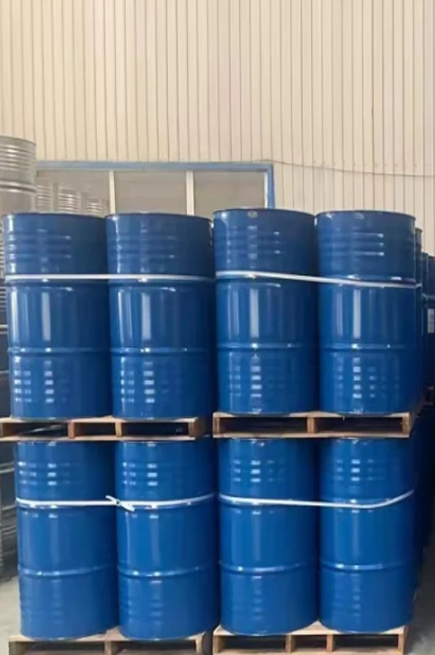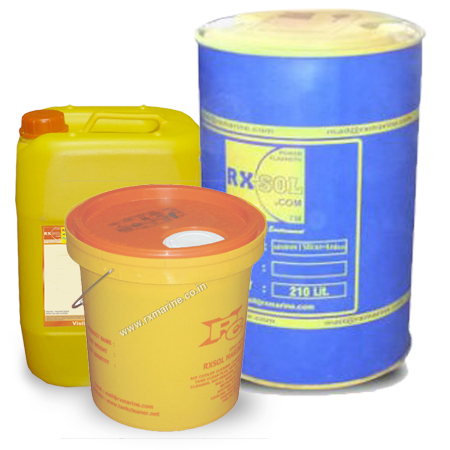
Tri Sodium Phosphate Anhydrous TSP

TRI SODIUM PHOSPHATE TSP Powder ANHYDROUS

SKU: RXSOL-15-1522-020 Category:

Description

Tri-sodium phosphate TSP Anhydrous is the inorganic compound . It is a white, granular or crystalline solid, highly soluble in water producing an alkaline solution. Tri-sodium phosphate is manufactured by neutralization of phosphoric acid solution using sodium hydroxides along with sodium carbonate.






Product Details

Application

Used in detergent mixtures, soaps, removing boiler scales, textiles processing, clarifing sugar, paper, water softner, leather tanning, laundering, paint remover,emulsifing fats oils, dairy food processing equipments, metal industrial cleaners.
 

The most common use of Tri-sodium Phosphate is in cleaning agents.
Tri-sodium Phosphate is used in photographic developers, in clarifying sugar and also in removing boiler scale.
TSP is also used in manufacturing paper, in softening water and in tanning leather

Dosage & Procedure

Formulation:
H3PO4 + 3NaOH = Na3PO4 + 3H2O
2H3PO4 + 3Na2CO3 = 2Na3PO4 + 3CO2 + 3H2O
 
Grades We Manufacture :
• Tri-sodium Phosphate Anhydrous Industrial Grade
• Tri-sodium Phosphate Anhydrous Pure Grade

Technical Specifications


Property Description

Specification

Purity, %

99.1 min

Sulphate, %

0.5 max

Insoluble in water, %

0.05 max

P2O5 %

41 min

CO3 %

0.40 max

NaOH %

2.87 max

Arsenic, %

0.005 max

Iron %

0.01 max

Chloride,%

0.7 max

Fluoride, %

0.003 max

Methyl Orange

16.5-19.0

Notes & Precautions

SYNONYMS :- Trisodium orthophosphate , Sodium phosphate tribasic , Sodium orthophosphate.
 
Cas No :- 7758-16-9
Chemical Formula :- Na3po4
Molecular Weight :- 163.94
Physical Form :- White Free Flowing Powder.
Solubility :- Soluble In Water.
Ph Of 1% Soln :- 11.8 - 12.2
P2o5 :- 42.0 - 43.5 %

Active Matter

42

Generic / Chemical Name

Anhydrous TSP

Supply Locations

Tri Sodium Phosphate Anhydrous TSP manufacturer, exporter and supplier in India, UAE - Middle East, Oman, Nairobi Kenya Africa. Tri Sodium Phosphate Anhydrous TSP stockist and supplier in Mumbai, Fujairah, Dubai, Ajman, Abudhabi, Sharjah, Jerf Ajman, UAE GULF, Gandhidham, Kolkata, Chennai, Visakhapatnam, Surat Gujrat, Sohar Barka Oman, Sudan, Yemen

Safety Data (MSDS)

Product Name Tri sodium phosphate anhydrous TSP
Product Code RXSOL-15-1522-020

Company Details:

RX MARINE INTERNATIONAL
105, A wing , BSEL , TECH PARK.
VASHI ,NEW BOMBAY 400703 INDIA

Stock Point : Mumbai, Kandla, Chennai, Kolkata, Visakhpatnam, Fujairah, Muscat. Nairobi

Phone +91 22 27815541 / 42
Fax +91 22 2781 1318 :::AOH :0091 9821214367
Email mail@rxmarine.com

Chemical Name

Percent

Value

Cas No

TSPP Anhydrous,Min.

%

99.9

7601-54-9

Synonym (s)...................……………...Trisodium orthophosphate , Sodium phosphate tribasic , Sodium orthophosphate.

Potential Health Effects:-

Inhalation

Material is irritating to mucous membranes and upper respiratory tract. Exposure can cause coughing, chest pains and difficulty breathing.

Ingestion

May cause burns of the mouth, throat and stomach. Aspiration in to the lungs may occur during ingestion or vomiting, resulting in lung injury.

Symptoms may include bleeding, vomiting diarrhea, fall in blood pressure. Damage may appears days after exposure.

Skin Contact

Material is irritating to mucous membranes and upper respiratory tract. Exposure can cause coughing, chest pains and difficulty breathing.

Eye  Contact

May cause eye burns. May cause permanent corneal injury. May cause severe eye irritation. Corrosive! Causes irritation of eyes, and with greater exposures it can cause burns that may result in permanent impairment of vision, even blindness.

Inhalation

Remove to fresh air. If not breathing, give artificial respiration. If breathing is difficult, give oxygen. Call a physician.

Ingestion

Do Not Induce Vomiting! Give large quantities of water or milk if available. Never give anything by mouth to an unconscious person. Get medical attention immediately.

Skin Contact

Immediately flush skin with plenty of water for at least 15 minutes while removing contaminated clothing and shoes. Call a physician, immediately. Wash clothing before reuse.

Eye Contact

Immediately flush eyes with plenty of water for at least 15 minutes, lifting lower and upper eyelids occasionally. Get medical attention immediately.


Fire

Not considered to be a fire hazard. Hot or molten material can react violently with water. Can react with certain metals, such as aluminum, to generate flammable hydrogen gas.

Explosion

Not considered to be an explosion hazard.

Fire Extinguishing Media

Use any means suitable for extinguishing surrounding fire. Adding water to caustic solution generates large amounts of heat.

Ventilate area of leak or spill. Keep unnecessary and unprotected people away from area of spill. Wear appropriate personal protective equipment as specified in Section 8. Spills: Pick up and place in a suitable container for reclamation or disposal, using a method that does not generate dust. Do not flush caustic residues to the sewer. Residues from spills can be diluted with water, neutralized with dilute acid such as acetic, hydrochloric or sulfuric. Absorb neutralized caustic residue on clay, vermiculite or other inert substance and package in a suitable container for disposal.

Keep in a tightly closed container. Protect from physical damage. Store in a cool, dry,ventilated area away from sources of heat, moisture and incompatibilities. Always add the caustic to water while stirring; never the reverse. Containers of this material may be hazardous when empty since they retain product residues (dust, solids); observe all warnings and precautions listed for the product. Do not store with aluminum or magnesium. Do not mix with acids or organic materials.


Airborne Exposure Limits

OSHA

OSHA Permissible Exposure Limit (PEL)

2 mg/m3 Ceiling – ACGIH

Threshold Limit Value (TLV)

2 mg/m3 Ceiling

Ventilation System

A system of local and/or general exhaust is recommended to keep employee exposures below the Airborne Exposure Limits. Local exhaust ventilation is generally preferred because it can control the emissions of the contaminant at its source, preventing dispersion of it into the general work area. Please refer to the ACGIH document, Industrial Ventilation, A Manual of Recomm-ended Practices, most recent edition, for details.

Personal Respirators

If the exposure limit is exceeded, a half-face dust/mist respirator may be worn for up to ten times the exposure limit or the maximum use concentration specified by the appropriate regulatory agency or respirator supplier, whichever is lowest. A full-face piece dust/mist respirator may be worn up to 50 times the exposure limit, or the maximum use concentration specified by the appropriate regulatory agency, or respirator supplier, whichever is lowest. For emergencies or instances where the exposure levels are not known, use a full-face piece positive-pressure, air-supplied respirator.

WARNING

Air-purifying respirators do not protect workers in oxygen-deficient atmospheres.

Skin Protection                     

Wear impervious protective clothing, including boots, gloves, lab coat, apron or coveralls, as appropriate, to prevent skin contact.

Eye Protection

Use chemical safety goggles and/or a full face shield where splashing is possible. Maintain eye wash fountain and quick-drench facilities in work area.

Appearance

Clear to opeque

Odor

Odorless

Solubility

100%

pH

11.8 (1% Solution @ 25oC)

% Volatiles by volume @ 21C (70F)

0

Boiling Point

1390C(2534F)

Melting Point

318C(604 F)

Vapor Pressure (mm Hg)

Negligible

Evoporation Rate (BuAc = 1)

No information found

Molecular Weight 163.94

Stability

Stable under ordinary conditions of use and storage. Very hygroscopic. Can slowly pick up moisture from air and react with carbon dioxide from air to form sodium carbonate.

Hazardous Decomposition Products

Sodium Hydroxide. Decomposition by reaction with certain metals releases flammable and explosive hydrogen gas.Hazardous

Hazardous  Polymerization

Will not occur.

Incompatibilities

Contact with water, acids, flammable liquids, and organic halogen compounds, especially trichloroethylene, may cause fire or explosion. Contact with nitromethane and other similar nitro compounds causes formation of shock-sensitive salts. Contact with metals such as aluminum, tin, and zinc causes formation of flammable hydrogen gas.

Conditions to Avoid

Moisture, dusting and incompatibles.

Skin Irritation 

Irritant wash with soap water

Eye Irritat 

Moderate irritant , flush with copious amounts of water

Sensitization

Not Sensitizing .

(All above information as per data available with us)

Comment

Not applicable

Ecotoxicity 

Fish Toxicity..................……………... EC50(96hr, Mosquitofish): 151mg/L Biodegradability.............……….….... The resulting phosphate may persist indefinitely or incorporate into biological systems. 

Water hazard class 2 (self-assessment)

Hazardous for water.

Environmental Effects Not available

Do not allow product to reach ground water, water bodies or sewage system. Danger to drinking water if even small quantities leak into soil.

This material must be disposed with local national regulations. Product Recommendation ( Recommended cleaning agent: water ) Can be burnt under adherence to the necessary technical regulations. Disposal must be made according to official regulations.Can be reused or recycled after cleaning .
 

Transport/Additional information

TDG Classification 
Class……………..………………..….... 9 
Group...............…………….......……... III 
PIN Number.................……..……….... UN3077 
Other…………………………………..... Secure containers (full a

• Irritating to eyes and skin.
• Safety phrases
2 Keep out reach of children
If swallowed, seek medical attention immediately
22  Harmful if swallowed
26  In case of contact with eyes, rinse immediately with plenty of water and
seek medical attention.
23  Do not Breathe
27  After contact with skin, wash immediately with plenty of water and soap and rinse thoroughly.
41  Risk of serious damage to eyes
• National regulations

These data are based on our present knowledge. However, they shall not constitute a guarantee for any specific product features and shall not establish a legally valid contractual relationship.Department issuing data specification sheet Environment protection department.Note : No Enviromental Problems Are Expected If The Product Is Handled Correctly.

DISCLAIMER OF LIABILITY :The information in this SDS was obtained from sources which we believe are reliable. However, the information is provided without any warranty, express or implied, regarding its correctness. The conditions or methods of handling, storage, use or disposal of the product are beyond our control and may be beyond our knowledge. For this and other reasons, we do not assume responsibility and expressly disclaim liability for loss, damage or expense arising out of or in any way connected with the handling, storage, use or disposal of the product. This MSDS was prepared and is to be used only for this product. If the product is used as a component in another product, this MSDS information may not be applicable.

top