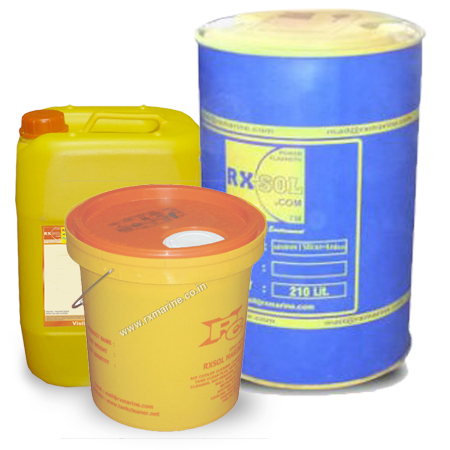
Chelating Agent Liquid

Concentrated Chelating Agent Liquid

SKU: RXSOL-81-6604-220 Category:

Description

Chelating Agent Liquid EDTA is a concentrated aqueous solution of ethylenediaminetetraacetic acid salt designed to bind and control dissolved metal ions. It forms stable, water-soluble complexes with calcium, magnesium, iron, copper, manganese, zinc, and other multivalent metal ions.

The product helps prevent metal precipitation, scale formation, unwanted discoloration, oxidation reactions, and interference caused by hardness or trace-metal contamination. It is suitable for use in industrial cleaning, water treatment, oilfield operations, detergents, textile processing, pulp and paper, metal treatment, and general chemical formulations.







Product Details

Application

manufacturing, EDTA is used to improve stability of some pharmaceutical products, detergents, liquid soaps, shampoos, agricultural chemical sprays, contact lens cleaners and cosmetics. It is also used in certain blood collection tubes used by medical laboratories.

Dosage & Procedure

Following Chelation Capacity of RXSOL Chelating Agen Liquid:

Calcium-Chelating Capacity Approximately 50-55 mg CaCO3 Calcium Carbonate per gram of product
Iron-Chelating Capacity Approximately 18-22 mg Fe3+ Ferric per gram of product

Technical Specifications

Property Typical Specification
Appearance Clear, colourless to pale yellow liquid
Active EDTA Content 20.0 ± 1.0% w/w
Chemical Type Aqueous EDTA salt solution
Odour Mild characteristic odour
pH at 25°C 7.0-10.5
Specific Gravity at 25°C 1.15-1.18
Solubility in Water Completely soluble
Freezing Point Below 0°C, formulation dependent
Flash Point Not applicable
Flammability Non-flammable
Ionic Character Anionic
Shelf Life 24 months under recommended storage conditions

Notes & Precautions

Mechanism of Chelation of RXSOL Chelating Agent Liquid

EDTA is a multifunctional chelating molecule that surrounds and binds dissolved metal ions through several coordination sites. Once the metal ion is complexed, it remains in a stable, water-soluble form and is less likely to react with other chemicals or precipitate as scale.

Metal ion + EDTA = Stable metal–EDTA complex

The stability of the chelate depends on the type of metal ion, solution pH, temperature, competing ions, and concentration of EDTA.

Generic / Chemical Name

Chelating Liquid

Safety Data (MSDS)

Product Name               Chelating Agent Liquid      
Part Number   RXSOL-81-6604-220

Company Details:

RX MARINE INTERNATIONAL
105, A wing , BSEL , TECH PARK.
VASHI ,NEW BOMBAY 400703 INDIA

Branch : Kandla, Mumbai , Chennai, Vizag, Kolkata, UAE , OMAN , CANADA and KENYA  

Phone +91 22 20871200 - 1400
Fax +91 22 27612100 :::AOH :0091 9821214367
Email mail@rxmarine.com
Website www.rxmraine.com

Chemical  Name                                         CAS                    EC number                  Weight                 
Ethylene Diamine Tetra Acetic Acid      6381-92-6 -- 20-25 %                             
Water 7732-73-2 231-791-2 75-80 %

Signal Word  None.
Hazard Statements H272 May intensify fire; oxidizer. H302 Harmful if swallowed. H319 Causes serious eye irritation. H335 May cause respiratory irritation. H410 Very toxic to aquatic life with long lasting effects.
Precautionary statements  
P210 Keep away from heat, hot surfaces, sparks, open flames and other ignition sources. No smoking. P220 Keep away from clothing and other combustible materials. P261 Avoid breathing dust/ fume/ gas/ mist/ vapors/ spray. P273 Avoid release to the environment. P301 + P312 IF SWALLOWED: Call a POISON CENTER/ doctor if you feel unwell. P305 + P351 + P338 IF IN EYES: Rinse cautiously with water for several minutes. Remove contact lenses, if present and easy to do. Continue rinsing. 
Classification of the substance or mixture Not a hazardous substance or mixture according to Regulation (EC) No. 1272/2008.
Supplemental Hazard      Statements None.
Other hazards  The substance does not fulfill the criteria to be identified as PBT substance or vPvB substance according to Annex XIII of Regulation REACH.

General advice None.
If inhaled  Not expected to require first aid. If necessary, remove to fresh air.
Eye Contact May cause slight irritation.
Swallowed Dilute with water or milk. Call a physician if necessary.
Skin Contact May cause slight irritation.
Inhalation Remove patient to fresh air, keep warm and at rest and get medical assistance in necessary. 
Ingestion Rinse mouth with water. Do not induce vomiting. Never give anything by mouth to an unconscious person. Call a doctor or Poison Control Center immediately.
Most important symptoms and effects, both acute and delaye Wash areas of contact with water. EYE CONTACT: May cause slight irritation. SKIN CONTACT: May cause slight irritation.
Indication of any immediate medical attention and special treatment needed  Not expected to require special treatment.

Flammability                                                  May be combustible at high temperature.
Suitable extinguishing media Use any means suitable for extinguishing surrounding fire.
Unsuitable extinguishing media Water Foam
Special hazards arising from the substance or mixture  Not considered to be a fire or explosion hazard.
Further information No data available
Hazardous combustion
products
Fire may cause the evolution of Sulphur oxides, nitrogen oxides.
Advice for firefighters Use protective clothing and breathing equipment appropriate for the surrounding fire.
Protective Equipment Use personal protective equipment.
Specific Hazards Arising from the Chemical Has a fire-promoting effect due to the release of oxygen.
Ambient fire may liberate hazardous vapours.

Personal precautions, protective equipment and emergency procedures Wear appropriate PPE for the size and nature of the spill. As a general rule, wear safety glasses and gloves.
Spillage Oxidizing material. Stop leak if without risk. Avoid contact with a combustible material (wood, paper, oil, clothing...). Keep substance damp using water spray. Do not touch spilled material. Prevent entry into sewers, basements or confined areas dike if needed. Eliminate all ignition sources. Call for assistance on disposal.
Personal Protection Advice for non-emergency personnel: Avoid inhalation of dusts. Evacuate the danger area, observe emergency procedures, consult an expert. Advice for emergency responders: Protective equipment see section 8.
Enviromental Precaution Prevent entry to sewers and public waters. Notify authorities if product enters sewers or public waters.
Methods and materials for
containment and cleaning
Absorb with suitable material and treat as normal refuse. Small amounts of the liquid may be flushed to the drain with excess water. Always dispose of in accordance with local regulations.

Advice on safe handling  Work under hood. Do not inhale substance/mixture. Avoid generation of vapours/aerosols.
Advice on protection against fire and explosion Keep away from open flames, hot surfaces and sources of ignition.
Incompatible materials  Keep away from alkalis, strong oxidizing agents and metals. Provide containment walls of adequate capacity to hold any accidental spills. 
Hygiene measures Change contaminated clothing. Preventive skin protection recommended. Wash hands after working with substance. For precautions see section 2.2.
Precautions for     safe handling Wash hands and other exposed areas with mild soap and water before eat, drink or smoke and when leaving work. 
Conditions for safe storage, including any incompatibilities  Keep only in the original container in a cool, well ventilated place. Keep container closed when not in use.
Storage conditions Tightly closed. Away from combustible materials and sources of ignition and heat. Do not store near combustible materials. Do not store near acids. Store under inert gas.
Storage class Strong bases, Strong acids, Sources of ignition, Direct sunlight.
Specific end     use(s) None.
Advice on general occupational hygiene Advice on safe handling Observe label precautions. Change contaminated clothing. Wash hands after working with substance.
Requirements for storage  Keep in cool and store under shade. 

Exposure controls  No specific additional engineering controls are required. Provide good natural or artificial ventilation. 
Engineering Control General industrial hygiene practice.
Eye/face protection Use equipment for eye protection tested and approved under appropriate government standards such as NIOSH (US) or EN 166(EU).
Body Protection Impervious clothing. The type of protective equipment must be selected according to the concentration and amount of the dangerous substance at the specific workplace.
Skin protection Handle with gloves. Gloves must be inspected prior to use. Use proper glove removal technique (without touching glove's outer surface) to avoid skin contact with this product. Dispose of contaminated gloves after use in accordance with applicable laws and good laboratory practices. Wash and dry hands.
Respiratory protection Respiratory protection not required. For nuisance exposures use type OV/AG (US) or type ABEK (EU EN 14387) respirator cartridges. Use respirators and components tested and approved under appropriate government standards such as NIOSH (US) or CEN (EU).
Other Protection      Measure Handle in accordance with good industrial hygiene and safety practice.
Control of    environmental exposure Do not let product enter drains.
Thermal hazards No data available

                                                                gloves                suit                

                                                                   Gloves                       Suit       

Physical state Liquid
Colour Colourless
Odour No data available
Odor Threshold Not Applicable
pH No data available
Melting Point No data available                                                             
Boiling Point No data available
Flash Point No data available
Evaporation Rate Not Applicable
Flammability (solid, gas) No data available
Explosive limits No Data Available
Upper flammability or explosive limits No data available
Autoignition temperature No data available
Decomposition temperature  No data available
Relative density 1.17-1.25
Density No data available
Vapour Density No data available
Freezing point  No data available 
Specific Gravity No data available 
Partition coefficient No data available  
Explosive properties No data available 
Solubility No data available
Ignition temperature No information available.
Particle characteristics No data available 

Reactivity                        No data available
Stability Stable under recommended storage conditions.
Possibility of hazardous reactions No data available
Conditions to avoid Direct sunlight, Extremely high or low temperatures.                                            
Incompatible materials Copper, aluminum and oxidizing agents.
Hazardous Polymerization Fumes, Carbon monoxide, Carbon dioxide. 

Acute toxicity  No data available
Skin corrosion/irritation No data available
Serious eye      damage/eye       irritation  Eyes - Rabbit Result: Eye irritation (Draize Test)
Respiratory or skin    sensitization  No data available
Toxic Effects on         Human May cause damage to the following organs: upper respiratory tract. Other Toxic Effects on Humans: Hazardous in case of skin contact (irritant, sensitizer), of ingestion, of inhalation (lung irritant, lung sensitizer).
Carcinogenicity No component of this product present at levels greater than or equal to 0.1% is identified as probable, possible or confirmed human carcinogen by IARC.
Germ cell        mutagenicity  No data available
Reproductive toxicity  May damage the unborn child. May damage fertility.
Specific target organ toxicity - single      exposure May cause respiratory irritation.
Special Remarks on other Toxi  Effects on Humans Acute Potential Health Effects: Skin: Causes skin irritation. May cause skin sensitization, an allergic reation, which becomes evident upon re-exposure to this material. Eyes: Causes eye irritation. Ingestion: Causes gastrointestinal (digestive) tract irritation with nausea, vomiting, and diarrhea. May be harmful if swallowed. Inhalation: Causes respiratory tract irritation. May cause chemical pneumonitis and pulmonary edema, inflammation, edema of bronchi and larynx. Chronic Potential Health Effects: Repeated or prolonged skin exposure may cause allergic reactions in sensitive individuals. Repeated or prolonged exposure by inhalation may affect respiration and metabolism.
Endocrine disrupting           properties RTECS: Not available

Persistence and degradability No data available
Toxicity to fish  LC50 - Oncorhynchus mykiss (rainbow trout) - 0,08 mg/l - 96,0 h
Toxicity to daphnia and other aquatic invertebrates EC50 - Daphnia magna (Water flea) - 0,17 mg/l - 48 h
Toxicity to algae No data available
Toxicity to bacteria No data available
Mobility in soil No Information available
Results of PBT and vPvB assessment The substance does not fulfill the criteria to be identified as PBT substance or vPvB substance according to Annex XIII of Regulation REACH.
Endocrine disrupting       properties The substance/mixture does not contain components considered to have endocrine disrupting properties according to REACH Article 57(f) or Commission Delegated regulation (EU) 2017/2100 or Commission Regulation (EU) 2018/605 at levels of 0.1% or higher.
Other adverse effects Avoid release to the environment.

Disposal methods Dispose of as unused product.
Waste treatment      Method Avoid release to the environment. Dispose in a safe manner in accordance with local/national regulations.

UN number ADR/RID:                   IMDG:                          IATA:
UN proper shipping name  ADR/RID:                   IMDG:                           IATA:
Transport hazard class(es)      ADR/RID:                    IMDG:                            IATA: 
Packaging group ADR/RID:                      IMDG:                           IATA: 
Environmental hazards ADR/RID:   yes              IMDG:    yes                  IATA: yes
Special precautions for user Tunnel restriction code : (C/E) 
Further information Not classified as dangerous in the meaning of transport regulations.
Transport in bulk according to IMOinstruments No data available

Inventory status Components are on the following inventories: Polymaleic acid: - US TSCA, Canadian DSL, EU EINECS, Australian AICS, Korean, Philippine PICCS and Chinese Xi irritant R 36/38 Irritant to eyes & skin R 41 Risk of serious damage to eyes S24/25 Avoid contact with skin and eyes S26/28 In case of contact eyes & skin, rinse with plenty water and seek medical advice Section 312/313: Not listed. Not listed under California proposition 65. 
Safety, health and environmental regulations/legislation specific for the substance or mixture This safety datasheet complies with the requirements of Regulation (EC) No. 1907/2006.
National legislation Seveso III: Directive 2012/18/EU of the European Parliament and of the Council on the control of major-accident hazards involving dangerous substances. : OXIDISING LIQUIDS AND SOLIDS : ENVIRONMENTAL HAZARDS
Other regulations Observe work restrictions regarding maternity protection in accordance to Dir 92/85/EEC or stricter national regulations where applicable. Take note of Dir 94/33/EC on the protection of young people at work.
Chemical Safety Assessment For this product a chemical safety assessment was not carried out.

Other Information

The information above is believed to be accurate and represents the  best information   currently    available  to us.  However,   we   make no warranty of merchantability or any other warranty, express or implied, with respect to such information, and  weassume  no liability resulting from its use. Users should make  their  own  investigations  to determine the suitability of the information for their particular purposes. In no event shall be liable for any claims, losses, or damages of any third party or for lost profits or any special, indirect, incidental, consequential or exemplary damages, howsoever arising, even if Rx Marine International  has been advised of the possibility of such damages.

top