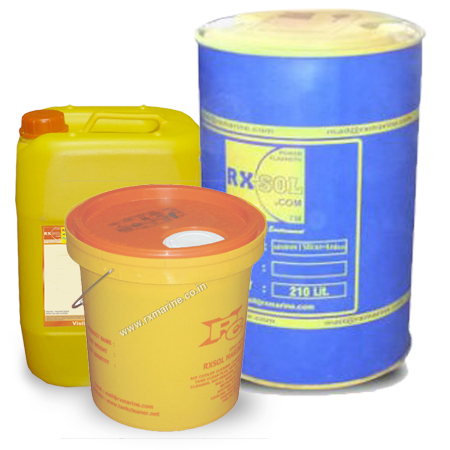
Sea Chest Antifoulant Aquasperse

Biocide against sea growth in inlets, pipelines and heat exchangers

SKU: RXSOL-16-1599-020 Category:

Description

RXSOL SEA CHEST ANTIFOULANT is a specialized liquid treatment developed to help control marine growth in sea chests, seawater cooling lines, strainers, filter boxes and associated heat exchange systems. It is designed for use in marine seawater circuits where fouling by algae, shellfish, slime and other marine organisms can reduce flow, impair heat transfer efficiency and increase maintenance requirements.

The product forms a protective conditioning effect within the system, helping reduce the attachment and development of marine growth while supporting cleaner internal surfaces and improved operational reliability. Regular use helps maintain circulation efficiency, reduce blockage risk and minimize unplanned downtime.







Product Details

Application

RXSOL SEA CHEST ANTIFOULANT is recommended for:
  • Sea chests
  • Seawater cooling systems
  • Strainer boxes
  • Filter boxes
  • Seawater pipe lines
  • Heat exchangers
  • Central cooling systems
  • Static or flowing seawater systems

Dosage & Procedure

Ensure all systems are completely free of marine growth prior to applying AQUASPERSE RXSOL. Where required, pre-clean using DESCALING LIQUID EXTRA or RXSOL Safe Acid DESCALEX POWDER. Marine organisms require a surface to anchor; if existing growth is not removed beforehand, it will continue to provide a base for further attachment even after AQUASPERSE RXSOL Sea Chest Antifoulant dosing.

SEAWATER COOLING SYSTEMS
Inject AQUASPERSE into the sea chests using dosing equipment once every two days for a duration of one hour, adjusted according to the seawater flow rate of the system. In harbour conditions or areas with high shellfish activity, increase dosing frequency to once daily.

A concentration of 3 ppm AQUASPERSE RXSOL is adequate for fouling prevention. This corresponds to a dosage of 0.3 litres per 100 tons per hour of seawater flow.

DEEP SEA VESSELS
Dose RXSOL AQUASPERSE into the suction box or strainers at a rate of 0.3 litres per 100 tons of flow, applied over one hour every 48 hours.

COASTAL VESSELS
Meter AQUASPERSE into the suction boxes or strainers at 0.3 litres per 100 tons of seawater flow, distributed over a 24-hour period.

Example:
For a circulating pump capacity of 250 TPH, the required dosage is:
0.3 × 2.5 = 0.75 litres of AQUASPERSE for one hour.

Technical Specifications

Parameter Value
Appearance Clear to pale yellow liquid
Odor Mild characteristic
Specific Gravity 1.05 – 1.15
pH 4.0 – 6.0
Solubility Completely miscible in seawater
Flash Point Non-flammable
Active Ingredient Marine-grade broad-spectrum biocide blend
Stability Stable under normal storage

Notes & Precautions

Features and benefits of using RXSOL Sea Chest Antifoulant

  • Helps prevent fouling caused by marine growth
  • Supports cleaner seawater cooling circuits
  • Helps maintain heat transfer efficiency
  • Reduces blockage in strainers and seawater lines
  • Can lower cleaning frequency and maintenance downtime
  • Suitable for routine preventive treatment
  • Easy-to-dose liquid formulation
  • Suitable for deep sea and coastal vessel operations
  • Strong broad-spectrum biocidal activity against bacteria, algae, fungi, and marine microorganisms
  • Prevents blockages in sea water inlets, strainers, filters, and pipelines
  • Protects heat exchangers and improves efficiency by eliminating biofilm
  • Reduces maintenance downtime and cleaning frequency
  • Compatible with common metals found in marine systems
  • Fast acting, suitable for both shock dosing and continuous dosing
  • Non-foaming and stable in sea water salinity

Active Matter

80

Generic / Chemical Name

Sea Chest Organic Growth Controller

Supply Locations

Sea Growth Treatment Biocide manufacturer supplier in Mumbai, Kandla, Kolkata, Chennai Vizag. Sea Growth Treatment Biocide manufacturer supplier in Fujairah, Dubai, Jebel Ali, UAE. Sea Growth Treatment Biocide manufacturer supplier in Muscat, Sohar, Duqm, OMAN.

Safety Data (MSDS)

Product Name Sea Growth Treatment SG
Part Number RXSOL-16-1599-020

Company Details:
RX MARINE INTERNATIONAL
105, A wing , BSEL , TECH PARK.

VASHI ,NEW BOMBAY 400703 INDIA

Branch : Kandla, Mumbai, Chennai, Kakinada, Vizag,  Kolkata, UAE, and Oman

Phone +91 22 2781 5540 / 41 / 42
Fax +91 22 2781 1318 :::AOH :0091 9821214367
Email 123@rxmarine.com
Website www.rxmarine.com

This product is a proprietory blend of quaternary ammonium compounds and non hazardous aqueous detergents.


Signal  Word                               Warning
Hazard Statements H302 Harmful if swallowed.
H314 Causes severe skin burns and eye damage.
H400 Very toxic to aquatic life.
Precautionary statements - prevention P260 Do not breathe dust/ fume/ gas/ mist/ vapours/ spray. Wash face, hands and any exposed skin thoroughly after handling
Do not eat, drink or smoke when using this product
Do not breathe dust/fume/gas/mist/vapors/spray
Wear protective gloves/protective clothing/eye protection/face protection
Use only outdoors or in a well-ventilated area
Precautionary statements - response Immediately call a POISON CENTER or doctor/physician
Inhalation
IF INHALED: Remove victim to fresh air and keep at rest in a position comfortable for breathing
Skin
IF ON SKIN (or hair): Take off immediately all contaminated clothing. Rinse skin with water/shower Wash contaminated clothing before reuse
Eyes
IF IN EYES: Rinse cautiously with water for several minutes. Remove contact lenses, if present and easy to do. Continue rinsing.
Ingestion
Rinse mouth
Do NOT induce vomiting
Storage
Store locked up
Store in a well-ventilated place. Keep container


Skin Contact Wash off immediately with plenty of water for at least 15 minutes. Remove and wash contaminated clothing and gloves, including the inside, before re-use. Call a physician immediately.
Eye Contact Rinse immediately with plenty of water, also under the eyelids, for at least 15 minutes. Immediate medical attention is required. Keep eye wide open while rinsing.
Inhalation: Do not use mouth-to-mouth method if victim ingested or inhaled the substance; give artificial respiration with the aid of a pocket mask equipped with a one-way valve or other proper respiratory medical device. Remove from exposure, lie down. Call a physician immediately. If not breathing, give artificial respiration.
Ingestion Do NOT induce vomiting. Never give anything by mouth to an unconscious person. Clean mouth with water. Call a physician immediately.
Most important symptoms/effects Causes burns by all exposure routes. Ingestion causes severe swelling, severe damage to the delicate tissue and danger of perforation.
Notes to Physician Treat symptomatically

Suitable extinguishing media                    Use water spray, alcohol-resistant foam, dry chemical or carbon dioxide. Cool closed containers exposed to fire with water spray.
Unsuitable extinguishing  media No Information Available
Sensitivity to Mechanical Impact No information available
Sensitivity to Static Discharge No information available
Specific Hazards Arising from the Chemical Thermal decomposition can lead to release of irritating gases and vapors. The product causes burns of eyes, skin and mucous membranes. Do not allow run-off from fire-fighting to enter drains or water courses.
Hazardous Combustion Products Thermal decomposition can lead to release of irritating gases and vapors. Protective Equipment and Precautions for Firefighters As in any fire, wear self-contained breathing apparatus pressure-demand, MSHA/NIOSH (approved or equivalent) and full protective gear. Thermal decomposition can lead to release of irritating gases and vapors.
Protective Equipment and Precautions for Firefighters Use personal protective equipment as required. Evacuate personnel to safe areas. Ensure adequate ventilation. Keep people away from and upwind of spill/leak.
Further Information Do not flush into surface water or sanitary sewer system. Do not allow material to contaminate ground water system. Prevent product from entering drains. Local authorities should be advised if significant spillages cannot be contained.


 Spillage                   Absorb with an inert material and put the spilled material in an appropriate waste disposal.Flammable liquid. Keep away from heat. Keep away from sources of ignition. Stop leak if without risk. Absorb with DRY earth, sand or other non-combustible material. Do not touch spilled material. Prevent entry into sewers, basements or confined areas; dike if needed. Be careful that the product is not present at a concentration level above TLV. Check TLV on the MSDS and with local authorities.
Personal Protection Use personal protective equipment. Ensure adequate ventilation. Remove all sources of ignition. Take precautionary measures against static discharges.
Enviromental Precaution Should not be released into the environment. See Section 12 for additional ecological information. Avoid release to the environment. Collect spillage. Do not flush into surface water or sanitary sewer system.
Methods and materials for containment and cleaning Soak up with inert absorbent material. Keep in suitable, closed containers for disposal. Remove all sources of ignition. Use spark-proof tools and explosion-proof equipment


Handling Wear personal protective equipment. Do not get in eyes, on skin, or on clothing. Use only under a chemical fume hood. Do not breathe vapors or spray mist. Do not ingest. Keep away from open flames, hot surfaces and sources of ignition. Use only non-sparking tools. To avoid ignition of vapors by static electricity discharge, all metal parts of the equipment must be grounded. Take precautionary measures against static discharges.
Storage Keep containers tightly closed in a dry, cool and well-ventilated place. Keep away from heat and sources of ignition. Flammables area. Corrosives area.
Hygiene measures Immediately change contaminated clothing. Apply preventive skin protection. Wash hands and face after working with substance.

Engineering            Control Provide exhaust ventilation or other engineering controls to keep the airborne concentrations of vapors below their respective threshold limit value. Ensure that eyewash stations and safety showers are proximal to the work-station location.
Personal Protection

Eye/face Protection :  Wear appropriate protective eyeglasses or chemical safety goggles as described by OSHA's eye and face protection regulations in 29 CFR 1910.133 or European Standard EN166.

Skin and body protection : Wear appropriate protective gloves and clothing to prevent skin exposure. Long sleeved clothing.Flame retardant antistatic protective clothing.

Respiratory Protection :  Follow the OSHA respirator regulations found in 29 CFR 1910.134 or European Standard EN 149. Use a NIOSH/MSHA or European Standard EN 149 approved respirator if exposure limits are exceeded or if irritation or other symptoms are experienced.

Hygiene Measures Handle in accordance with good industrial hygiene and safety practice.
Exposure Limits TWA: 100 (ppm) [Canada] TWA: 435 (mg/m3) [Canada] TWA: 434 STEL: 651 (mg/m3) from ACGIH (TLV) [United States]
TWA: 100 STEL: 150 (ppm) from ACGIH (TLV) [United States] Consult local authorities for acceptable exposure limits.

       gloves                suit                

        Gloves                       Suit                          

Form         Liquid
Colour Colourless
Odour sweet, Characteristic
Odor Threshold No Information Available
pH 11-12
Melting Point -25 °C / -13 °F
Boiling Point 143 - 145 °C / 289.4 - 293 °F
Flash Point 31 °C / 87.8 °F
Evaporation Rate 0.7
Flammability (solid, gas) Non Flammable


Recativity  Hazard                      None known, based on information available
Stability Product is stable.
Possibility of hazardous reactions No known hazardous reactions.
Conditions to avoid Incompatible products. Excess heat. Keep away from open flames, hot surfaces and sources of ignition.
Incompatible materials Strong oxidizing agents, Strong acids, Strong reducing agents
Hazardous Decomposition Products Carbon monoxide (CO), Carbon dioxide (CO2),
Hazardous Polymerization Hazardous polymerization does not occur. Hazardous Reactions None under normal processing

Acute   oral                                   toxicity Symptoms: Gastrointestinal disturbance, Risk of aspiration upon vomiting., Pulmonary failure possible after aspiration of vomit.
Acute dermal toxic Acute toxicity estimate : 1,134 mg/kg
Skin corrosion Drying-out effect resulting in rough and chapped skin. Mixture causes skin irritation.
Toxic Effects on Humans Acute Potential Health Effects: Skin: Causes skin irritation. Can be absorbed through skin. Eyes: Causes eye irritation. Inhalation: Vapor causes respiratory tract and mucous membrane irritation.
Special Remarks on Chronic Effects on Humans Detected in maternal milk in human. Passes through the placental barrier in animal. Embryotoxic and/or foetotoxic in animal. May cause adverse reproductive effects (male and femael fertility (spontaneous abortion and fetotoxicity) and birth defects based animal data.
Further information
After absorption:
Headache, somnolence, Dizziness, euphoria, agitation, spasms, narcosis Effect potentiated by: ethanol Damage to: Kidney, Central nervous system, Liver

Toxicity to Fish No information available.
COD and BOD 5 Not Available
Products of Biodegradation: No information available.
Mobility in soil No information available.
Results of PBT and vPvB assessment Substance(s) in the mixture do(es) not meet the criteria for PBT or vPvB according to Regulation (EC) No 1907/2006, Annex XIII, or a PBT/vPvB assessment was not conducted.
Other adverse effects Additional ecological information
Discharge into the environment must be avoided.


Waste treatment Method Waste material must be disposed of in accordance with the national and local regulations. Leave chemicals in original containers. No mixing with other waste. Handle uncleaned containers like the product itself

Transport over land ADR/RID : Not classified as hazardous for transport

Classification and labelling

Not classified as hazardous for users- S2 : Keep out of reach of children S26 : Incase of contact with eyes, rinse immediately with plenty of water and seek medical advice. S28 : After contact with skin, wash immediately with plenty of water. S37/39 : Wear suitable gloves and eye/face protection.

Other Information  

The information above is believed to be accurate and represents the  best information   currently    available  to us.  However,   we   make no warranty of merchantability or any other warranty, express or implied, with respect to such information, and  we assume  no liability resulting from its use. Users should make  their  own  investigations  to determine the suitability of the information for their particular purposes. In no event shall be liable for any claims, losses, or damages of any third party or for lost profits or any special, indirect, incidental, consequential or exemplary damages, howsoever arising, even if Rx Marine International  has been advised of the possibility of such damages.

DISCLAIMER OF LIABILITY :The information in this SDS was obtained from sources which we believe are reliable. However, the information is provided without any warranty, express or implied, regarding its correctness. The conditions or methods of handling, storage, use or disposal of the product are beyond our control and may be beyond our knowledge. For this and other reasons, we do not assume responsibility and expressly disclaim liability for loss, damage or expense arising out of or in any way connected with the handling, storage, use or disposal of the product. This MSDS was prepared and is to be used only for this product. If the product is used as a component in another product, this MSDS information may not be applicable.

 
top