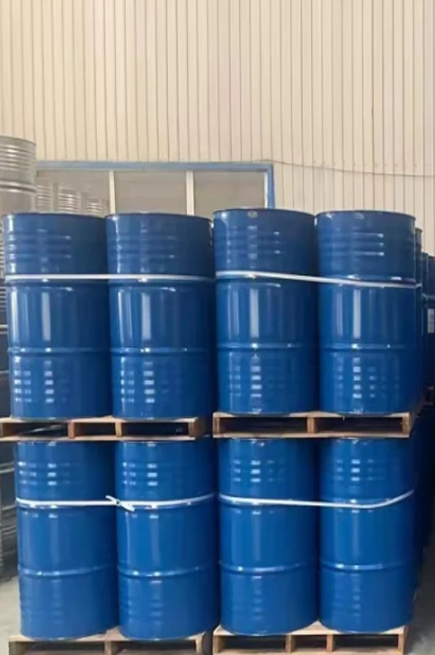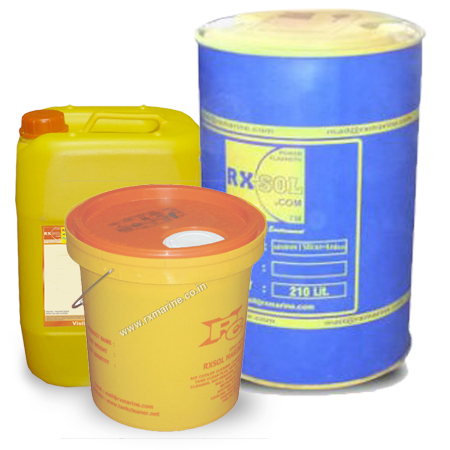
OxyShield Plus Boiler Oxygen Scavenger

Scavenges oxygen and passivates iron and copper surfaces, rendering them more resistant to corrosion

SKU: RXSOL-42-5029-200 Category:

Description

OxyShield Boiler Oxygen Scavenger is a high performance corrosion inhibitor for Boilers Condensate systems scientifically formulated for use in steam boilers, condensate systems and high pressure hot water systems. OxyShield Boiler Oxygen Scavenger is a steam volatile liquid treatment based on complex Hydroxylamine compounds used to remove oxygen chemically from feed water, boiler water and condensate in steam generating systems and the recirculating water in high pressure hot water systems. Additionally, OxyShield Boiler Oxygen Scavenger passivates iron and copper surfaces, rendering them more resistant to corrosion.







Product Details

Application

OxyShield Boiler Oxygen Scavenger use in Steam Boilers

OxyShield Boiler Oxygen Scavenger should be fed continuously to the deaerator storage section, the condensate or directly to the boiler. Choice of feed point is dependent upon the specific problem to be corrected. The recommended concentration to be maintained in the feedwater will vary with operating pressure and the particular installation and will be advised by Accepta technical support. The normal dosage rate for OxyShield Boiler Oxygen Scavenger is 20ml/m3 of feed water per mg/L of dissolved oxygen and the dosage should be adjusted to give a residual of 0.1 -0.25ppm of DEHA in the feed or boiler water.

OxyShield Boiler Oxygen Scavenger use in High Pressure Hot Water Systems

OxyShield Boiler Oxygen Scavenger should be dosed at an initial rate of 200ml/m3 and thereafter to maintain a DEHA residual of 5-10ppm.

Dosage & Procedure

OxyShield Boiler Oxygen Scavenger use in Steam Boilers

The normal dosage rate for OxyShield Boiler Oxygen Scavenger is 20ml/m3 of feed water per mg/L of dissolved oxygen and the dosage should be adjusted to give a residual of 0.1 -0.25ppm of DEHA in the feed or boiler water.

OxyShield Boiler Oxygen Scavenger use in High Pressure Hot Water Systems

OxyShield Boiler Oxygen Scavenger should be dosed at an initial rate of 200ml/m3 and thereafter to maintain a DEHA residual of 5-10ppm.

Technical Specifications

Appearance Clear Liquid
Odor Amine like
pH 10-11

Notes & Precautions

Features and Benefits of OxyShield Oxygen Scavenger for Boiler

  • High performance corrosion inhibitor
  • Passivation of metal surfaces through the formation of magnetite and cuprous oxide films
  • Minimisation of iron and copper deposits in the boiler by reducing these metals to their more soluble ferrous and cuprous forms
  • Ability to provide corrosion protection to the after-boiler sections of the system

Generic / Chemical Name

Oxygen Scavenger for Boiler Water

Supply Locations

Oxygen Scavenger for Boiler Water exporter and supplier in India UAE Middle East Oman Kenya Africa. Oxygen Scavenger for Boiler Water supplier in Mumbai, Kandla Surat Gujrat, Kolkata, West Bengal, Chennai Tamilnadu, Visakhapatnam, Andhra Pradesh, Dubai, Fujairah, Abudhabi, Sharjah, Ajman, Muscat Barka Sohar, Nairobi Kenya Sudan, Yemen Tanzania Africa

Safety Data (MSDS)

Product Name RXSOL-42-5029-200
Product Type OxyShield Plus Boiler Oxygen Scavenger

Company Details:

RX MARINE INTERNATIONAL
105, A wing , BSEL , TECH PARK.
VASHI ,NEW BOMBAY 400703 INDIA

Stock Point : Mumbai, Kolkata, Chennai, Gandhidham, Visakhapatnam, Fujairah, Muscat

Phone +91 22 27815541 / 42
Fax +91 22 2781 1318 :::AOH :0091 9821214367
Email mail@rxmarine.com

Proprietary blend of hydroxylamines and stabilisers.

GHS Classification:

Flammable Liquids (Category 3)

Acute Toxicity, Inhalation (Category 4)

Acute Toxicity, Dermal (Category 4)

Skin Irritation (Category 2)

Eye Irritation (Category 2A)

Signal Word: WARNING

Pictograms: Flammable,  Acute Toxicity

Hazard Statements:

H226 : Flammable liquid and vapor

H312 + H332 : Harmful if in contact with skin or inhaled

H315 : Causes skin irritation

H319 : Causes serious eye irritation Precautionary

Statements: Prevention:

P210 : Keep away from heat/sparks/open flames/hot surfaces - No smoking

P233 : Keep container tightly closed

P240 : Ground/Bond container and receiving equipment

P241 : Use explosion-proof electrical/ventilating/lighting equipment

P242 : Use only non-sparking tools

Precautionary Statements:

P243 : Take precautionary measures against static discharge

P261 : Avoid breathing dust/fume/gas/mist/vapors/spray

P264 : Wash contact area thoroughly after handling

P271 : Use only outdoors or in a well-ventilated area

P280 : Wear protective gloves/protective clothing/eye protection/face protection.

P281 : Use personal protective equipment as required

P303 + P361 +P353 : IF ON SKIN or hair: Remove/Take off immediately all contaminated clothing. Rinse skin with water/shower

P333 + P313 : IF skin irritation or rash occurs: Get medical advice/attention.

P305 + P351 + P338 : IF IN EYES: rinse cautiously with water for several minutes. Remove contact lenses, if present and easy to do. Continue rinsing.

P312 : Call a POISON CENTER or doctor/physician if you feel unwell

P301 + P330 + P331 : IF SWALLOWED: Rinse mouth. Do NOT induce vomiting

P304 + P340 : IF INHALED: Remove person to fresh air and keep in position comfortable for breathing

P332 + P313 : If skin irritation occurs: Get medical advice/attention

P337 + P313 : If eye irritation persists: Get medical advice/attention

P362 : Take off all contaminated clothing and wash before resuse

P370 + P378 : In case of fire: Use dry sand, dry chemical or alcohol-resistant foam for extinction.

P403 + P235 : Store in a well-ventilated place. Keep cool.

P501 : Dispose of contents/container in accordance with local/state/federal regulations. 

General Advice:

Consult a physician. Show this safety data sheet to the doctor in attendance. Move out of dangerous area.

Eyes

Flush skin with running water for at least fifteen minutes. Remove any contact lenses. Get medical aid/ attention immediately. Continue to rinse eyes during transport to the hospital.

Skin

Remove contaminated clothing. Wash skin with plenty of running water and soap. Take victim immediately to the hospital. Consult a physician.

Ingestion If the product is swallowed, first rinse mouth. Give small amount of water to drink. Call doctor/ physician/poison center immediately. Do not induce vomiting. Never give anything by mouth to an unconscious person. If a person vomits, place him/her in recovery position so the vomit does not enter lungs. 
Inhalation If safe to do so, remove individual from further exposure. Keep warm and at rest. If breathing has ceased, give artificial respiration. Do not give mouth to mouth resuscitation. Get medical attention/ consult a physician immediately. 
Note to Physician  Treat symptomatically
PPE for first responders

Gloves and safety goggles are highly recommended. 

Flash Point (°C) : 45 °C (113 °F) - closed cup

Flammable Limits : Upper explosion limit: 10% (V); Lower explosion limit: 1.9% (V)

Auto ignition Temp. : Not available.

Flammable Class : Not available.

General Hazard : Evacuate personnel downwind in-order to avoid inhalation of irritating and/or harmful fumes and smoke.

Extinguishing Media : For small (incipient) fires, use media such as “alcohol” foam, dry chemical, or carbon dioxide. For large fires, apply water from as far as possible. Use large quantities (flooding) of water applied as a mist or spray; solid streams of water may be ineffective. Cool all affected containers with flooding quantities of water.

Special hazards arising from the substance : Carbon oxides, Nitrogen Oxides (NOx)

Fire Fighting Procedures: Hazardous decomposition and combustion products such as carbon/nitrogen oxides can be formed if product is burning. Cool exposed containers with water spray to prevent over heating. Fire Fighting Equipment:Respiratory and eye protection are required for fire fighting personnel. Full protective equipment (bunker gear) and self-contained breathing apparatus (SCBA) should be used for all indoor fires and any significant outdoor fires. Evacuate area and fight fire from safe distance or a protected location. Move fire-exposed containers, if allowable without sacrificing the safety of the firefighters. If possible, firefighters should control run-off water to prevent environmental contamination.

Protective Gear for Personnel

Wear respiratory protection. Avoid breathing vapors, mist, or gas. Ensure adequate ventilation. Remove all sources of ignition. Evacuate personnel to safe areas. Beware of vapors accumulating to form explosive concentrations. Vapors can accumulate in low areas

Environmental Precaution

Prevent further leakage or spillage if safe to do so. Do not let product enter drains. Discharge into the environment must be avoided.

Methods and materials for containment and cleaning up

Contain spillage, and then collect with an electronically protected vacuum cleaner or by wet-brushing and place in container for disposal according to local regulations.

Release Notes

If spill could potentially enter any waterway, including intermittent dry creeks, contact local authorities.

Handling

Avoid contact with skin and eyes. Avoid inhalation of vapor or mist. Keep away from sources of ignition. No smoking. Take measures to prevent the build up of electrostatic charge.

Storage

Store in a cool, dry well-ventilated area. Keep containers closed and up right when not in use. Keep product isolated from incompatible materials/conditions

Engineering Controls
 

Use appropriate engineering controls to avoid contact with skin, eyes, and clothing. Wash hands before breaks and immediately after handling the product.

Personal Protective Equipment
 

Eyes and face: Use equipment for eye protection tested and approved under appropriate government standards such as NIOSH.

Skin: Avoid direct contact with skin. Wear rubber gloves, apron, boots or whole bodysuit when handling this product. Gloves must be inspected prior to use. Use proper glove removal technique (without touching glove’s outer surface) to avoid skin contact with this product. Dispose of any contaminated gloves after use in accordance with applicable laws and good laboratory practices. Wash and dry hands.

Body Protection: Complete suit protecting against chemicals; flame retardant anti-static protective clothing. The type of protective equipment must be selected according to the concentration and amount of dangerous substance at the specific work place.

Respiratory: Where risk assessment shows air-purifying respirators are appropriate, use full-face respirator with multi-purpose combination respirator cartridges as a back up to engineering controls. If the respirator is the sole means of protection, use a full-face supplied air respirator. Use respirators and components tested and approved under appropriate government standards such as NIOSH.


Work Hygienic Practices:

Facilities storing or using this material should be equipped with emergency eyewash, and a safety shower. Good personal hygiene practices should always be followed. 

Control of Environmental Exposure Prevent further leakage or spillage if safe to do so. Do not let product enter drains. Discharge into the environment must be avoided. 

Appearance : Liquid

Odor : Not available

Odor threshold : Not available

Color : Light yellow

pH : Alkaline

Melting Point : -25°C (-13°F)

Freezing Point : Not available

Boiling Range : 125 –130 °C (257-266°F)

Flash Point : 45ᵒC (113°F) - closed cup

Viscosity @ 20 ᵒC : Not available

Decomposition Temp. : Not available

Evaporation Rate : Not available

Lower Explosive Limit : 1.9% (V)

Upper Explosive Limit : 10% (V)

Vapor Pressure : 133 hPa (100 mmHg) @ 81.5°C

Vapor Density : 3.08 - (Air = 1.0)

Relative Density : 0.902 g/cm3 @ 25°C

Solubility : 35% @ 20°C

Partition coefficient (n-octanol/water) : log POW: 0.43

Auto Ignition Temp. : Not available

Molecular Weight : 89.14 g/mol

Stability : The product is stable under recommended storage conditions.

Possibility of Hazardous Reactions : No data available

Hazardous Decomposition Products : No data available

Incompatible Materials : Strong oxidizing agents, Strong acids.Do not store near acids.

Conditions to Avoid : Heat, flames, sparks

Reproductive Toxicity No data available

Rat - Parenteral - Effects on fertility: Pre-implantation mortality (e.g. reduction in number of implants per female; total number of implants per corpora lutea) Rat - Parenteral - Effects on fertility: Post-implantation mortality (e.g. dean and/or resorbed implants per total number of implants) No data available

Specific target organ toxicity - single exposure: No data available

Specific target organ toxicity - repeated exposure: No data available

Aspiration Hazard: No data available

Additional Information: RTECS: NC3500000 Incoordination,. Mydriasis., To the best of our knowledge, the chemical, physical, and toxicological properties have not been thoroughly been investigated

Toxicity to fish:

No data available

Toxicity to daphnia and other aquatic Invertebrates:

EC50 - Daphnia magna (Water flea) - 110.5 mg/l - 48h

Toxicity to algae:

No data available

Biodegradability:

Result: 17% - not readily biodegradable

Bioaccumulative Potential:

No data available

Mobility in soil:

No data available

Results of PBT and vPvB assessment: 

PBT/vPvB assessment not available as chemical safety assessment not required/not conducted 

Other Adverse effects:

An environmental hazard cannot be excluded in the event of unprofessional handling or disposal. Harmful to aquatic life.


Disposal Method

Dispose of waste at an appropriate waste disposal facility according to current applicable laws and regulations.

For Large Spills

Contain material and call local authorities for emergency assistance.

Product Disposal

Dispose of at a supervised incineration facility or an appropriate waste disposal facility according to current applicable local, state and federal laws, regulations and product characteristics at time of disposal.

Empty Container

Contaminated container should be labeled and disposed in accordance to local, state and federal laws and regulations. 

Proper Shipping Name:

Flammable Liquid, N.O.S.


UN NO.

1993


Hazard Class

3

PackingGroup

III (Flammable Sticker) 

Proper Shipping Name

Corrosive Liquids, BASIC, Organic, N.O.S.


IMDG UN No.

1993


IMDG Hazard Class

3

IMDG PackGroup.:

III

(Flammable Sticker)

U.S. Federal Regulations:

SARA 302 Components: No chemicals in this material are subject to the reporting requirements of SARA Title III, Section 302.

SARA 313 Components: This material does not contain any chemical components with known CAS numbers that exceed the threshold (De Minimis) reporting levels established by SARA Title III, Section 313

SARA 311/312: Fire Hazard, Acute Health Hazard,

Massachusetts Right to know Components: No components are subject to the Massachusetts Right to Know Act Pennsylvania Right to know Components: Diethylhydroxylamine CAS No. 3710-84-7

New Jersey Right to know Components: Diethylhydroxylamine CAS No. 3710-84-7

California Proposition 65 Components: This product does not contain any chemicals known to the State of California to cause cancer, birth defects, or any other reproductive harm.

WHMIS Canada: B3 Combustible Liquid; D2B Toxic Materials

OSHA Hazcom Standard Rating: This material is classified as Hazardous under Federal OSHA regulation Combustible liquid irritant.

CERCLA: This product has the following CERCLA/SARA

TPQ and RQ: DEHA contains a small impurity of < 1% Diethylamine which has an RQ of 100lbs.

US Toxic Substances Control Act: Listed on the TSCA inventory

HMIS and NFPA Rating Scale:

HMIS: Hazardous Materials Identification System

Numeric Scale for Health (Blue), Flammability (Red), and Physical Hazard (Yellow):

HEALTH 2

FLAMMABILITY 2

PHYSICAL HAZARD 0

PERSONAL PROTECTION C

Personal Protection Code C: Gloves + Safety Goggles + Chemical Apron

NFPA: National Fire Protection Association

Numeric Scale for Health (Blue), Fire Hazard (Red), and Reactivity (Yellow): Special (White)

H226 Flammable liquid and vapor.

H312 Harmful in contact with skin.

H332 Harmful if inhaled.

H335 May cause respiratory irritation.

H401 Toxic to aquatic life.

H411 Toxic to aquatic life with long lasting effects.

The information provided about the product on this Safety Data Sheet has been compiled from knowledge of the individual constituents.The data given here is based on current knowledge and experience. This Safety Data Sheet describes the product .in terms of safety requirements and does not signify any warranty with regard to the product's properties The data given here only applies when product used for proper application(s). The product is not sold as suitable for other applications - usage in such may cause risks not mentioned in this sheet. Do not use for other.

DISCLAIMER OF LIABILITY :The information in this SDS was obtained from sources which we believe are reliable. However, the information is provided without any warranty, express or implied, regarding its correctness. The conditions or methods of handling, storage, use or disposal of the product are beyond our control and may be beyond our knowledge. For this and other reasons, we do not assume responsibility and expressly disclaim liability for loss, damage or expense arising out of or in any way connected with the handling, storage, use or disposal of the product. This MSDS was prepared and is to be used only for this product. If the product is used as a component in another product, this MSDS information may not be applicable.

top