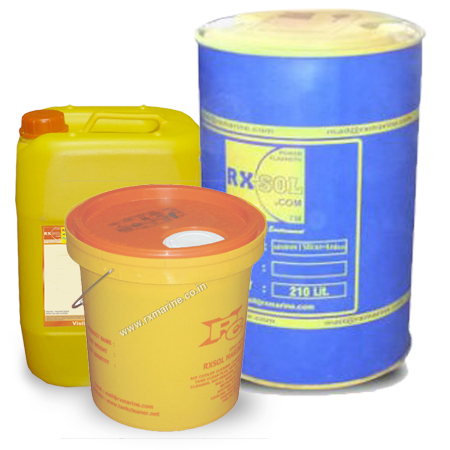
Oxalic Acid

This colorless crystalline solid is a dicarboxylic acid. In terms of acid strength, it is about 3,000 times stronger than acetic acid. Oxalic acid is a reducing agent and its conjugate base, known as oxalate (C2O42) is a chelating agent for metal cation

SKU: RXSOL-19-1303-025 Category:

Description

Oxalic acid is an organic compound with the formula H2C2O4. This colorless crystalline solid is a dicarboxylic acid. In terms of acid strength, it is about 3,000 times stronger than acetic acid.
Oxalic acid is a reducing agent and its conjugate base, known as oxalate (C2O42), is a chelating agent for metal cations. Typically oxalic acid occurs as the dihydrate with the formula H2C2O4·2H2O.







Product Details

Application

Transparant, colourless crystals. Hazard: Toxic by inhalation and ingestion, strong irritant.

Uses: general metal and equipment cleaning, purifying agent and intermediate for many compounds.

Oxalic acid's main applications include cleaning or bleaching, Especially for the removal of rust (iron complexing agent), e.g. Bar Keepers Friend is an example of a household cleaner containing oxalic acid.
About 25% of produced oxalic acid is used as a mordant in dyeing processes.
It is used in bleaches, especially for pulpwood.
It is also used in baking powder.


Dosage & Procedure

Solubility in water 14.3 g/100ml (25 °C)
Solubility 23.7 g/100ml (15 °C) in ethanol
--------------------------------------------------------------------------------
1.4 g/100ml (15 °C) in diethyl ether


Acidity (pKa) 1.25, 4.14

Density 1.90 g cm-3 (anhydrous) or 1.653g cm-3 (dihydrate)
 

Technical Specifications

COOH.2H2O

OXALIC ACID
Molecular Formula Mol Wt. 126
APPEARANCE   

 Fine colourless & Odourless prismatic crystals. (It has appearance of powder form.)

CHEMICAL COMPOSITION  
OXALIC ACID CONTENT % BY MASS MIN                    99.00%
SULPHETED  ASH % BY MASS MAX                   0.15% 
CHLORIDE (as CI) % BY MASS MAX.                   0.005%
SULPHETES (as SO4)  % BY MASS  MAX                    0.10%
IRON (as Fe) % BY MASS   MAX                    0.05%   
HEAVY DUTY METALS (as Pb) 

MAX                    0.005%

SOLUBILITY  Soluble in water, water solution is clear & colourless.                                                                                     

Notes & Precautions

Using Application :
Oxalic Acid is used extensively for boat cleaning, it can be used on timber, GRP and steel craft for the removal of rust and waterline stains and also to clean timber decks. For vertical applications oxalic can be mixed with wallpaper paste to make a thick solution, this mix will cling to any vertical surface and can be washed off with water.


REMOVAL OF IRON STAINS
Iron stains can be removed by scrubbing the stained area with an aqueous solution of oxalic acid in water. Dissolve 1kg oxalic acid to 6Lt of warm water. Scrub stained area using a stiff-bristle brush. Thoroughly rinse with water after treatment. When completely dry, lightly sand the surface. Surface must be clean and completely dry (not just surface dry) before refinishing. Incomplete drying and retained subsurface moisture can cause finish adhesion failure.


Many of Construction Chemicals customers are involved with building renovation and in particular Oak frames, oak windows and beams as well as flooring. Our product range ensures that whenever timber is being used we have the products to bond, fill, preserve, sand, stain and paint. Our Customers will be aware of the problems of oak stains especially with green oak. This can look unsightly and spoil good looking beams or floors. OXALIC ACID CLEANS MOST STAINS FROM TIMBER.

REMOVAL OF BLACK WATER AND TANNIN STAIN
A common form of staining on wood surfaces results from contamination with iron. A portion of the extractives in wood includes a group of chemicals collectively called tannins. The amount of tannins depends on species; oak, redwood, and cedar are rich in tannins. Tannins react with iron to form a blue-black stain on wood. Common causes of iron stain include use of un-galvanized or poorly galvanized fasteners; OXALIC ACID brushed into the stains makes removal easy. Finishing wood with a WATER REPELLANT WITHA PRESERVATIVE AND/OR  WOOD POLISH OR  OIL greatly minimizes further iron stain and enhances the finish of the wood.. Wood must be clean; free of paint, waxes, oils and dirt. Use wood cleaners to remove any grease oils or grime. Use paint strippers to remove any finish, paint or coating.

Active Matter

99

Generic / Chemical Name

OXALIC POWDER

Areas of Use

Handling Procedure ::: ---
Donot contact with skin and eyes. May cause burns or irritation. Harmful if swallowed. Can be Neutralised by use Ammonia or Borax, or wash with water.
DO NOT allow solution to get into gloves or soak through clothing to skin.

Supply Locations

Oxalic Acid manufacturer supplier distributor in Mumbai, Kandla Gandhidham, Kolkata, Vizag Visakhapatnam, Surat Chennai, India, Fujairah, Dubai UAE, Muscat Oman, Kenya Africa. Get the best quality of Oxalic Acid at a competitive price from us. We have ready stock of Oxalic Acid in India, UAE Gulf, Oman, Kenya Africa. Contact us for bulk as well as small orders.

Industry Applications

#OXALICacid_MUSCAT
#oxalicACID_DUBAI
#OXALICacid_supplier
#oxalicacid_manufacturer

Safety Data (MSDS)

Product Name RXSOL-19-1303-025
Product Type Oxalic Acid PWD 25 Kg

Company Details:

RX MARINE INTERNATIONAL
105, A wing , BSEL , TECH PARK.
VASHI ,NEW BOMBAY 400703 INDIA

Stock Point : Mumbai, Kandla, Kolkata, Chennai, Visakhapatnam, Surat, Fujairah, Muscat
 

Phone +91 22 65113333 / 5555 / 9999 / 27611360
Fax +91 22 2781 1318 :::AOH :0091 9821214367
Email mail@rxmarine.com

Chemical Name

CAS Number

Proportion

R Phrases*

Oxalic Acid 144-62-7 100%

R21/22 R41

*See Section 16

This material is hazardous according to criteria of ASCC; HAZARDOUS SUBSTANCE.
Not classified as Dangerous Goods by the criteria of the Australian Dangerous Goods Code (ADG Code) for transport by Road and Rail; NON-DANGEROUS GOODS.

Risk Phrases Harmful in contact with skin and if swallowed. Risk of serious damage to eyes.
Safety Phrases Avoid contact with skin and eyes. In case of contact with eyes, rinse immediately with plenty of water and seek medical advice. Wear suitable protective clothing, gloves and eye/face protection.
Poisons Schedule S6 Poison.

Inhalation

Remove victim from area of exposure - avoid becoming a casualty. Remove contaminated clothing and loosen remaining.clothing. Allow patient to assume most comfortable position and keep warm. Keep at rest until fully recovered. Seek medical advice if effects persist.

Skin Contact

If skin or hair contact occurs, immediately remove any contaminated clothing and wash skin and hair thoroughly with running water. If swelling, redness, blistering or irritation occurs seek medical assistance.

Eye Contact

Immediately wash in and around the eye area with large amounts of water for at least 15 minutes. Eyelids to be held apart. Remove clothing if contaminated and wash skin. Urgently seek medical assistance. Transport to hospital or medical centre.

Ingestion

Rinse mouth with water. If swallowed, do NOT induce vomiting. Give a glass of water. Seek immediate medical assistance.

Medical attention and special treatment:Treat symptomatically. Can cause corneal burns.

Hazards from combustion products:
Non-combustible material.
Precautions for fire fighters and special protective equipment: Decomposes on heating emitting toxic fumes. Fire fighters to wear self-contained breathing apparatus and suitable. protective clothing if risk of exposure to products of decomposition. Keep containers cool with water spray.
Suitable Extinguishing Media: Not combustible, however, if material is involved in a fire use: Fine water spray, normal foam, dry agent (carbon dioxide, dry chemical powder).

Emergency procedures: Clear area of all unprotected personnel. If contamination of sewers or waterways has occurred advise local emergency services.
Methods and materials for containment and clean up: Avoid accidents, clean up immediately. Wear protective equipment to prevent skin and eye contact and breathing in dust. Sweep up, but avoid generating dust. Collect and seal in properly labelled containers or drums for disposal.

This material is a Scheduled Poison S6 and must be stored, maintained and used in accordance with the relevant
regulations.

Handling

Avoid skin and eye contact and breathing in dust. Avoid handling which leads to dust formation.

Storage

Store in a cool, dry, well ventilated place and out of direct sunlight. Store away from foodstuffs. Store away from incompatible materials described in Section 10. Keep containers closed when not in use - check regularly for spills.

Oxalic acid

8hr TWA = 1 mg/m3, 15 min STEL = 2 mg/m3

Product Name

OXALIC ACID Issued: 24/02/2009

Substance No

000030127001 Version: 2

TWA The time-weighted average airborne concentration over an eight-hour working day, for a five-day working week over an entire working life.
STEL (Short Term Exposure Limit) The average airborne concentration over a 15 minute period which should not be exceeded at any time during a normal eight hour work day. According to current knowledge this concentration should neither impair the health of, nor cause undue discomfort to, nearly all workers. These Exposure Standards are guides to be used in the control of occupational health hazards. All atmospheric contamination should be kept to as low a level as is workable. These exposure standards should not be used as fine dividing lines between safe and dangerous concentrations of chemicals. They are not a measure of relative toxicity.
Engineering controls Use with local exhaust ventilation or while wearing dust mask. Keep containers closed when not in use. Ensure ventilation is adequate and that air concentrations of components are controlled below quoted Exposure Standards.
Personal Protective Equipment The selection of PPE is dependant on a detailed risk assessment. The risk assessment should consider the work situation, the physical form of the chemical, the handling methods, and environmental factors. Orica Personal Protection Guide No. 1, 1998: F - OVERALLS, SAFETY SHOES, CHEMICAL GOGGLES, GLOVES, DUST MASK. Wear overalls, chemical goggles and impervious gloves. Avoid generating and inhaling dusts. If dust exists, wear dust mask/respirator meeting the requirements of AS/NZS 1715 and AS/NZS 1716. Always wash hands before smoking, eating, drinking or using the toilet. Wash contaminated clothing and other protective equipment before storage or re-use.

Physical state Granules or Crystals

Colour

White to Clear

Odour

Odourless

Solubility

Soluble in water , glycerol and alcohol. Partially soluble in ether. Insoluble in chloroform, petroleum ether and benzene

Specific Gravity

1.65 at 20°C

Vapour Density (air=1)

Not available

Vapour Pressure (20 °C) <0.14 Pa
Flash Point (°C) Not applicable
Flammability Limits (%) Not applicable
Autoignition Temperature (°C) Not applicable
Melting Point/Range (°C) 101.5 (dihydrate)
Boiling Point/Range (°C) 149 - 160 (dihydrate)
Decomposition Point (°C) Not available
pH 1.3 (0.1m soln)

Chemical stability Stable under normal ambient and anticipated storage and handling conditions of temperature and pressure. Vigorous reaction may occur with alkalies yielding heat and pressure, and with acid chlorides producing toxic fumes. May react violently with alkali metals producing flammable hydrogen gas. Reacts strongly with oxidising agents, especially sodium chlorite and sodium hypochlorite. Can react with some silver compounds to form explosive silver oxalates. Dry oxalic acid is not corrosive to metals. Hygroscopic.
Conditions to avoid Avoid alkali material in storage and in use
Incompatible materials Incompatible with most metals in the presence of moisture.
Hazardous decomposition products Hydrogen. Carbon monoxide. Oxygen, which will support combustion.
Hazardous reactions Reacts exothermically with alkalis . Accelerated decomposition occurs when mixed with strong oxidising agents.

No adverse health effects expected if the product is handled in accordance with this Safety Data Sheet and the product label. Symptoms or
effects that may arise if the product is mishandled and overexposure occurs are:

Ingestion

Swallowing can result in a severe burning pain of the mouth, throat and stomach followed by profuse vomiting (sometimes bloody). Small doses of oxalate in the body can cause headache, pain and twitching in muscles, and cramps. Larger doses can cause weak and irregular heartbeat, drop in blood pressure and signs of heart failure. Large doses rapidly cause a shock-like state, convulsions, coma and possibly death.

Eye contact

A severe eye irritant. Contamination of eyes can result in permanent injury.

Skin contact

Contact with skin may result in irritation. Solutions of 5% to 10% oxalic acid are irritating to the skin after prolonged exposure and can cause corrosive injury.

Inhalation

Breathing in dust may result in respiratory irritation.Inhaled oxalic acid is readily absorbed into the body and may cause headaches and nausea.

Long Term Effects

Long term exposure can result in kidney stones and stone formation in the urinary tract.

Toxicological Data
Oral LD50 (rat) 475 mg/kg
Dermal LD50 (rabbit) 2000 mg/kg

Exposure to this compound can result in systemic effects including kidney damage, muscle twitching , cramps and nervous system complaints.

Ecotoxicity Avoid contaminating waterways.

Disposal methods

Refer to local government authority for disposal recommendations. Dispose of material through a licensed waste contractor.

Road and Rail Transport:
Not classified as Dangerous Goods by the criteria of the Australian Dangerous Goods Code (ADG Code) for transport by Road and Rail;
NON-DANGEROUS GOODS.
Marine Transport:
Not  classified  as  Dangerous  Goods  by  the  criteria  of the    International  Maritime   Dangerous Goods Code (IMDG Code) for
transport by sea; NON-DANGEROUS GOODS.
Air Transport:
Not classified as Dangerous Goods by the criteria of the International Air Transport Association (IATA) Dangerous Goods Regulations
for transport by air; NON-DANGEROUS GOODS.

Classification

This material is hazardous according to criteria of ASCC; HAZARDOUS SUBSTANCE.

Hazard Category

Xn: Harmful  Xi: Irritant

Risk Phrase(s)
R21/22 Harmful in contact with skin and if swallowed.
R41 Risk of serious damage to eyes.
Safety Phrase(s)
S24/25 Avoid contact with skin and eyes.
S26 In case of contact with eyes, rinse immediately with plenty of water and seek medical advice.
S36/37/39 Wear suitable protective clothing, gloves and eye/face protection.
Poisons Schedule S6 Poison

This material is listed on the Australian Inventory of Chemical Substances (AICS).

Supplier Material Safety Data Sheet.
Reason(s) for Issue: 5 Yearly Revised Primary MSDS. Change in Personal Protection Requirements
Product Name: OXALIC ACID
Substance No: 000030127001 Version: 2

This MSDS summarises to our best knowledge at the date of issue, the chemical health and safety hazards of the   material and general guidance on how to safely handle the material in the workplace. Since RX MARINE INTERNATIONAL cannot anticipate or control the conditions under which the product may be used, each user must, prior to usage, assess and control the risks arising from its use of the material.
.
RX MARINE INTERNATIONAL responsibility for the material as sold is subject to the terms and conditions of sale, a copy of which is available upon request. Product

DISCLAIMER OF LIABILITY :The information in this SDS was obtained from sources which we believe are reliable. However, the information is provided without any warranty, express or implied, regarding its correctness. The conditions or methods of handling, storage, use or disposal of the product are beyond our control and may be beyond our knowledge. For this and other reasons, we do not assume responsibility and expressly disclaim liability for loss, damage or expense arising out of or in any way connected with the handling, storage, use or disposal of the product. This MSDS was prepared and is to be used only for this product. If the product is used as a component in another product, this MSDS information may not be applicable.

top