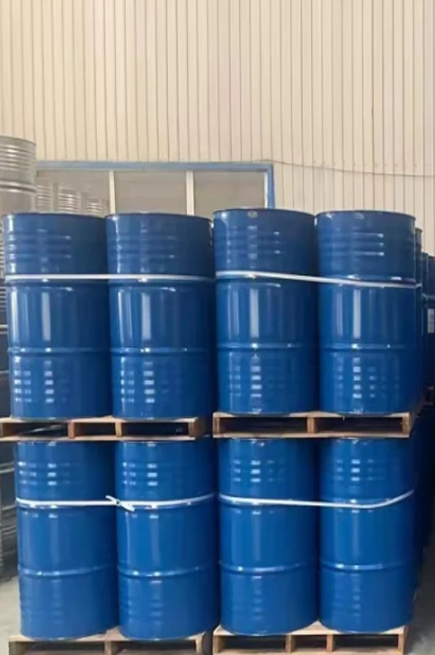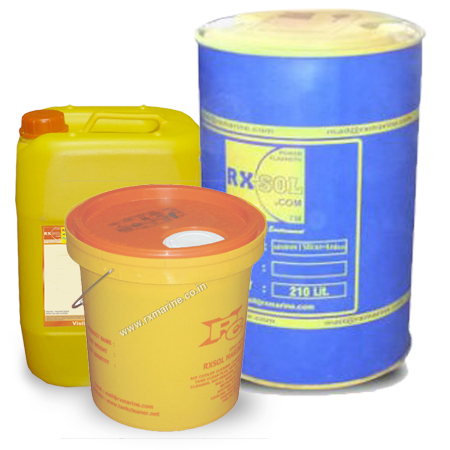
Nitrite Borax RoccorRX NB Liq

Usefull for use in high or low temperature closed cooling water systems for the prevention of corrosion and scale formation in internal combustion engines, compressors, chiller system and DG sets. Protects all metals including cast iron, mild steels and c

SKU: RXSOL-40-4001-210 Category:

Description

Corrosion Inhibitor for Water Systems  having  unique formulation with highly concentrated liquid cooling treatment compound, ferrous & Non ferrous corrosion inhibitors, antiscalants , dispersant and buffer solution of non carbonate.Usefull for use in high or low temperature closed cooling water systems for the prevention of corrosion and scale formation in internal combustion engines, compressors, chiller system and DG sets. Protects all metals including cast iron, mild steels and copper. Recommended ppm levels are easily controlled by standered RXSOL test kit Nitrite / Chloride.







Product Details

Application

Prolongs the life of equipment by keeping it scale and corrosion free. Since RXSOL-40-4001-210 is alkaline, it will suppress acid corrosion, which would otherwise result in sever pittings. It improves cooling efficiency by maintaining clean heat transfer surfaces , from Radiators, DG - sets, Closed Cooling and chiller System.


( Used as a corrosion inhibitor for all ferrous and non-ferrous metals found in water systems )

Dosage & Procedure

Refer to technical datasheet.

GENERAL RECOMMENDATION

Nitrite (as PPM NO2) 100-200 300-600 700-900 1100-1300   
RXSOL-40-4001-210 / 1000L 13.0  11.3 8-10 5-7   1.5-3.5

NOTE ::: --   If nitrite level becomes 1440-2400 then doses should be ZERO.

Technical Specifications

Before testing of Nitrite level, Here is some point and guideline,  what you need to do. : 1 take the following readings; pH, TDS (uS), and nitrite level.and record. 2 add the Chemical your are using. 3. wait for a period of time for the sysem to circulate. <minimum 3 -4 hours> 4. Re check the readings. and record. 5 track these readings
for a period of time.

If the TDS and Nitrite drop you have a leak/ unknown makeup. if the TDS stays stable and the nitrite drops you have a biological problem. Bacteria that convert nitrite to nitrate.

Solution ::: Use DI water in place of general water, And also use. Algaecide to control Bacterial growth inside water system ... http://rxmarine.com/Biocide-Algaecide

Notes & Precautions

Initial dosage for an untreated system is 9 litres of RXSOL-40-4001-210 / 1000 litres of untreated distilled water. This will bring the treatment up to the minimum level of 1000 ppm nitrite. For best result and prolonged engine life add RXSOL-40-4001-210 every 500 -6500 km. or 250 to 300 hours of running time or every 2 month interval. Specially designed for use in  water systems of internal combustion equipment. pH should be maintained between 8.3 and 10 by the treatment.

Active Matter

68-75%

Generic / Chemical Name

Engine Water Treatment Corrosion inhibitor Liquid

Supply Locations

Nitrite Borax ROCCORRXRX NB Liq manufacturer, exporter and supplier in Navi Mumbai MIDC, Nashik, Pune, Gandhidham, Chennai, Visakhapatnam, Kolkata, Haldia, Paradip, India, Fujairah, Dubai, Ajman, Abudhabi Middle East, Barka, Muscat, Oman, Canada

Industry Applications

Nitrite Borax and Mercaptobenzothiazole (MBT) blended corrosion inhibitor suitable and well balanced formulation for Jacket Engine water system.
 

Various Grade of  Corrosion Inhibitor http://rxmarine.com/search/node/corrosion RXSOL corrosion inhibitor is most popular for water treatment chemicals. 

Types of Corrosion Inhibitor : 

Anodic Inhibitors: A chemical substance that forms a protective layer of oxide film on the surface of metal causing resistance to corrosion. They are also known as passivators. It alters the anodic reactions in a chemical cell, forcing the metallic surface into the passivation region. There is a strong relationship between the anodic inhibitors and corrosion rate.

It helps to reduce the corrosion rate due to its retarding anodic reactions.

Following are the compounds been used as anodic inhibitors

  • Chromate
  • Nitrite
  • Molybdate
  • Orthophosphate

Cathodic Inhibitors: Cathodic Inhibitors are generally been used to prevent access to the corrosive substance or material. The effectiveness of cathodic inhibitors depends on the flow regime, water quantity and the fluid composition.

It helps to reduce the corrosion rate due to its retarding cathodic reactions. It forms an insoluble compounds precipitating on the cathodic sites in order to form a barrier film.

Following are the compounds used as cathodic inhibitors

  • Zinc salts
  • Calcium salts
  • Magnesium salts
  • Polyphosphates

Mixed Inhibitor: It is a type of enzyme inhibition in which the inhibitor may bind the enzyme. It is known as mixed inhibitor as it is a conceptual mixture of competitive inhibition and uncompetitive inhibition. Here the inhibitor can be bind only of the substrate is been already found.The compound formed reduces both cathodic as well as anodic reactions. In order to prevent formation of rust water silicates and phosphates is been used

Several things are to be considered before choosing with the corrosion inhibitors for your application:

  • Type of product whether it is oil, solvent of water based.
  • Consider environment, health and safety requirements.
  • Storage packaging and shipping conditions to be maintained according to temperature and humidity.
  • Methods of application that includes dip, spray, brush etc.
  • Define with the desired type and thickness of coating.
  • Materials to be protected.

Following are the compounds used as Mixed Inhibitor

  • Silicate
  • Phosphate
There are various benefits of corrosion inhibitors which are been described as follows:
  • Liquids used in vehicles come in contact with metal parts. Using with this chemicals corrosion is been avoided
  • Corrosion inhibitors are been added to the vehicles as the metal parts get rust when comes in contact
  • Water systems get damaged due to the risk of rust, so the inhibitors are been added
  • Corrosion inhibitors are required for pipe, due to rust it can contaminate with the liquid passing through the pipe.
  • Tanks generally used to store water and fuel has the potential to get rust. It should be treated beforehand along with the corrosion inhibitors.
  • Corrosion inhibitors mitigate the corrosion rates of pipelines resulting in improved long-term pipeline integrity.
  • Along with the automotive industry there are other industries that benefits from corrosion inhibitors are open garden equipments, bike chains and loosen rusted scissor
  •  Another sector that benefits with corrosion inhibitor is the construction industry as many of the metals used are vulnerable to weather
  • Metals like gates and railings are very much susceptible to rust, hence corrosion inhibitor is been used.
  • Corrosion inhibitor extend the lifespan of the equipment up to 250%
  • Reduces the cost of repair due to corrosive damage
  • If the equipment is protected, service interruptions and operation malfunction can be avoided
  • For companies having corrosion inhibitor equipments, can avoid legal and environmental liabilities

Safety Data (MSDS)

Product Name :  RXSOL-40-4001-210
Product Type : ROCCORRX NB

Company Details:

RX MARINE INTERNATIONAL
105, A wing , BSEL , TECH PARK.
VASHI ,NEW BOMBAY 400703 INDIA

Phone : +91 22 65113333 / 5555 / 9999 / 27611360
Fax : +91 22 2781 1318 :::AOH :0091 9821214367
Email : mail@rxmarine.com

Chemica Name Concentration CAS Number EC Number R Phrases* Symbols
 Sodium nitrite 10-30  7632-00-0  231-555-9 8, 25, 50  T, O,N
Sodiumtetraborate 10 aq 1-5 1303-96-4 215-540-4 62,63 Xn 
Benzothiazol-2-thiol 0.1-.02 149-30-4 2299129 34,37  O

*See Section 16

Odour Odourless
Appearance Pale Yellowis to Clear Liquid, soluble in water
Contact with eyes May cause pain
Contact with skin In cases of severe exposure, severe irritation may develop
Inhalation Vapours or aerosols may cause irritation of eyes, nose and respiratory tract
Ingestion Toxic if swallowed (R25)

Contact with skin Remove contaminated clothing immediately and drench affected skin with plenty of water
Contaminated clothing should be laundered before reuse
When in doubt or symptoms persist, seek medical attention
Contact with eyes If substance has got into eyes, immediately wash out with plenty of water for at least 15 minutes
Irrigate eyes thoroughly whilst lifting eyelids
Obtain immediate medical attention
Ingestion Never make an unconscious person vomit or drink fluids
Give water or milk to drink
Induce vomiting (only if patient is conscious)
Obtain immediate medical attention
Inhalation Inhalation is unlikely to occur
Remove patient to fresh air
When in doubt or symptoms persist, seek medical attention
General In case of accident or if you feel unwell, seek medical advice immediately (show the label where possible)

-  Nitrogen oxides may be formed
-  Not flammable. In case of fire use extinguishing media appropriate to surrounding conditions
-  Substance evolves toxic fumes, wear self-contained breathing apparatus

Personal Precautions Wear protective clothing as per section 8
Environmental Precautions Do not allow to enter public sewers and watercourses
Immediate Actions Use appropriate containment to avoid environmental contamination (S57)
Clean Up Actions Absorb spillage in inert material and shovel up
Ventilate the area and wash spill site after material pick-up is complete
Special Precautions Wear protective clothing as per section 8

Handling

Wear protective clothing as per section 8
Avoid contact with skin and eyes (S24/25)
Eyewash bottles should be available

Storage Keep only in the original container in a cool, well ventilated place (S3/9/49)
Protect from heat
Protect from frost

Exposure controls No special precautions are required for this product
Occupational exposure controls Wear suitable protective clothing, including eye/face protection and gloves (plastic or rubber are recommended)

gloves                                 suit                no_smoking

  Gloves                   Goggles                        Suit                 No_Smoking

Odour Odourless
Appearance Pale yellowish to clear  Liquid, soluble in water
pH 8.5 - 9.5 at 100 % concentration
Boiling point >100 °C at 760 mm /Hg
Vapour pressure not known
Vapour density not applicable
Freezing point <0 °C at 760 mm/Hg
Completely soluble in water
Specific gravity (water=1) 1.10

-   This article is considered stable under normal conditions
-   Avoid contact with acid
-   Incompatible with acid, Contact with acids liberates toxic gas (R31)
-    See Section 5

Toxicological information No experimental data available
Inhalation Not applicable
Contact with skin In cases of severe exposure, severe irritation may develop
Contact with eyes May cause severe irritation
May cause pain
Ingestion Toxic if swallowed (R25)
Carcinogenicity No evidence of carcinogenic effects

Ecotoxicity This product contains components which are classified in the EU as dangerous for the environment.
May cause acute effects in the aquatic environment
Mobility Completely soluble in water
Persistence and Biodegradability Its main ingredients will either dissolve rapidly and dissociate in water or are readily/inherently biodegradable.
Bioaccumulation Potential Bioaccumulation of the components in this product is insignificant.
Other Adverse Effects No environmental problems are expected when the product is used / handled correctly. In its intended use, the product will not be released into the environment.

Classification EU Waste class: 06.03 This material and/or its container must be disposed of as hazardous waste
Disposal considerations Do not discharge into drains or the environment, dispose to an authorised waste collection point Disposal should be in accordance with local, state or national legislation

 -  Not classified as hazardous for transport

Classification and labeling

Contains Benzothiazol-2-thiol.  May produce an allergic reaction.
Cooling Water Treatment 15 Regulatory information (....)

Risk Phrases Toxic if swallowed (R25)
Safety Phrases Wear suitable protective clothing, eye/face protection and gloves (S36/37/39)
In case of accident or if you feel unwell, seek medical advice immediately (show the label where possible) (S45) This material and its container must be disposed of in a safe way (S35)

Text of R and S phrase codes used  in  this safety data sheet:-  R25: Toxic I f swallowed;  R43: May  cause  sensitisation
by  skin  contact;   R50:  Very  toxic  to  aquatic   organisms;   R50/53:  Very   toxic   to  a  quatic  organisms,  may  cause long-term  adverse  effects  in  the  aquatic   environment;  R62: Possible  risk  of I mpaired fertility; R63: Possible risk of harm  to the unborn child;  R8: Contact  with combustible  material  may cause fire.The  information  provided  about  the product  on  this  Safety  Data  Sheet  has  been  compiled  from knowledge of the individual constituents.The data given here  is  based  on current knowledge and experience. This Safety Data Sheet describes the product.In terms of safetyr equirements   and   does   not   signify  any   warranty   with  regard  to  the  product's  properties  The  data  given  here  only  applies  when  product  used for proper application(s). The product  is  not  sold  as  suitable for  other applications  -   usage   in  such  may  cause  risks  not   mentioned   in   this  sheet.  Do  not  use  for  other application (s) without seeking advice from manufacturer
This Safety Data Sheet is provided in compliance with The  Safety  Data  Sheets  Directive   ( 2001/58EC)
This Safety Data Sheet is provided in compliance with The Dangerous Preparations Directiv (88/379/EEC)
This Safety Data Sheet is provided in compliance with The Dangerous Substances Directive (67/548/EEC)

DISCLAIMER OF LIABILITY :The information in this SDS was obtained from sources which we believe are reliable. However, the information is provided without any warranty, express or implied, regarding its correctness. The conditions or methods of handling, storage, use or disposal of the product are beyond our control and may be beyond our knowledge. For this and other reasons, we do not assume responsibility and expressly disclaim liability for loss, damage or expense arising out of or in any way connected with the handling, storage, use or disposal of the product. This MSDS was prepared and is to be used only for this product. If the product is used as a component in another product, this MSDS information may not be applicable.

top