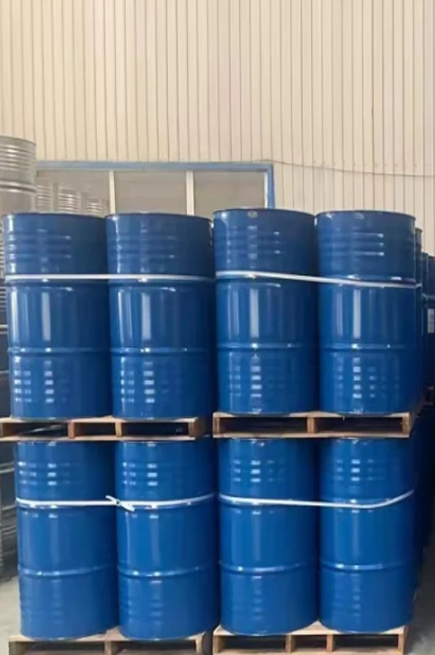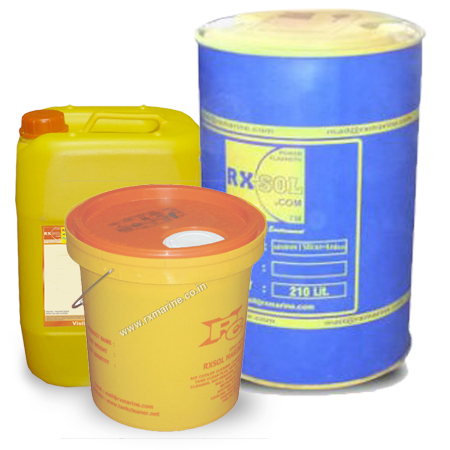
Antiscalant Antifoulant Corrosion Inhibitor 704

Antiscalant / Antifoulant – Corrosion Inhibitor 704 is a highly effective liquid an-tiscalant/antifoulant developed to control scale precipitates and reduce particulate fouling within membrane separation systems

SKU: RXSOL-33-3337-025 Category:

Description

Antiscalant / Antifoulant – Corrosion Inhibitor 704 is a highly effective liquid antiscalant / antifoulant developed to control scale precipitates and reduce particulate fouling within membrane separation systems. This highly effective liquid antiscalant/antifoulant is formulated specifically to be used with RXSOL Coagulant. It is imperative that the coagulants used are compatible with the antiscalant/antifoulant being injected as incompatible chemicals may cause membrane fouling.







Product Details

Application

For maximum effectiveness, Antiscalant / Antifoulant Corrosion Inhibitor 704 should be added prior to the static mixer or cartridge filter housing. For potable applications the maximum dosage is 10 mg/L. Maximum dilution is 10% with RO permeate or DI water. Antiscalant / Antifoulant Corrosion Inhibitor 704 helps Block particles disperse to maintain the reverse osmosis membrane surface clean.

Dosage & Procedure

Typical dosage range is between 1 and 6 mg/L. Maximum dilution is temperature related as shown:

Temperature  Maximum Dilution %
<30°C 10
30 – 35°C 25
>35°C 50

Important Note: Over and under-dosing may cause membrane fouling so please contact RX Marine International representative to define the optimal feed point and dosage rate. Maximum Dilutions

Technical Specifications

Form: Clear liquid

Color: Light yellow

Specific Gravity: >1

pH value: 4.5 - 5.5 ( Effective over a broad pH range 5 - 9 Compatible with feed waters that contain aluminum and iron oxides )

Solubility in water: 100% soluble

Notes & Precautions

Features & Benefits

  • Excellent results as a replacement for softenerfilters
  • Compatible with coagulants
  • Highly effective over a wide-range of waters For calcium-based and sulfate-based scales, notably, barium sulfate.
  • Compatible with all of the leading RO membranes
  •  Maintains cleaner membrane surfaces by inhibition and dispersing particulate foulants
  • Effective over a wide pH range
  • May be fed neat or diluted
  • Compatible with feedwaters that contain aluminum and iron oxides

Handling : 
 
Avoid prolonged exposure. Provide adequate ventilation. Wear appropriate personal protective equipment. Observe good industrial hygiene practices. Use care in handling/storage.

Storage  : Store in a cool, dry place out of direct sunlight. Keep only in the original container.

Active Matter

81-85

Generic / Chemical Name

Antiscalant Antifoulant

Areas of Use

RO ANTISCALANT
 
RXSOL Antiscalant Antifoulant Corrosion Inhibitor 704 Effectively control  CaCO3 up to LSI +3.0, CaSO4, SrSO4, BaSO4, CaF2, SiO2, Fe2O3, etc.

Antiscalant Antifoulant Corrosion Inhibitor 704 RXSOL  is compatible with all of the leading reverse osmosis membranes, such as Dow, Filmtec, GE, Hydranautics, TORAY, etc.

Supply Locations

Antiscalant Antifoulant Corrosion Inhibitor 704 Exporter, Manufacturer and supplier in India, UAE, Oman, Kenya. Antiscalant Antifoulant Corrosion Inhibitor 704 available ready stock at Mumbai, Nairobi, Kenya, Chennai, Kolkata, Visakhapatnam, Gandhidham, Kandla, Fujairah, Dubai, Ajman, Abudhabi, Dubai, Sharjah UAE Middle East, Canada, Jinja Uganda, Canada

Industry Applications

Antiscalant Antifoulant Corrosion Inhibitor 704  helps to extend the membrane life and reduce the running cost.

Safety Data (MSDS)

Product Name Antiscalant / Antifoulant - Corrosion Inhibitor 704
Part Number RXSOL-33-3337-025

Company Details:
RX MARINE INTERNATIONAL
105, A wing , BSEL , TECH PARK.

VASHI ,NEW BOMBAY 400703 INDIA

Stock Pont : Mumbai, Kandla, Chennai, Kolkata, Visakhapatnam, Fujairah, Muscat

Phone +91 22 65113333 / 5555 / 9999
Fax +91 22 2781 1318 :::AOH :0091 9821214367
Email 123@rxmarine.com
Website www.rxmarine.com


Name     of        Substance                          Cas Number EC Number Wight %
Disodium phosphonate 13708-85-5   ------  2 - 10%
Phosphonic Acid Derivative Compound Proprietory  Proprietory   
Proprietory Non Hazardous Ingirdent and Multipolymer      90 - 95%

Designates that a specific chemical identity and/or percentage of composition has been withheld as a trade secret.


Signal Word                        Warning
Hazard Statements May be corrosive to metals.
Precautionary statements - prevention Avoid release to the environment.
Wear protective gloves/ protective clothing/ eye protection/ face protection.
Precautionary statements - response IF SWALLOWED: Rinse mouth. Do NOT induce vomiting.
IF ON SKIN: Wash with plenty of soap and water.
IF INHALED: Remove victim to fresh air and keep at rest in a position comfortable for breathing.
IF IN EYES: Rinse cautiously with water for several minutes. Remove contact lenses, if present and easy to do. Continue rinsing.
Physical Hazards Summary Metal Corrosion, Category 1
Potential Health Hazards Summary Eye Irritation Category 2A
H319 Causes serious eye irritation
H290 May cause corrosion to  metals
Potential Ecological Effects Summary None
U.S. OSHA classification Eye irritant
Classification as per EC 1272/2008 (CLP/GHS ) EC 1272/2008 Eye Irritation Category 2A
(CLP/GHS) H319 Causes serious eye irritation
WHMIS classification E Corresive
Other hazards  No data is available on this product.
General Warnings P101 If medical advice is needed, have product container or label at hand. 
P102 Keep out of reach of children.
P103Read label before use
 Hazard statements H290   May cause corrosion to metals 
H 319  Causes serious eye irritation
Precautionary statements P271 Use only outdoors or in a well-ventilated area               
P281 Use personal protective equipment as required.               
P312  IF SWALLOWED: Call a POISON CENTER or doctor/physician if  Avoid breathing dust/ fume/ gas/ mist/ vapours/ spray.  Remove contact lenses, if present and easy to do      
P302/P352  you feel unwell.    
P261  P305 + P351 + P338  : P261  P305 + P351 + P338 IF IN EYES: Rinse cautiously with water for several minutes.
.  . Continue rinsing
Hazard pictograms Unclassified Hazards
Ingredients with unknown acute
toxicity


Eye Contact Rinse with water. Get medical attention if irritation develops and persists.
Skin Contact In case of contact, immediately flush skin with plenty of water. Cover the irritated skin with an emollient. Remove contaminated clothing and shoes. Cold water may be used.Wash clothing before reuse. Thoroughly clean shoes before reuse. Get medical attention.
   
Inhalation: Move to fresh air. If breathing is difficult, give oxygen. Get medical attention immediately if symptoms occur.
Ingestion: Do not induce vomiting. Obtain medical attention.If vomiting occurs, lean patient forward or place on left side (head-down position, if possible) to maintain open airway and prevent aspiration.
Notes to Physician Treat symptomatically
 
Skin exposure If this product contaminates the skin, immediately begin decontamination with running water.  Remove exposed or contaminated clothing, taking care not to contaminate eyes.  Victim should seek immediate medical attention if any adverse exposure symptoms develop.
Eye exposure If this product enters the eyes, open victim's eyes while under gently running water.  Use sufficient force to open eyelids.  Have victim "roll" eyes.  Minimum flushing is for 15 minutes.  Victim must seek medical attention. 
Inhalation:              If vapors, mists, or sprays of this product are inhaled, remove victim to fresh air.  If necessary, use artificial respiration to support vital functions.  Remove or cover gross contamination to avoid exposure to rescuers.
Ingestion: If this product is swallowed, CALL PHYSICIAN OR POISON CONTROL CENTER FOR MOST CURRENT INFORMATION.  DO NOT INDUCE VOMITING.  Have victim rinse mouth with water, if conscious.  Never induce vomit

Flammability                                                  Non-flammable.
Flash Point Not applicable.
Suitable extinguishing media No information available
Hazardous combustion
products
During fire, gases hazardous to health may be formed.
Protective Equipment In case of fire and/or explosion do not breathe fumes. Use standard firefighting procedures and consider the hazards of other involved materials. Move containers from fire area if you can do so without risk. Cool containers / tanks with water spray.
Specific Hazards Arising from the Chemical Not considered to be a significant fire risk.  

Small Spillage Wipe up with absorbent material (e.g. cloth, fleece). Clean surface thoroughly to remove residual contamination.Finish cleaning by spreading water on the contaminated surface and dispose of according to local and regional authority requirements
Large Spillage Large Spills: Stop the flow of material, if this is without risk. Dike the spilled material, where this is possible. Absorb spillage to prevent material damage. Use a non-combustible material like vermiculite, sand or earth to soak up the product and place into a container for later disposal. Following product recovery, flush area with water.
Personal Protection Keep unnecessary personnel away. Keep people away from and upwind of spill/leak. Wear appropriate protective equipment and clothing during clean-up. Do not touch damaged containers or spilled material unless wearing appropriate protective clothing. Ensure adequate ventilation. Local authorities should be advised if significant spillages cannot be contained. For personal protection, see section 8.
Enviromental Precaution Do not let product enter drains.
Methods and materials for
containment and cleaning
Cover drains. Collect, bind, and pump off spills. Observe possible material restrictions (see sections 7 and 10). Take up dry. Dispose of properly. Clean up affected area. Avoid generation of dusts


Handling Avoid prolonged exposure. Provide adequate ventilation. Wear appropriate personal protective equipment. Observe good industrial hygiene practices. Use care in handling/storage.In case of insufficient ventilation, wear suitable respiratory equipment. If ingested, seek medical advice immediately and show the container or the label. Keep away from incompatibles such as oxidizing agents,.
Storage Store in a cool, dry place out of direct sunlight. Keep only in the original container. Store away from incompatible materials (see Section 10 of the SDS). Store in accordance with local/regional/national/international regulation.
Advice on general occupational hygiene Advice on safe handling Observe label precautions. Change contaminated clothing. Wash hands after working with substance.

Engineering Control Provide exhaust ventilation or other engineering controls to keep the airborne concentrations of vapors below their respective threshold limit value. Ensure that eyewash stations and safety showers are proximal to the work-station location.
Personal Protection Eye/face Protection :  Wear appropriate protective eyeglasses or chemical safety goggles as described by OSHA's eye and face protection regulations in 29 CFR 1910.133 or European Standard EN166.
Skin and body protection : Wear appropriate protective gloves and clothing to prevent skin exposure. Respiratory Protection :  Follow the OSHA respirator regulations found in 29 CFR 1910.134 or European Standard EN 149. Use a NIOSH/MSHA or European Standard EN 149 approved respirator  exposure limits are exceeded or if irritation or other symptoms are experienced.
Other Protection Measure Handle in accordance with good industrial hygiene and safety practice.
Exposure Limit No exposure limits noted for ingredient(s).
General hygiene considerations

Always observe good personal hygiene measures, such as washing after handling the material and before eating, drinking, and/or smoking. Routinely wash work clothing and protective equipment to remove contaminants.

       gloves                suit                

        Gloves                       Suit                          


Form         Liquid
Colour Clear
Odour Slight amine
Odor Threshold No Information Available
pH 3-6
Freezing Point -5 °C
Boiling Point 102°C
Flash Point Not Applicable
Evaporation Rate < 1 (Ether = 1)
Flammability (solid, gas) No Data Available
Explosive limits No Data Available
Vapour pressure 18 mm Hg
Vapor pressure temp 70 °F (21 °C)
Vapour Density < 1 (Air = 1)
Specific Gravity 1.13 - 1.14  at 25 °C
Partition coefficient No data available
Explosive properties None
Solubility Soluble in water
Ignition temperature Not available

Recativity                        May be corrosive to metals.
Stability Product is stable.
hazardous Decomposition No hazardous decomposition products are known.
Conditions to avoid Strong Heating
Incompatible materials Strong oxidizing agents. Metals
Hazardous Polymerization Hazardous polymerization does not occur.

Rout Of Entry Absorbed through skin. Eye contact. Inhalation. Ingestion.
Toxicity to Animal Dermal     LD50 Rabbit    > 5000 mg/kg, (Calculated according to GHS additivity formula)
Inhalation LC50 Rat        > 5 mg/l, 4 Hour, (Calculated according to GHS additivity formula)
Oral          LD50 Rat        > 5000 mg/kg, (Calculated according to GHS additivity formula)
Toxic Effects on Humans Inhalation : No adverse effects due to inhalation are expected. Skin contact  : Prolonged or repeated contact may cause transient irritation. Eye contact : Direct contact with eyes may cause temporary irritation. Ingestion : Expected to be a low ingestion hazard.
Special Remarks on other Toxic Effects on Humans: Skin corrosion/irritation : Prolonged skin contact may cause temporary irritation. Serious eye damage/eye irritation : Direct contact with eyes may cause temporary irritation.Respiratory or skin sensitization : Respiratory sensitization This product is not expected to cause respiratory sensitization. Skin sensitization : This product is not expected to cause skin sensitization. No data available to indicate product or any components present at greater than 0.1% are mutagenic or genotoxic.
Germ cell mutagenicity : Carcinogenicity This product is not considered to be a carcinogen by IARC, ACGIH, NTP, or OSHA.


Eco Toxicity Not Available
COD and BOD 5 COD (mgO2/g) 65 (calculated data)
TOC (mg C/g) 22 (calculated data)
Products of Biodegradation: No Information available
Mobility in soil No Information available
Results of PBT and vPvB assessment Substance(s) in the mixture do(es) not meet the criteria for PBT or vPvB .
Other adverse effects Discharge into the environment must be avoided.


Waste treatment Method Waste material must be disposed of in accordance with the national and local regulations. Leave chemicals in original containers. No mixing with other waste. Handle uncleaned containers like the product itself

DOT 

UN        Number                                          UN 3267
Proper shipping name CORROSIVE LIQUID, BASIC, ORGANIC, N.O.S. (PHOSPHONIC ACID, [NITRILOTRIS(METHYLENE)]TRIS, SODIUM SALT)
Hazard Class 8
Packing group III

TDG 

UN        Number                                          UN 3267
Proper shipping name CORROSIVE LIQUID, BASIC, ORGANIC, N.O.S. (PHOSPHONIC ACID, [NITRILOTRIS(METHYLENE)]TRIS, SODIUM SALT)
Hazard Class 8
Packing group III

IATA

UN        Number                                          UN 3267
Proper shipping name CORROSIVE LIQUID, BASIC, ORGANIC, N.O.S. (PHOSPHONIC ACID, [NITRILOTRIS(METHYLENE)]TRIS, SODIUM SALT)
Hazard Class 8
Packing group III

IMDG/IMO

UN        Number                                          UN 3267
Proper shipping name CORROSIVE LIQUID, BASIC, ORGANIC, N.O.S. (PHOSPHONIC ACID, [NITRILOTRIS(METHYLENE)]TRIS, SODIUM SALT)
Hazard Class 8
Packing group III

Fedral and State Regulation This product is a "Hazardous Chemical" as defined by the OSHA Hazard Communication Standard, 29 CFR 1910.1200.
Other Regulation Not Regulated
WHMIS (Canada) Not Regulated
DSCL (EEC) R36- Irritating to eyes. S2- Keep out of the reach of children. S24/25- Avoid contact with skin and eyes. S46- If swallowed, seek medical advice immediately and show this container or label.


HMIS                               
Health Hazard : 1
Fire Hazard : 0
Reactivity : 0
Personal Protection : H


Fire :                              
Health Hazard : 1
Fire Hazard : 0
Reactivity : 0
Specific Hazard : H


Other Information  

The information above is believed to be accurate and represents the  best information   currently    available  to us.  However,   we   make no warranty of merchantability or any other warranty, express or implied, with respect to such information, and  we assume  no liability resulting from its use. Users should make  their  own  investigations  to determine the suitability of the information for their particular purposes. In no event shall be liable for any claims, losses, or damages of any third party or for lost profits or any special, indirect, incidental, consequential or exemplary damages, howsoever arising, even if RX Marine International  has been advised of the possibility of such damages.

DISCLAIMER OF LIABILITY :The information in this SDS was obtained from sources which we believe are reliable. However, the information is provided without any warranty, express or implied, regarding its correctness. The conditions or methods of handling, storage, use or disposal of the product are beyond our control and may be beyond our knowledge. For this and other reasons, we do not assume responsibility and expressly disclaim liability for loss, damage or expense arising out of or in any way connected with the handling, storage, use or disposal of the product. This MSDS was prepared and is to be used only for this product. If the product is used as a component in another product, this MSDS information may not be applicable.


Skin exposure If this product contaminates the skin, immediately begin decontamination with running water.  Remove exposed or contaminated clothing, taking care not to contaminate eyes.  Victim should seek immediate medical attention if any adverse exposure symptoms develop.
Eye exposure If this product enters the eyes, open victim's eyes while under gently running water.  Use sufficient force to open eyelids.  Have victim "roll" eyes.  Minimum flushing is for 15 minutes.  Victim must seek medical attention. 
Inhalation:              If vapors, mists, or sprays of this product are inhaled, remove victim to fresh air.  If necessary, use artificial respiration to support vital functions.  Remove or cover gross contamination to avoid exposure to rescuers.  
Ingestion: If this product is swallowed, CALL PHYSICIAN OR POISON CONTROL CENTER FOR MOST CURRENT INFORMATION.  DO NOT INDUCE VOMITING.  Have victim rinse mouth with water, if conscious.  Never induce vomit


top