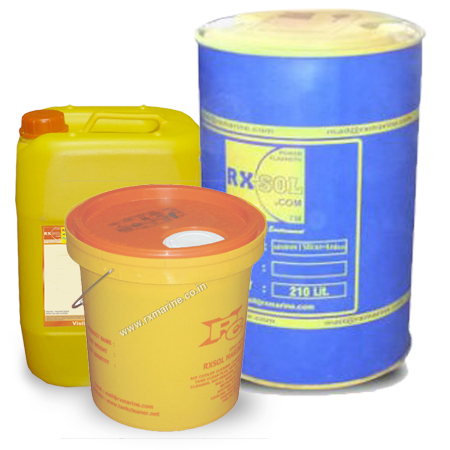
Ascorbic Acid

A natural water soluble vitamin vitamin C

SKU: RXSOL-95-1589-200 Category:

Description

A natural water soluble vitamin vitamin C Ascorbic acid is a potent reducing and antioxidant agent that functions in fighting bacterial infections in detoxifying reactions and in the formation of collagen in fibrous tissue teeth bones connective tissue skin and capillaries.

RX MARINE INTERNATIONAL is by far the most popular source of ASCORBIC ACID in INDIA and MIDDLE EAST. We offer high assay of ascorbic acid which is of export quality. RXSOL ASCORBIC ACID is widely used for producing vitamin c supplements and premixes in pharmaceutical industry and food industry. We have managed to maintain top most position as MANUFACTURER, SUPPLIER, DISTRIBUTOR and EXPOTER.







Product Details

Application

Ascorbic acid is also called vitamin c. It exists in two enantiomeric forms and is commonly extracted from naturally occurring substances. It is widely used as an antioxidant and a reducing agent. 
APPLICATION OF ASCORBIC ACID 
-It is widely used as a food additive it combat oxidation.
-It is used as a dietary supplement
-Ascorbic acid is easily oxidized and so is used as a reductant in photographic developer solutions 
-In fluorescence microscopy and related fluorescence-based techniques, ascorbic acid can be used as an antioxidant to increase fluorescent signal and chemically retard dye photobleaching.
-It is also commonly used to remove dissolved metal stains, such as iron, from fiberglass swimming pool surfaces.
-In plastic manufacturing, ascorbic acid can be used to assemble molecular chains more quickly and with less waste than traditional synthesis methods.
-Heroin users are known to use ascorbic acid as a means to convert heroin base to a water-soluble salt so that it can be injected.
-As justified by its reaction with iodine, it is used to negate the effects of iodine tablets in water purification. It reacts with the sterilized water, removing the taste, color, and smell of the iodine. This is why it is often sold as a second set of tablets in most sporting goods stores as Potable Aqua-Neutralizing Tablets, along with the potassium iodide tablets.
-Intravenous high-dose ascorbate is being used as a chemotherapeutic and biological response modifying agent. 
-It also prevents cancer due to its high antioxidant properties
-It is great for healthy skin
-Ascorbic acid plays a great role in developing immunity

Dosage & Procedure

We at RX MARINE INTERNATIONAL make sure that our products are free from impurities. For which we take stringent quality control measures. We conduct a series of limit test to make sure our product is free of contamination. Our factories are high technology to make sure that stringent measures are taken. 

Technical Specifications

ASCORBIC ACID IP
Test Results

Description

White crystalline powder
Solubility
Complies
Identification
 
A. IP absorption
Complies
B. Add 2ml of 2%w/v soln. to a few ml of 2.6
dichlorophenolindophenol soln. the soln. is decolorised
Complies
pH
2.39
Clarity and colour of solution
Complies
Specific optical rotation (10% w/v Solution)
+20.98°
Light absorption
Complies
Oxalic acid
Less than 0.2% w/v
Heavy metals
Less than 10 ppm
Sulfated ash
0.07% w/w
Assay
99.39% w/w

Notes & Precautions

We have established a vast foot hold all over India and Middle East, this aids in timely delivery of product. We also offer customized packaging as per our customer's requirement. We make sure that we personalize our product according to customer's whim and fancy so that the best results can be achieved. We have a dedicated team to cater to further needs of purchaser. 

Safety Data (MSDS)

Porduct Name               Ascorbic Acid
Part Number   RXSOL-95-1589-200

Company Details:....

RX MARINE INTERNATIONAL
105, A wing , BSEL , TECH PARK.
VASHI ,NEW BOMBAY 400703 INDIA

Branch : Kandla, Mumbai , Chennai, Vizag, Kolkata, UAE , OMAN , CANADA and KENYA  

Phone +91 22 20871200 - 1400
Fax +91 22 27612100 :::AOH :0091 9821214367
Email mail@rxmarine.com
Website www.rxmraine.com

Substances

Synonyms
Antiscorbutic factor
L-Threoascorbic acid
Vitamin C
Formula C6H8O6            
Molecular weight 176,12 g/mol
CAS-No 50-81-7
EC-No.  200-066-2
Classification of the substance or mixture Not a hazardous substance or mixture according to Regulation (EC) No 1272/2008.
Label elements No hazard pictogram, no signal word, no hazard statement(s), no precautionary statement(s) required
Other hazards
This substance/mixture contains no components considered to be either persistent,
bioaccumulative and toxic (PBT), or very persistent and very bioaccumulative (vPvB) at
levels of 0.1% or higher.
 
Ecological information:
The substance/mixture does not contain components considered to have endocrine
disrupting properties according to REACH Article 57(f) or Commission Delegated regulation
(EU) 2017/2100 or Commission Regulation (EU) 2018/605 at levels of 0.1% or higher.
 
Toxicological information:
The substance/mixture does not contain components considered to have endocrine
disrupting properties according to REACH Article 57(f) or Commission Delegated regulation
(EU) 2017/2100 or Commission Regulation (EU) 2018/605 at levels of 0.1% or higher.
 
May form explosible dust-air mixture if dispersed.

Description of first aid measures

If inhaled After inhalation: fresh air.
In case of skin contact In case of skin contact: Take off immediately all contaminated clothing. Rinse skin with water/ shower.
In case of eye contact After eye contact: rinse out with plenty of water. Remove contact lenses.
If swallowed After swallowing: make victim drink water (two glasses at most). Consult doctor if feeling unwell.
Most important symptoms and effects, both acute and delayed The most important known symptoms and effects are described in the labelling (see section 2.2) and/or in section 11
Indication of any immediate medical attention and special treatment needed No data available

Extinguishing media

Suitable extinguishing media                                             Water Foam Carbon dioxide (CO2) Dry powder
Unsuitable extinguishing media  For this substance/mixture no limitations of extinguishing agents are given.
Special hazards arising from the substance or mixture
Highly flammable liquid and vapor. Runoff to sewer may create fire or explosion hazard.
In a fire or if heated, a pressure increase will occur and the container may burst, with the
risk of a subsequent explosion. The vapor/gas is heavier than air and will spread along
the ground. Vapors may accumulate in low or confined areas or travel a considerable
distance to a source of ignition and flash back.
Highly flammable liquid and vapor. Runoff to sewer may create fire or explosion hazard.
In a fire or if heated, a pressure increase will occur and the container may burst, with the
risk of a subsequent explosion. The vapor/gas is heavier than air and will spread along
the ground. Vapors may accumulate in low or confined areas or travel a considerable
distance to a source of ignition and flash back.
Highly flammable liquid and vapor. Runoff to sewer may create fire or explosion hazard.
In a fire or if heated, a pressure increase will occur and the container may burst, with the
risk of a subsequent explosion. The vapor/gas is heavier than air and will spread along
the ground. Vapors may accumulate in low or confined areas or travel a considerable
distance to a source of ignition and flash back.
Carbon oxides
Combustible.
Risk of dust explosion.
Development of hazardous combustion gases or vapours possible in the event of fire
Advice for firefighters

In the event of fire, wear self-contained breathing apparatus.

Further information
Prevent fire extinguishing water from contaminating surface water or the ground water system.
spray to keep fire-exposed containers cool.Promptly isolate the scene by removing all persons from the vicinity of the incident if
there is a fire. No action shall be taken involving any personal risk or without suitable
training. Move containers from fire area if this can be done without risk. Use water
spray to keep fire-exposed containers cool.

Personal precautions, protective equipment and emergency procedures 
Advice for non-emergency personnel: Avoid inhalation of dusts. Evacuate the danger area, observe emergency procedures, consult an expert.
For personal protection see section 8.
Environmental precautions Do not let product enter drains.
Methods and materials for containment and cleaning up Cover drains. Collect, bind, and pump off spills. Observe possible material restrictions (see sections 7 and 10). Take up dry. Dispose of properly. Clean up affected area. Avoid generation of dusts.
Reference to other sections For disposal see section 13.

Precautions for safe handling

Advice on protection against fire and explosion Keep away from open flames, hot surfaces and sources of ignition.Take precautionary measures against static discharge.
Hygiene measures
Change contaminated clothing. Wash hands after working with substance. For precautions see section 2.2.
Recommended storage temperature see product label.Tightly closed.
 
Recommended storage temperature see product label.
Conditions for safe storage, including any incompatibilities
 
Storage conditions


Tightly closed. Dry.
 
Light sensitive.
Storage class Storage class (TRGS 510): 11: Combustible Solids
Specific end use(s) Apart from the uses mentioned in section 1.2 no other specific uses are stipulated 

 Control parameters

 
Ingredients with workplace control parameters
 
Exposure controls
 
Personal protective equipment
Eye/face protection Use equipment for eye protection tested and approved under appropriate government standards such as NIOSH (US) or EN 166(EU). Safety glasses
Skin protection
This recommendation applies only to the product stated in the safety data sheet,
supplied by us and for the designated use. When dissolving in or mixing with other
substances and under conditions deviating from those stated in EN374 please
contact the supplier of CE-approved gloves (e.g. KCL GmbH, D-36124 Eichenzell,
Internet: www.kcl.de).
Full contact
Material: Nitrile rubber
Minimum layer thickness: 0,11 mm
Break through time: 480 min
Material tested:KCL 741 Dermatril® L
 
This recommendation applies only to the product stated in the safety data sheet,
supplied by us and for the designated use. When dissolving in or mixing with other
substances and under conditions deviating from those stated in EN374 please
contact the supplier of CE-approved gloves (e.g. KCL GmbH, D-36124 Eichenzell,
Internet: www.kcl.de).
Splash contact
Material: Nitrile rubber
Minimum layer thickness: 0,11 mm
Break through time: 480 min
Material tested:KCL 741 Dermatril® L
Respiratory protection
Required when dusts are generated.
Our recommendations on filtering respiratory protection are based on the following
standards: DIN EN 143, DIN 14387 and other accompanying standards relating to
the used respiratory protection system.
Recommended Filter type: Filter type P1
 
The entrepeneur has to ensure that maintenance, cleaning and testing of respiratory
protective devices are carried out according to the instructions of the producer.
These measures have to be properly documented.
Control of environmental exposure Do not let product enter drains.. 

Information on basic physical and chemical properties

Physical state solid
Color No data available
Odor No data available
Melting point/freezing point Melting point/range: 190 - 194 °C - dec.
Initial boiling point and boiling range No data available
Flammability (solid, gas) May form combustible dust concentrations in air.
Upper/lower flammability or explosive limits No data available
Flash point Not applicable
Autoignition temperature No data available
Decomposition temperature
No data available
materials.Extremely flammable in the presence of the following materials or conditions: oxidizing
materials.
pH

No data available

Viscosity
Viscosity, kinematic: No data available
Viscosity, dynamic: No data available
Water solubility No data available
Partition coefficient: n-octanol/water No data available
Vapor pressure No data available
Density 1,65 g/cm3 at 20 °C
Relative density No data available
Relative vapor density No data available
Particle characteristics No data available
Explosive properties No data available
Oxidizing properties None
Other safety information No data available

Reactivity                    The following applies in general to flammable organic substances and mixtures: in correspondingly fine distribution, when whirled up a dust explosion potential may generally be assumed.
Chemical stability The product is chemically stable under standard ambient conditions (room temperature)
Possibility of hazardous reactions
Violent reactions possible with:
Aluminum
Copper alloys
Zinc
metal ions
Oxidizing agents
Copper
Acids
bases
Conditions to avoid
Light.
No information available       
Incompatible materials
Strong acids
Hazardous decomposition products In the event of fire: see section 5

Information on toxicological effects

Acute toxicity 
LD50 Oral - Rat - male and female - > 2.000 mg/kg
(OECD Test Guideline 420)
 
LC50 Inhalation - Rat - male and female - 4 h - > 5,05 mg/l
(OECD Test Guideline 403)
Remarks: (in analogy to similar products)
 
LD50 Dermal - Rat - male and female - > 2.000 mg/kg
(OECD Test Guideline 402)
Remarks: (in analogy to similar products)

The value is given in analogy to the following substances: disodium molybdate               

Skin corrosion/irritation
Skin - Rabbit
Result: No skin irritation - 4 h
(OECD Test Guideline 404)
Remarks: (in analogy to similar products)
The value is given in analogy to the following substances: Molybdenum dioxide
Serious eye damage/eye irritation
Eyes - Rabbit
Result: No eye irritation
(OECD Test Guideline 405)
Remarks: (in analogy to similar products)
The value is given in analogy to the following substances: Molybdenum dioxide
Respiratory or skin sensitization
Maximization Test - Guinea pig
Result: negative
(OECD Test Guideline 406)
Remarks:
(in analogy to similar products)
Germ cell mutagenicity
Test Type: Micronucleus test
Test system: Human lymphocytes
Metabolic activation: with and without metabolic activation
Method: OECD Test Guideline 487
Result: negative
Remarks: (in analogy to similar products)
The value is given in analogy to the following substances: Disodium molybdate dihydrate
Test Type: Ames test
Test system: Escherichia coli/Salmonella typhimurium
Metabolic activation: with and without metabolic activation
Method: OECD Test Guideline 471
Result: negative
Remarks: (in analogy to similar products)
The value is given in analogy to the following substances: Disodium molybdate dihydrate
Test Type: In vitro mammalian cell gene mutation test
Test system: mouse lymphoma cells
Metabolic activation: with and without metabolic activation
Method: OECD Test Guideline 476
Result: negative
Remarks: (in analogy to similar products)
The value is given in analogy to the following substances: Disodium molybdate dihydrate
Carcinogenicity
No data available
Reproductive toxicity No data available
Specific target organ toxicity - single exposure No data available
Specific target organ toxicity - repeated exposure No data available
Aspiration hazard No data available

Persistence and degradability No data available
Toxicity to fish  Static test LC50 - Oncorhynchus mykiss (rainbow trout) - 75 mg/l - 96 h (OECD Test Guideline 203)
Toxicity to daphnia and other aquatic invertebrates Static test EC50 - Daphnia magna (Water flea) - 42,81 mg/l - 48 h (OECD Test Guideline 202) Remarks: (in analogy to similar products) The value is given in analogy to the following substances: maleic acid
Toxicity Toxicity to fish LC50 - Pimephales promelas (fathead minnow) - 1.520 mg/l - 96 h
Toxicity to bacteria  EC10 - Bacteria - 14 mg/l - 72 h Remarks: (Lit.) EC5 - E.coli - 15.000 mg/l Remarks: (Lit.) (maximum permissible toxic concentration)
Toxicity to algae Static test ErC50 - Pseudokirchneriella subcapitata (green algae) - 74,35 mg/l - 72 h (OECD Test Guideline 201) Remarks: (in analogy to similar products) The value is given in analogy to the following substances: maleic acid
Products Biodegradation The methods for determining the biological degradability are not applicable to inorganic substances.
Mobility in soil No data available
Results of PBT and vPvB assessment This substance/mixture contains no components considered to be either persistent, bioaccumulative and toxic (PBT), or very persistent and very bioaccumulative (vPvB) at levels of 0.1% or higher.
Endocrine disrupting       properties No data available
Other adverse effects No data available .

Product Offer surplus and non-recyclable solutions to a licensed disposal company. Waste material must be disposed of in accordance with the Directive on waste 2008/98/EC as well as other national and local regulations. Leave chemicals in original containers. No mixing with other waste. Handle uncleaned containers like the product itself.
Contaminated packaging Dispose of as unused product.
Waste treatment      Method See www.retrologistik.com for processes regarding the return of chemicals and containers, or contact us there if you have further questions.

UN number ADR/RID:2404                 IMDG:2404             IATA: 2404
UN proper shipping name  ADR/RID:PROPIONITRILE    IMDG:PROPIONITRILE IATA:PROPIONITRILE 
Transport hazard class(es)      ADR/RID: 3 (6.1)               IMDG: 3 (6.1)               IATA:3 (6.1) 
Packaging group ADR/RID: II                 IMDG:     II      IATA:II
Environmental hazards ADR/RID: No                     IMDG: No                IATA: No
Special precautions for user No data available
Further information Not classified as dangerous in the meaning of transport regulations.

Safety, health and environmental regulations/legislation specific for the substance or mixture This material safety data sheet complies with the requirements of Regulation (EC) No. 1907/2006.
Other regulations Observe work restrictions regarding maternity protection in accordance to Dir 92/85/EEC or stricter national regulations where applicable. Take note of Dir 94/33/EC on the protection of young people at work.
Chemical Safety Assessment For this product a chemical safety assessment was not carried out

Other Information

The information above is believed to be accurate and represents the  best information   currently    available  to us.  However,   we   make no warranty of merchantability or any other warranty, express or implied, with respect to such information, and  weassume  no liability resulting from its use. Users should make  their  own  investigations  to determine the suitability of the information for their particular purposes. In no event shall be liable for any claims, losses, or damages of any third party or for lost profits or any special, indirect, incidental, consequential or exemplary damages, howsoever arising, even if Rx Marine International  has been advised of the possibility of such damages.

DISCLAIMER OF LIABILITY :The information in this SDS was obtained from sources which we believe are reliable. However, the information is provided without any warranty, express or implied, regarding its correctness. The conditions or methods of handling, storage, use or disposal of the product are beyond our control and may be beyond our knowledge. For this and other reasons, we do not assume responsibility and expressly disclaim liability for loss, damage or expense arising out of or in any way connected with the handling, storage, use or disposal of the product. This MSDS was prepared and is to be used only for this product. If the product is used as a component in another product, this MSDS information may not be applicable.

top