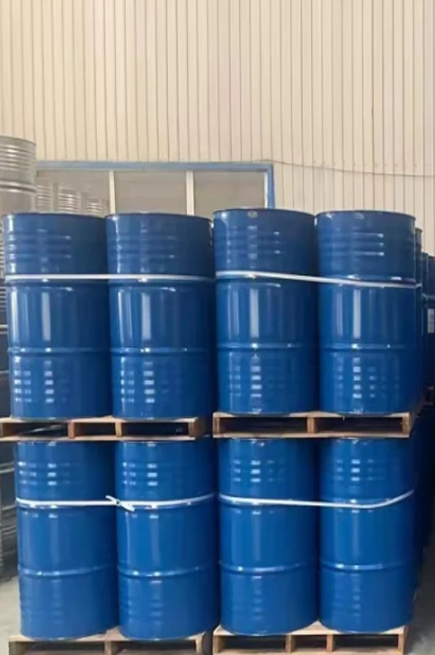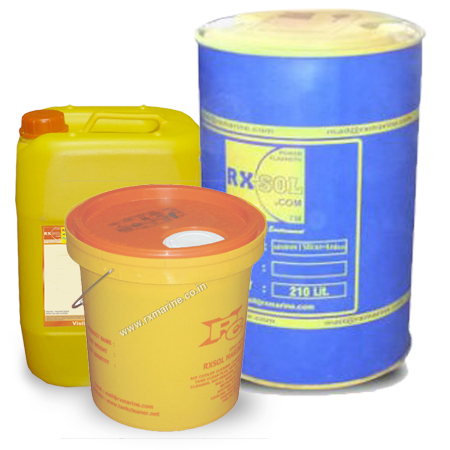
Monosodium Glutamate

MSG is a flavor enhancer that’s derived from glutamic acid, an amino acid found in many foods

SKU: RXSOL-19-1339-027 Category:

Description

Monosodium glutamate (MSG) known as sodium glutamate and E621. MSG is white or off-white crystalline powder with a slight odor. It’s found naturally in tomatoes and cheeses, and is added to many processed foods, including canned vegetables, soups, deli meats, and fast food.





Product Details

Application

The FDA considers MSG to be "generally recognized as safe" (GRAS), but some studies have questioned its long-term safety. For example, preclinical studies have found that MSG can cause: Cardiovascular toxicity, Increased oxidative stress in cardiac tissue, Increased levels of heart disease biomarkers, and Hepatotoxicity

Technical Specifications

Physical properties :
Appearance A white, crystalline powder or solid at room temperature   
Odor    Odorless or has a slight peptone-like odor
Taste   Slightly salty and bitter, or has an umami flavor
Solubility Highly soluble in water, with a solubility of 740 grams per liter
Density 26.2 grams per cubic centimeter when saturated in water at 20°C
Melting point 225–236°C
Boiling point               225°C
Molecular mass 169.11 grams per mole
pH 6.7–7.2 

Generic / Chemical Name

MSG Ajinomoto

Safety Data (MSDS)

Porduct Name               Monosodium glutamate
Part Number   RXSOL-19-1339-027  

Company Details:....

RX MARINE INTERNATIONAL
105, A wing , BSEL , TECH PARK.
VASHI ,NEW BOMBAY 400703 INDIA

Branch : Kandla, Mumbai , Chennai, Vizag, Kolkata, UAE , OMAN , CANADA and KENYA  

Phone +91 22 20871200 - 1400
Fax +91 22 27612100 :::AOH :0091 9821214367
Email mail@rxmarine.com
Website www.rxmraine.com

Substances

Synonyms
L-Glutamic acid, sodium salt (1:1)
Monosodium glutamate, MSG     
Formula      C5H8NO4 .Na
Molecular weight        169.11 g/mol
CAS-No. 142-47-2

Classification of the substance or mixture


GHS Classification in accordance with 29 CFR 1910 (OSHA HCS)
Acute toxicity, Oral (Category 4), H302
Acute aquatic toxicity (Category 1), H400
Chronic aquatic toxicity (Category 1), H410

Label elements

Hazard Statements  
H302 Harmful if swallowed.
H410 Very toxic to aquatic life with long lasting effects.
Precautionary Statements  
P264 Wash skin thoroughly after handling
P270 Do not eat, drink or smoke when using this product.
P273 Avoid release to the environment.
P301 + P312 IF SWALLOWED: Call a POISON CENTER or doctor/ physician if you feel unwell.
P230 Rinse mouth.
P291 Collect spillage.
P501 Dispose of contents/ container to an approved waste disposal plant.
Other hazards None

Description of first aid measures

Eye contact Remove any contact lenses, locate eye-wash station, and flush eyes immediately with large amounts of water. Separate eyelids with fingers to ensure adequate flushing. Promptly call a physician.
Skin contact Rinse skin thoroughly with large amounts of water. Remove contaminated clothing and shoes and call a physician.
Inhalation Immediately relocate self or casualty to fresh air. If breathing is difficult, give cardiopulmonary resuscitation (CPR). Avoid mouth-to-mouth resuscitation.
Ingestion  Wash out mouth with water; Do NOT induce vomiting; call a physician.
Most important symptoms and effects, both acute and delayed The most important known symptoms and effects are described in the labelling (see section 2.2).
Indication of any immediate medical attention and special treatment needed Treat symptomatically.

Extinguishing media

Suitable extinguishing media                                             Use water spray, dry chemical, foam, and carbon dioxide fire extinguisher.
Special hazards arising from the substance or mixture
Highly flammable liquid and vapor. Runoff to sewer may create fire or explosion hazard.
In a fire or if heated, a pressure increase will occur and the container may burst, with the
risk of a subsequent explosion. The vapor/gas is heavier than air and will spread along
the ground. Vapors may accumulate in low or confined areas or travel a considerable
distance to a source of ignition and flash back.
Highly flammable liquid and vapor. Runoff to sewer may create fire or explosion hazard.
In a fire or if heated, a pressure increase will occur and the container may burst, with the
risk of a subsequent explosion. The vapor/gas is heavier than air and will spread along
the ground. Vapors may accumulate in low or confined areas or travel a considerable
distance to a source of ignition and flash back.
Highly flammable liquid and vapor. Runoff to sewer may create fire or explosion hazard.
In a fire or if heated, a pressure increase will occur and the container may burst, with the
risk of a subsequent explosion. The vapor/gas is heavier than air and will spread along
the ground. Vapors may accumulate in low or confined areas or travel a considerable
distance to a source of ignition and flash back.
During combustion, may emit irritant fumes.
Advice for firefighters
Wear self-contained breathing apparatus and protective clothing.
spray to keep fire-exposed containers cool.Promptly isolate the scene by removing all persons from the vicinity of the incident if
there is a fire. No action shall be taken involving any personal risk or without suitable
training. Move containers from fire area if this can be done without risk. Use water
spray to keep fire-exposed containers cool.

Personal precautions, protective equipment and emergency procedures
Use full personal protective equipment. Avoid breathing vapors, mist, dust or gas. Ensure adequate
ventilation. Evacuate personnel to safe areas.
Refer to protective measures listed in sections 8.
Environmental precautions Try to prevent further leakage or spillage. Keep the product away from drains or water courses.
Methods and materials for containment and cleaning up Absorb solutions with finely-powdered liquid-binding material (diatomite, universal binders); Decontaminate surfaces and equipment by scrubbing with alcohol; Dispose of contaminated material according to Section 13.

Precautions for safe handling Avoid inhalation, contact with eyes and skin. Avoid dust and aerosol formation. Use only in areas with appropriate exhaust ventilation.

Conditions for safe storage, including any incompatibilities

Keep container tightly sealed in cool, well-ventilated area. Keep away from direct sunlight and sources of
ignition.
Store at -20°C(powder) or -80°C( in solvent)
Specific end use(s) No data available.

 Control parameters 

Ingredients with workplace control parameters

Exposure controls

Personal protective equipment

Eye/face protection Use equipment for eye protection tested and approved under appropriate government standards such as NIOSH (US) or EN 166(EU). Tightly fitting safety goggles
Skin protection
This recommendation applies only to the product stated in the safety data sheet,
supplied by us and for the designated use. When dissolving in or mixing with other
substances and under conditions deviating from those stated in EN 16523-1 please
contact the supplier of CE-approved gloves (e.g. KCL GmbH, D-36124 Eichenzell,
Internet: www.kcl.de).
Full contact
Material: Chloroprene
Minimum layer thickness: 0,65 mm
Break through time: 480 min
Material tested:KCL 720 Camapren®
 
This recommendation applies only to the product stated in the safety data sheet,
supplied by us and for the designated use. When dissolving in or mixing with other
substances and under conditions deviating from those stated in EN 16523-1 please
contact the supplier of CE-approved gloves (e.g. KCL GmbH, D-36124 Eichenzell,
Internet: www.kcl.de).
Splash contact
Material: Latex gloves
Minimum layer thickness: 0,6 mm
Break through time: 60 min
Material tested:Lapren® (KCL 706 / Aldrich Z677558, Size M).
Body Protection Flame retardant antistatic protective clothing.
Respiratory protection
Recommended Filter type: Filter A-(P3)
 
The entrepeneur has to ensure that maintenance, cleaning and testing of respiratory
protective devices are carried out according to the instructions of the producer.
These measures have to be properly documented.
Control of environmental exposure Do not let product enter drains.

Appearance solid
Colour No data available
Odor No data available
Melting point/freezing point No data available
Initial boiling point and boiling range No data available
Flammability (solid, gas) No data available
Upper/lower flammability or explosive limits No data available
Flash point No data available
Autoignition temperature No data available
Decomposition temperature No data available
pH
No data available
materials.Extremely flammable in the presence of the following materials or conditions: oxidizing
materials.
Viscosity

No data available

Water solubility 33 mg/mL
Partition coefficient: n-octanol/water No data available
Vapor pressure No data available                                    
Density No data available
Relative density No data available
Relative vapor density No data available
Particle characteristics No data available
Explosive properties No data available
Oxidizing properties No data available
Other safety information No data available

Reactivity                        The following applies in general to flammable organic substances and mixtures: in correspondingly fine distribution, when whirled up a dust explosion potential may generally be assumed.
Chemical stability The product is chemically stable under standard ambient conditions (room temperature) 
Possibility of hazardous reactions
Violent reactions possible with:
Oxidizing agents
Bases
Reducing agents
Conditions to avoid No information available
Incompatible materials
No data available
Hazardous decomposition products In the event of fire: see section 5

Information on toxicological effects

Acute toxicity 
LD50 Oral - Rat - male - 207,0 mg/kg
Remarks: Sense Organs and Special Senses (Nose, Eye, Ear, and Taste):Olfaction:Other
changes.
Behavioral:Convulsions or effect on seizure threshold.
Gastrointestinal:Ulceration or bleeding from stomach.
(ECHA)
Symptoms: If ingested, severe burns of the mouth and throat, as well as a danger of
perforation of the esophagus and the stomach.
Acute toxicity estimate Oral - 207 mg/kg
(ATE value derived from LD50/LC50 value)
LC50 Inhalation - Rat - 1 h - > 710 mg/m3
 
Remarks: (RTECS)
LD50 Dermal - Rabbit - 301,0 mg/kg
Remarks: Behavioral:Tremor.
Gastrointestinal:Changes in structure or function of salivary glands.
Kidney, Ureter, Bladder:Other changes.
(ECHA)
Acute toxicity estimate Dermal - 301 mg/kg

(ATE value derived from LD50/LC50 value)                  

Skin corrosion/irritation
Skin - Rabbit
Result: Causes burns.
Remarks: (ECHA)
 sensitization  Not available
mutagenicity  Not available
Carcinogenicity Not available
Reproductive toxicity
Not available
Teratogenicity Not available
Specific target organ toxicity (single exposure) Not available.
Specific target organ toxicity (repeated exposure) Not available.
Aspiration hazard Not available.
Information on the likely routes of exposure  Not available.

Persistence and degradability No data available
Toxicity to fish  Static test LC50 - Oncorhynchus mykiss (rainbow trout) - 75 mg/l - 96 h (OECD Test Guideline 203)
Toxicity to daphnia and other aquatic invertebrates Static test EC50 - Daphnia magna (Water flea) - 42,81 mg/l - 48 h (OECD Test Guideline 202) Remarks: (in analogy to similar products) The value is given in analogy to the following substances: maleic acid
Toxicity Toxicity to fish LC50 - Pimephales promelas (fathead minnow) - 1.520 mg/l - 96 h
Toxicity to bacteria  EC10 - Bacteria - 14 mg/l - 72 h Remarks: (Lit.) EC5 - E.coli - 15.000 mg/l Remarks: (Lit.) (maximum permissible toxic concentration)
Toxicity to algae Static test ErC50 - Pseudokirchneriella subcapitata (green algae) - 74,35 mg/l - 72 h (OECD Test Guideline 201) Remarks: (in analogy to similar products) The value is given in analogy to the following substances: maleic acid
Products Biodegradation The methods for determining the biological degradability are not applicable to inorganic substances.
Mobility in soil No data available
Results of PBT and vPvB assessment This substance/mixture contains no components considered to be either persistent, bioaccumulative and toxic (PBT), or very persistent and very bioaccumulative (vPvB) at levels of 0.1% or higher.
Endocrine disrupting       properties No data available
Other adverse effects No data available .

Product Offer surplus and non-recyclable solutions to a licensed disposal company. Waste material must be disposed of in accordance with the Directive on waste 2008/98/EC as well as other national and local regulations. Leave chemicals in original containers. No mixing with other waste. Handle uncleaned containers like the product itself.
Contaminated packaging Dispose of as unused product.
Waste treatment      Method See www.retrologistik.com for processes regarding the return of chemicals and containers, or contact us there if you have further questions.

UN number ADR/RID:2404                 IMDG:2404             IATA: 2404
UN proper shipping name  ADR/RID:PROPIONITRILE    IMDG:PROPIONITRILE IATA:PROPIONITRILE 
Transport hazard class(es)      ADR/RID: 3 (6.1)               IMDG: 3 (6.1)               IATA:3 (6.1) 
Packaging group ADR/RID: II                 IMDG:     II      IATA:II
Environmental hazards ADR/RID: No                     IMDG: No                IATA: No
Special precautions for user No data available
Further information Not classified as dangerous in the meaning of transport regulations.

Safety, health and environmental regulations/legislation specific for the substance or mixture This material safety data sheet complies with the requirements of Regulation (EC) No. 1907/2006.
Other regulations Observe work restrictions regarding maternity protection in accordance to Dir 92/85/EEC or stricter national regulations where applicable. Take note of Dir 94/33/EC on the protection of young people at work.
Chemical Safety Assessment For this product a chemical safety assessment was not carried out

Other Information

The information above is believed to be accurate and represents the  best information   currently    available  to us.  However,   we   make no warranty of merchantability or any other warranty, express or implied, with respect to such information, and  weassume  no liability resulting from its use. Users should make  their  own  investigations  to determine the suitability of the information for their particular purposes. In no event shall be liable for any claims, losses, or damages of any third party or for lost profits or any special, indirect, incidental, consequential or exemplary damages, howsoever arising, even if Rx Marine International  has been advised of the possibility of such damages.

DISCLAIMER OF LIABILITY :The information in this SDS was obtained from sources which we believe are reliable. However, the information is provided without any warranty, express or implied, regarding its correctness. The conditions or methods of handling, storage, use or disposal of the product are beyond our control and may be beyond our knowledge. For this and other reasons, we do not assume responsibility and expressly disclaim liability for loss, damage or expense arising out of or in any way connected with the handling, storage, use or disposal of the product. This MSDS was prepared and is to be used only for this product. If the product is used as a component in another product, this MSDS information may not be applicable.

top