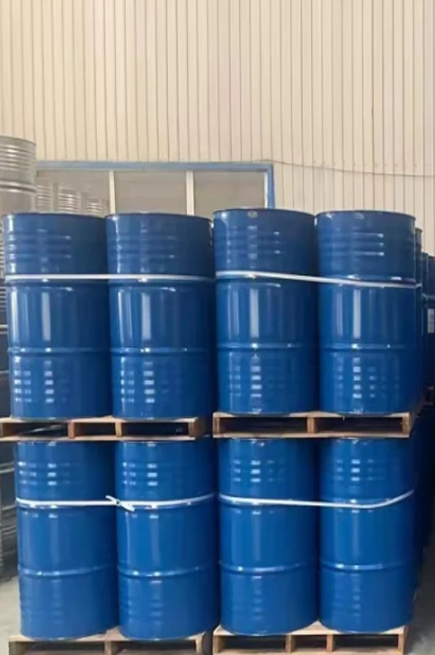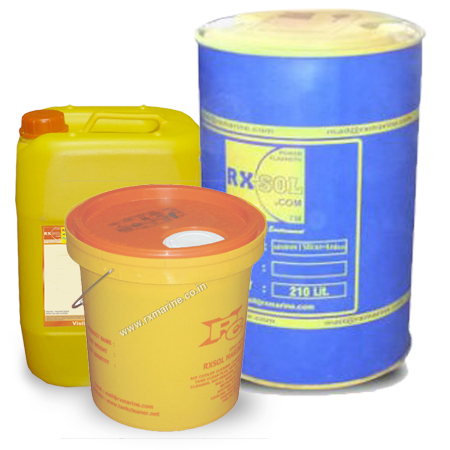
ORG RO SCALE CONTROL

ORG RO SCALE CONTROL

SKU: RXSOL-33-3342-025 Category:

Description

Scaling and iron fouling of the RO membranes will reduce system performance and lead to premature membrane replacement. Precipitation of scale and deposits build up on the RO membrane, which leads to poor permeate quality, low permeate production, unscheduled downtime, increased water consumption and increased energy costs.

RXSOL RO Scale Control is a high-performance, broad-spectrum antiscalant formulated to protect Reverse Osmosis (RO) systems by effectively preventing scale formation and iron fouling. It helps maintain system efficiency while extending membrane life under varying operating conditions.







Product Details

Dosage & Procedure

Dosage Levels of controlling SCALE FORMATION in RO MEMBRANE

Typical dosage: 5 - 15 ml per m³ of feed water
 
Application: Continuous dosing is recommended to prevent scale precipitation and membrane fouling.
 
Dosing method:
  • Use a high-frequency dosing pump
  • Adjust dosage via pump stroke for precise control
Injection point:
  • As close to the RO membrane as possible
  • Typically before cartridge filters to ensure proper mixing
 
For best results, the product should be dosed neat using a closed feed system to prevent contamination.

Technical Specifications

Form Liquid
Colour Colourless to slightly Yellow
Odour Ammonia
Boiling point and boiling range No Data Available
Flash Point Not Applicable / Non Flammable
Boiling Point 105°C
Freezing Point 16 °C
pH as a solution (1%) 10-11

Notes & Precautions

Why Choose RXSOL RO Scale Control?

RXSOL RO Scale Control ensures dependable and consistent scale inhibition across a wide range of operating environments. Its optimized formulation allows effective performance at low dosage levels, making it a cost-efficient solution for RO treatment.

The product is compatible with most commercially available RO membranes, offering flexibility across diverse system configurations.

Generic / Chemical Name

Reverse Osmosis Scale Control

Areas of Use

If dilution is required:
 
  • Use only RO permeate water
  • Prepare fresh solution every 3-5 days
  • Clean the day tank before refilling if necessary
  • Typical dilution ratio: up to 1:10
  • Higher dilution ratios require:
  • More frequent tank cleaning
  • Fresh solution preparation every 1-3 days


For warm climates, adjust solution pH to 10–11 using NaOH to prevent biological growth.

Supply Locations

RO SCALE CONTROL manufacturer and supplier in Mumbai, Kandla Gandhidham, Chennai Ennore, Kolkata Haldia Paradip, Visakhapatnam Gangavaram, Surat Hazira, Muscat Barka Sohar Oman, Fujairah Sharjah, Abudhabi Ajman, UAE Middle East, Nairobi Kenya Africa, Canada, Sudan, Yemen

Get factory sale price for RO SCALE CONTROL for your REVERSE OSMOSIS MEMBRANE SYSTEMS. Best Quality RO SCALE CONTROL in Mumbai, Kandla, Kolkata, Chennai, Vizag, Fujairah, Muscat

Industry Applications

#ROSCALECONTROL
#REVERSEOSMOSISSCALECONTROLLIQUID

Safety Data (MSDS)

Product Name ORG RO SCALE CONTROL
Part Number   RXSOL-33-3342-025

Company Details:

RX MARINE INTERNATIONAL
105, A wing , BSEL , TECH PARK.
VASHI ,NEW BOMBAY 400703 INDIA

Branch : Kandla, Mumbai , Chennai, Vizag, Kolkata, UAE , Muscat , CANADA and KENYA  

Phone +91 22 20871200 - 1400
Fax +91 22 27612100 :::AOH :0091 9821214367
Email mail@rxmarine.com

Name     of        Substance                          Cas Number EINECS No Wt.%
Aminotri(Methylene Phosphonic acid), sodium salt 20592-85-2 243-900-0 30 -60 %
Ammonia 1336-21-6 215-647-6 0.1 - 1.0%

Signal Word                        None
Hazard Statements

Not Applicable

Supplementary statement Not Applicable
Precautionary statement General
 
P101 If medical advice is needed, have product container or label at hand.
P102 Keep out of reach of children.
P103 Read carefully and follow all instructions.


Eye Contact Rinse immediately with plenty of water, also under the eyelids, for at least 15 minutes. Remove contact lenses, if present and easy to do. Continue rinsing. Get medical attention immediately.
Skin Contact Wash off immediately with plenty of water for at least 15 minutes. Use a mild soap if available. Wash clothing before reuse. Thoroughly clean shoes before reuse. Get medical attention immediately.
Inhalation:              If fumes or combustion products are inhaled remove from contaminated area. Lay patient down. Keep warm and rested.
Prostheses such as false teeth, which may block airway, should be removed, where possible, prior to initiating first aid
procedures. Apply artificial respiration if not breathing, preferably with a demand valve resuscitator, bag-valve mask device, or pocket mask as trained. Perform CPR if necessary.  Get medical attention immediately.
Ingestion:                        Immediately give a glass of water. First aid is not generally required. If in doubt, contact a Poisons Information Centre or a doctor
Notes to Physicians Treat symptomatically.

Extinguishing media Use extinguishing measures that are appropriate to local circumstances and the surrounding environment.
Protective  Equipment                       Use personal protective equipment.
Hazardous combustionproducts Carbon dioxide (CO2), Nitrogen oxides (NOx), Phosphorus oxides (POx), Other pyrolysis products typical of burning organic material. May emit poisonous fumes. May emit corrosive fumes
Advice for firefighters Wear breathing apparatus plus protective gloves in the event of a fire. Prevent, by any means available, spillage from entering drains or water courses. Use fire fighting procedures suitable for surrounding area. DO NOT approach containers suspected to be hot. Cool fire exposed containers with water spray from a protected location. If safe to do so, remove containers from path of fire.
Specific extinguishing methods Fire residues and contaminated fire extinguishing water must be disposed of in accordance with local regulations. In the event of fire and/or explosion do not breathe fumes.

Personal precautions, protective equipment and emergency procedures

Ensure adequate ventilation. Keep people away from and upwind of spill/leak. Avoid inhalation, ingestion and contact with skin and eyes. Wear suitable personal protective equipment.Respiratory protective equipment.

Enviromental  Precaution  Do not allow contact with soil, surface or ground water.If the products get into drains, inform the relevant authorities immediately.
Methods and materials for
containment and cleaning up
Stop leak if safe to do so. Contain spillage, and then collect with noncombustible absorbent material, (e.g. sand, earth, diatomaceous earth, vermiculite) and place in container for disposal according to local / national regulations (see section 13). Flush away traces with water. For large spills, dike spilled material or otherwise contain material to ensure runoff does not reach a waterway.

Advice on safe handling Avoid all personal contact, including inhalation. Wear protective clothing when risk of exposure occurs Use in a well-ventilated area. Avoid contact with moisture. Avoid contact with incompatible materials. When handling, DO NOT eat, drink or smoke. Keep containers securely sealed when not in use. DO NOT allow clothing wet with material to stay in contact with skin
Storage Do not store near acids. Keep out of reach of children. Store in suitable labeled containers. Storage temperature : 10 °C to 30 °C
Advice on general occupational hygiene Wash hands after use. Do not to eat, drink and smoke in work areas. Remove contaminated clothing and protective equipment before entering eating areas.

Engineering Control Remove a hazard or place a barrier between the worker and the hazard. Well-designed engineering controls can be highly effective in protecting workers and will typically be independent of worker interactions to provide this high level of protection. The basic types of engineering controls are: Process controls which involve changing the way a job activity or process is done to reduce the risk. Enclosure and/or isolation of emission source which keeps a selected hazard "physically" away from the worker and ventilation that strategically "adds" and "removes" air in the work environment. Ventilation can remove or dilute an air contaminant if designed properly. The design of a ventilation system must match the particular process and chemical or contaminant in use. Employers may need to use multiple types of controls to prevent employee overexposure
Personal   Protection Eye protection : Wear eye protection/ face protection.
Hand protection : Wear the following personal protective equipment: Standard glove type. Gloves should be discarded and replaced if there is any indication of degradation or chemical breakthrough. Skin protection : Personal protective equipment comprising: suitable protective gloves, safety goggles and protective clothing Respiratory protection : When workers are facing concentrations above the exposure limit they must use appropriate certified respirators.

Control Paprameter & Occupational Exposure Limits (OEL) 

Ingredients CAS No Form of exposure
Aminotri(methylene phosphonic acid), sodium salt 20592-85-2 Dermal 2.75 mg/kg bw/day (Systemic, Chronic)
Inhalation 9.7 mg/m³ (Systemic, Chronic)
Dermal 2.75 mg/kg bw/day (Systemic, Acute)
Inhalation 9.7 mg/m³ (Systemic, Acute)
Dermal 1.38 mg/kg bw/day (Systemic, Chronic)
Inhalation 2.39 mg/m³ (Systemic, Chronic) *
Oral 1.38 mg/kg bw/day (Systemic, Chronic) *
Dermal 1.38 mg/kg bw/day (Systemic, Acute) *
Inhalation 2.39 mg/m³ (Systemic, Acute) *
Oral 1.38 mg/kg bw/day (Systemic, Acute) *
 
 Ammonia  1336-21-6 TEEL 1 : 61 PPM
    TEEL 2 : 330 PPM
    TEEL 3 : 2300 PPM
Hygiene measures Handle in accordance with good industrial hygiene and safety practice. Remove and wash contaminated clothing before re-use. Wash face, hands and any exposed skin thoroughly after handling. Provide suitable facilities for quick drenching or flushing of the eyes and body in case of contact or splash hazard.

       gloves                suit                

            Gloves                       Suit                          


Form         Liquid
Colour Colourless to slightly Yellow
Odour Ammonia
Boiling point and boiling range  No Data Available
Flash Point Not Applicable / Non Flammable
Boiling Point 105°C
Freezing Point 16 °C
pH as a solution (1%) 10-11
Evaporation rate No data available
Flammability (solid, gas) No data available
Upper explosion limit No data available
Lower explosion limit No data available
Explosive properties No data available
Vapor pressure No data available
Relative vapor density No data available
Relative density 1.40 g/cm3 (25°C)
Water solubility Miscible
Solubility in other solvents No data available
Partition coefficient: octanol No data available
Autoignition temperature No data available
Thermal decomposition No data available
Viscosity, (cSt) 57.5
Explosive properties No data available
Oxidizing properties No data available
Molecular weight No data available
VOC No data available

Recativity                                             Avoid reaction with oxidising agents
Stability Stable under normal  conditions.
Possibility of hazardous reactions No dangerous reaction known under conditions of normal use.
Incompatible materials Avoid to contact with Strong Acids
Avoid to contact with Oxidizing agents.
Store away from Aldehydes.
Hazardous Decomposition

Carbon Dioxide (CO2)
Nitrogen Oxides (NOx)
Phosphorus Oxides (POx)

Condition to Avoid Contact with strong oxidizing agents and strong acid solutions.
Keep away from heat/sparks/open flames / hot surfaces. Freezing temperatures.
Polymerization Will not occur.

Route of Exposure Inhalation, Eye contact, Skin contact
Eyes                                    

Causes serious eye damage.

Skin Evidence exists, or practical experience predicts, that the material either produces inflammation of the skin in a substantial number of individuals following direct contact, and/or produces significant inflammation when applied to the healthy intact skin of animals, for up to four hours, such inflammation being present twenty-four hours or more after the end of the exposure period.
Skin irritation may also be present after prolonged or repeated exposure; this may result in a form of contact dermatitis (nonallergic). The dermatitis is often characterised by skin redness (erythema) and swelling (oedema) which may progress to blistering (vesiculation), scaling and thickening of the epidermis. At the microscopic level there may be intercellular oedema of the spongy layer of the skin (spongiosis) and intracellular oedema of the epidermis.
The material may accentuate any pre-existing dermatitis condition Skin contact is not thought to have harmful health effects (as classified under EC Directives); the material may still produce health damage following entry through wounds, lesions or abrasions.
The acids and salts of ATMP, HEDP, and DTPMP can be considered to be of low acute dermal toxicity. ATMP acid and its tetraand pentasodium salt were practically non-toxic with LD50 values exceeding the concentrations tested. Dermal LD50 values were determined to be greater than 6310 mg active acid/kg bw. No dermal toxicity was observed for HEDP acid and its salts at the highest tested concentrations tested of 1650 mg active salt/kg bw. DTPMP compounds
 
Ingestion  The material has NOT been classified by EC Directives or other classification systems as "harmful by ingestion". This is because of the lack of corroborating animal or human evidence. The material may still be damaging to the health of the individual, following ingestion, especially where pre-existing organ (e.g liver, kidney) damage is evident. Present definitions of harmful or toxic substances are generally based on doses producing mortality rather than those producing morbidity (disease, ill-health).Gastrointestinal tract discomfort may produce nausea and vomiting. In an occupational setting however, ingestion of insignificant quantities is not thought to be cause for concern. The phosphonic acid compounds ATMP, HEDP, DTPMP and their salts can be considered to be of low to moderate acute oral toxicity.
ATMP acid was of moderate acute toxicity to mammals. The acute oral LD50 in rat was determined to be2910 mg active acid/kg bw. In comparison, the tetrasodium and pentasodium salt of ATMP were less acutely toxic with LD50 values of 8610 and 7120 mg active salt/kg bw, respectively. HEDP acid and its salts are of moderate acute oral toxicity LD50's in rats and mice ranging from 1100 to 1878 mg active acid/kg bw. The oral LD50 values of HEDP salts were in a slightly wider range from 581 mg active salt/kg bw to greater than 5000 mg active salt/kg.
Inhalation Evidence shows, or practical experience predicts, that the material produces irritation of the respiratory system, in a substantial number of individuals, following inhalation. In contrast to most organs, the lung is able to respond to a chemical insult by first removing or neutralising the irritant and then repairing the damage. The repair process, which initially evolved to protect mammalian lungs from foreign matter and antigens, may however, produce further lung damage resulting in the impairment of gas exchange, the primary function of the lungs. Respiratory tract irritation often results in an inflammatory response involving the recruitment and activation of many cell types, mainly derived from the vascular system. The material has NOT been classified by EC Directives or other classification systems as "harmful by inhalation". This is because of the lack of corroborating animal or human evidence. In the absence of such evidence, care should be taken nevertheless to ensure exposure is kept to a minimum and that suitable control measures be used, in an occupational setting to control vapours, fumes and aerosols.
Chronic Exposure Long-term exposure to respiratory irritants may result in disease of the airways involving difficult breathing and related systemic problems.
Limited evidence suggests that repeated or long-term occupational exposure may produce cumulative health effects involving organs or biochemical systems. Long term exposure to organophosphonate chelating agents may cause adverse effects
Acute oral toxicity dermal (rat) LD50: >10000 mg/kg:  Not Available
Oral (Rat) LD50; >10000 mg/kg   : Not Available
Acute inhalation toxicity No data available
Acute dermal toxicity No data available
Classification Classification drawn from Regulation (EU) No 1272/2008 - Annex VI.


Environmental Effects No data available
Toxicity    to     fish                                                     No data available
Toxicity to daphnia  and others No data available
Toxicity to algae                       No data available
Biodegradability Orthophosphate has been found to suppress phosphonate utilisation in many microorganisms. Thus organisms preferentially use inorganic phosphate, which may explain the low biodegradability of phosphonates in synthetic test media and natural sewage systems.The classical tests, such as the OECD screening test, BOD20 test or the closed bottle test show only a low degree of ultimate biodegradation of phosphonate derivatives. For ATMP and HEDP a DOC (Dissolved Organic Carbon) removal of 23 - 33 % was observed in an inherent biodegradability test (Zahn-Wellens test), but mineralisation was very low even after long-term incubation.
However, several studies have shown that phosphonate degrading bacteria can be found in almost any environment whether soil, activated sludge or river water. At low ortho-phosphate concentration, i.e. if phosphate is the growth-limiting factor, phosphonate degradation occurs with almost complete breakdown of HEDP (94 %).
DTPMP showed 60 % degradation under similar conditions. No quantitative study was done for ATMP.
For Phosphate: The principal problems of phosphate contamination of the environment relates to eutrophication processes in lakes and ponds. Phosphorus is an essential plant nutrient and is usually the limiting nutrient for blue-green algae.
Persistence and degradability No data available
Bioaccumulative potential No data available
Mobility in soil No data available


Remarks Please consider the relevant national or regional provisions. Waste shall be separated into the categories that can be handled separately by the local or national waste management facilities.
Waste Disposal The product should not be allowed to enter drains, water courses or the soil. Where possible recycling is preferred to disposal or incineration. If recycling is not practicable, dispose of in compliance with local regulations. Dispose of wastes in an approved waste disposal facility

Transport hazard class(es)                     
  DOT  TDG Classification IMDG IATA
UN        Number Not dangerous goods Not dangerous goods Not dangerous goods Not dangerous goods
Proper shipping name Not regulated for transport Not regulated for transport Not regulated for transport 2Not regulated for transport
Transport
hazard class(es)
Not regulated for transport Not regulated for transport Not regulated for transport Not regulated for transport
Packing Group Not regulated for transport Not regulated for transport Not regulated for transport Not regulated for transport
Environmental
hazards
NO NO NO NO
Marine pollutant No


Regulations This safety data sheet is in compliance with the following EU legislation and its adaptations - as far as applicable - : Directives 98/24/EC, - 92/85/EEC, - 94/33/EC, - 2008/98/EC, - 2010/75/EU; Commission Regulation (EU) 2020/878; Regulation (EC) No 1272/2008 as updated through ATP
Chemical safety assessment No Chemical Safety Assessment has been carried out for this substance/mixture by the supplier.
Further information National Inventory Status
Australia - AIIC / Australia
Non-Industrial Use Yes
Canada - DSL Yes
Canada - NDSL No (Aminotri(methylene phosphonic acid), sodium salt; ammonia......%)
China - IECSC Yes
Europe - EINEC / ELINCS /
NLP      Yes
Japan - ENCS Yes
Korea - KECI Yes
New Zealand - NZIoC Yes
Philippines - PICCS Yes
USA - TSCA Yes
Taiwan - TCSI Yes
Mexico -   INSQ No (Aminotri(methylene phosphonic acid), sodium salt)
Vietnam - NCI Yes
Russia - FBEPH Yes
Legend:
Yes = All CAS declared ingredients are on the inventory
No = One or more of the CAS listed ingredients are not on the inventory. These ingredients may be exempt or will require
registration.


Other Information The information above is believed to be accurate and represents the  best information   currently    available  to us.  However,   we   make no warranty of merchantability or any other warranty, express or implied, with respect to such information, and  we assume  no liability resulting from its use.
Users should make  their  own  investigations  to determine the suitability of the information for their particular purposes. In no event shall be liable for any claims, losses, or damages of any third party or for lost profits or any special, indirect, incidental, consequential or exemplary damages, howsoever arising, even if RX Marine International  has been advised of the possibility of such damages.
top