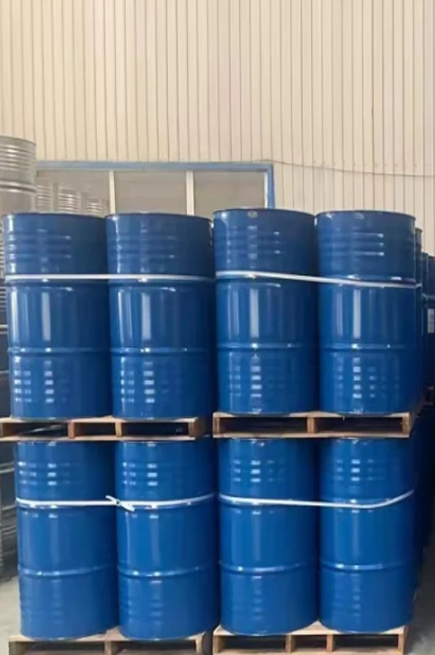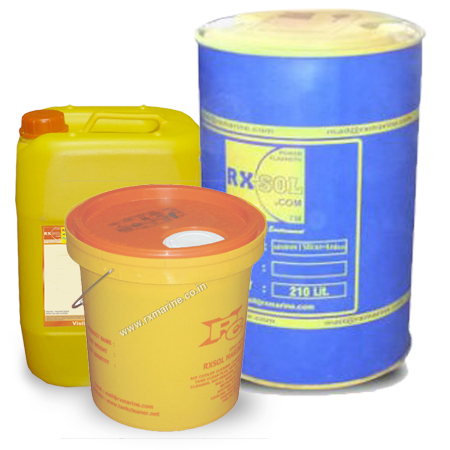
Sodium Hypo Chlorite 12-15

A 12% solution is widely used in waterworks for the chlorination of water and a 15% solution is more commonly used for disinfection of waste water in treatment plants

SKU: RXSOL-25-3025-026 Category:

Description

Sodium Hypochlorite 12% solution is widely used in waterworks for the chlorination of water and a 15% solution is more commonly used for disinfection of waste water in treatment plants. High-test hypochlorite (HTH) is sold for chlorination of swimming pools and contains approximately 30% calcium hypochlorite. The crystalline salt is also sold for the same use; this salt usually contains less than 50% of calcium hypochlorite. However, the level of active chlorine may be much higher.







Product Details

Application

  • Also used as a disinfectant and germicide , especially in the sterilization of water.

  • It is also used for making wool unshrinkable and in the manufactire of chloroform.

  • For the purpose of disinfection and bleaching  , a weak soln. ( 1.2 % ) is used. For purifying water 0.02 to 0 .2 % volumetric is sufficientPotable Water Treatment

  • Aquatics and Pools
  • Odor Control/Corrosion Control
  • Food & Beverage Processing
  • Wastewater Treatment
  • Cooling Towers, Inland Power Stations & Industry
  • Irrigation Systems
  • Agriculture/Farming


HANDLING AND STORAGE PRECAUTIONS:

Do not store adjacent to chemicals that may react if spillage occurs. Comply with Oman regulations, when shipped. If closed containers become heated, vent to release decomposition products (mainly oxygen under normal decomposition). Do not mix or contaminate with ammonia, hydrocarbons, acids, alcohol or ethers.

DO NOT REUSE CONTAINERS: Product residues may remain in containers. All labeled precautions MUST be observed. Dispose of container in a manner meeting government regulations.

PRODUCT DISPOSAL:  Product should be completely removed from containers. Material that cannot be used or chemically reprocessed should be disposed of, in a manner meeting government regulations.

Dosage & Procedure

A weak soln. ( 1.2 % ) is used. For purifying water
0.02 to 0 .2 % volumetric is sufficient for Potable Water Treatment

SODIUM HYPOCHLORITE

ACTIVE INGREDIENT:

            Sodium Hypochlorite as Chlorine                           : 15%

            Sodium Hydroxide                                                      :   1%

INERT INGREDIENTS:                                                           : 84%

             Total                                                                              100%     
 

General formulation to calculate  how much bleach is needed to add to a tank or a pipeline to disinfect it to a given chlorine residual using a given disinfectant. Usually someone wants to know how to meet an AWWA Standard (like C651-92, Disinfection of Water Mains). The equation below should be used to estimate the amount of sodium / Calcium hypochlorite (Chlorine Water is 6.00% sodium hypochlorite) needed to disinfect a given quantity of water to a desired chlorine concentration. 

                                                                        req'd residual in ppm
  Valume of hypo  =  volume of water  x  (  ----------------------------- )
                                                                           1,000,000 x hypo %

For example , say you had installed a new 5,000 gallon tank and wanted to make sure that you had at least a 100 ppm solution of chlorine in it.

How much 6.00% Hypochlorite would you need to add  ?

  • (5,000 gal x 100 ppm) / (1,000,000 x .06) = 8.33 gallons

How much 12% Hypochlorite solution would you need ?

  • (5,000 gal x 100 ppm) / (1,000,000 x .12) = 4.17 gallons

If you use calcium hypochlorite (the white, powder version of chlorine, like HTH pool cleaner), the equation becomes:

                                                                                                              req'd residual in PPM
Wgt. of Calcium Hypo (lbs)= gal of water x 8.33 lb / gal m x   ( ----------------------------- )
                                                                                                               1,000,000 x hypo %

  • This is simply the previous equation multiplied by the conversion factor of 8.33 pounds per gallon of water.

Let's assume that we still need to disinfect 5,000 gallons at 100 ppm.

How many pounds of 65% calcium hypochlorite (HTH pool cleaner) are needed?

  • (8.33 lbs/ gal. x 5,000 gal x 100 ppm) / (1,000,000 x .65) = 6.4 pounds


Technical Specifications

12.5% wt. SODIUM HYPOCHLORITE - EXTRA - PURE

Parameters Specification Range Typical

Sodium Hypochlorite

as NaOCl (%wt)

12.5 - 13.2 13.0
Available Chlorine (%wt) 11.9 - 12.6 12.4
Available Chlorine (%vol) 14.3 - 15.3 15.0
Available Chlorine grams/liter 143 - 153 150
Excess Caustic (%wt) 0.25 - 0.80 0.30
Specific Gravity @ 60°F 1.197 - 1.220 1.210
pH 12.0 - 13.0 12.50
Iron (Fe) ppm <0.5 0.05
Nickel (Ni) ppm <0.2 0.02
Copper (Cu) ppm <0.2 0.05
Mercury (Hg) ppb 0.001 - 0.003 0.002
Sodium Chloride (NaCl)% <15.0 12.5

Appearance: Clear greenish-yellow liquid miscible in any proportion with water.
This product meets the requirements of NSF standard 60 for drinking water.

Notes & Precautions

Note : Store in cool place
 

UN No :  1791
IMDG CLASS : 8

PACKING GROUP : III

ODOUR  : IRRITATING , PUNGENT ODOUR

R31: Contact with acids liberates toxic gases

R34: Causes burns

S-PHRASES

S1/2: Keep locked up and out of the reach of children.

S28: After contact with skin, wash immediately with plenty of water

S45: In case of accident or if you feel unwell, seek  medical advice (show the label where possible)

S50: Do not mix with acids

S50: Do not mix with reducing agents

X2: Restricted to professional users.Warning! Avoid exposure - obtain special instructions before use.

EMERGENCY AND FIRST AID PROCEDURES

EYE:

OBJECT IS TO FLUSH MATERIAL OUR IMMEDIATELY AND THEN SEEK MEDICAL ATTENTION IMMEDIATELY flush eyes with a directed stream of water at least 15 minutes while forcibly holding eye lids apart to ensure complete irrigation of all eye and lid tissue. Washing eyes within one (1) minute is essential to achieve maximum effectiveness. SEEK MEDICAL ATTENTION IMMEDIATELY.

SKIN:

SEEK MEDICAL ATTENTION IMMEDIAELY. Flush thoroughly with cold water under shower while removing contaminated clothing and shoes. CONTINUE TO FLUSH UNTIL MEDICAL ATTENTION ARRIVES. Discard non-rubber shoes. Wash clothing before reuse.

INIIALATION:

Remove to fresh air. If breathing is difficult, have trained person administer oxygen. If respiration stops, give mouth-to-mouth resuscitation. GET MEDICAL ATTENTION IMMEDIATELY.

INGESTION:

           NEVER GIVE ANYTHING BY MOUTH TO AN UNCONSCIOUS PERSON. If swallowed, DO NOT INDUCE VOMITING. Give large quantities of milk or gelatin solution. If these are not available give large quantities of water. If vomiting occurs spontaneously, keep airway clear and give more milk, gelatin solution or water, GET MEDICAL ATTENTION IMMEDIATELY. Avoid vomiting, lavages or acidic antidotes. NOTE TO PHYSICIAN: Sodium Hypochlorite is an alkaline corrosive. For exposure by ingestion do not use emesis, lavages or acidic antidotes. Dilute immediately by giving milk, melted ice cream, beaten egg white, starch paste or antacids such as milk magnesia. Aluminum hydroxide gel or magnesium trisilicate gel. Avoid sodium bicarbonate because of  carbon di-oxide release. Sodium thiosulphate solution may prove beneficial by reducing unreacted material


Other Related PRODUCTS LINKS :

Textile Hypo Bleach SODIUM HYPO CHLORITE , Sod Hypo Chlorite conc activeCHLORINE , CHLORINE LIQUID , Calcium Hypo Chlorite Conc active Chlorine , Chlorine Tablet cyanurate , Chlorine Tablets Calcium Based , DYE REMOVER ORG DICHLOR , Dechlorination Soln De-Hypo

Safety Data (MSDS)

Porduct Name                Sodium Hypo Chlorite 12-15 
Part Number   RXSOL-25-3025-026

RX MARINE INTERNATIONAL
105, A wing , BSEL , TECH PARK.
VASHI ,NEW BOMBAY 400703 INDIA

Branch : Kandla, Mumbai , Chennai, Vizag, Kolkata, UAE , OMAN , CANADA and KENYA  

Phone +91 22 20871200 - 1400
Fax +91 22 27612100 :::AOH :0091 9821214367
Email mail@rxmarine.com
Website www.rxmraine.com

Chemical Name                 Cas No                        EC No              Whight                          Formula                   
Sodium hypochlorite solution  7681-52-9  231-668-3 74,44 g/mol ClNaO 
Signal Word  Danger
Hazard Statements H300 + H310 Fatal if swallowed or in contact with skin.
Precautionary statements   P262 Do not get in eyes, on skin, or on clothing. P280 Wear protective gloves/ protective clothing. P301 + P310 + P330 IF SWALLOWED: Immediately call a POISON CENTER/ doctor. Rinse mouth. P302 + P352 + P310 IF ON SKIN: Wash with plenty of water. Immediately call a POISON CENTER/ doctor.
Classification of the substance or mixture Not a hazardous substance or mixture according to Regulation (EC) No 1272/2008.
Supplemental Hazard      Statements None
Other hazards  This substance/mixture contains no components considered to be either persistent, bioaccumulative and toxic (PBT), or very persistent and very bioaccumulative (vPvB) at levels of 0.1% or higher.

General advice First aiders need to protect themselves. Show this material safety data sheet to the doctor in attendance.
If inhaled After inhalation: fresh air. Call in physician.
Eye Contact  After eye contact: rinse out with plenty of water. Call in ophthalmologist. Remove contact lenses 
Swallowed If swallowed: give water to drink (two glasses at most). Seek medical advice immediately. In exceptional cases only, if medical care is not available within one hour, induce vomiting (only in persons who are wide awake and fully conscious), administer activated charcoal  (20 - 40 g in a 10% slurry) and consult a doctor as quickly as possible.  
Skin Contact   In case of skin contact: Take off immediately all contaminated clothing. Rinse skin with water/ shower. Consult a physician.  
Inhalation Remove patient to fresh air, keep warm and at rest and get medical assistance in necessary. 
Ingestion Rinse mouth with water. Do not induce vomiting. Never give anything by mouth to an unconscious person. Call a doctor or Poison Control Center immediately.
Most important symptoms and effects, both acute and delaye The most important known symptoms and effects are described in the labelling (see section 2.2) and/or in section 11  
Indication of any immediate medical attention and special treatment needed  No data available

Flammability                                                  May be combustible at high temperature.
Suitable extinguishing media  Use extinguishing measures that are appropriate to local circumstances and the surrounding environment.  
Unsuitable extinguishing media For this substance/mixture no limitations of extinguishing agents are given. 
Special hazards arising from the substance or mixture  Hydrogen bromide gas Potassium oxides  Not combustible. Has a fire-promoting effect due to release of oxygen. Ambient fire may liberate hazardous vapours.  
Further information Suppress (knock down) gases/vapors/mists with a water spray jet. Prevent fire  extinguishing water from contaminating surface water or the ground water system. 
Hazardous combustion
products
Fire may cause the evolution of Sulphur oxides, nitrogen oxides.
Advice for firefighters Stay in danger area only with self-contained breathing apparatus. Prevent skin contact by  keeping a safe distance or by wearing suitable protective clothing.  
Protective Equipment Use personal protective equipment.
Specific Hazards Arising from the Chemical Has a fire-promoting effect due to the release of oxygen.
Ambient fire may liberate hazardous vapours.

Personal precautions, protective equipment and emergency procedures Advice for non-emergency personnel: Avoid generation and inhalation of dusts in all circumstances. Avoid substance contact. Ensure adequate ventilation. Evacuate the danger area, observe emergency procedures, consult an expert. For personal protection see section 8.  
Spillage Oxidizing material. Stop leak if without risk. Avoid contact with a combustible material (wood, paper, oil, clothing...). Keep substance damp using water spray. Do not touch spilled material. Prevent entry into sewers, basements or confined areas dike if needed. Eliminate all ignition sources. Call for assistance on disposal.
Personal Protection Advice for non-emergency personnel: Avoid inhalation of dusts. Evacuate the danger area, observe emergency procedures, consult an expert. Advice for emergency responders: Protective equipment see section 8.
Enviromental Precaution Do not let product enter drains. 
Methods and materials for
containment and cleaning
Cover drains. Collect, bind, and pump off spills. Observe possible material restrictions  (see sections 7 and 10). Take up carefully. Dispose of properly. Clean up affected area. Avoid generation of dusts.  
Reference to other sections    For disposal see section 13.

Advice on protection against fire and explosion Keep away from open flames, hot surfaces and sources of ignition. 
Incompatible materials  Keep away from alkalis, strong oxidizing agents and metals. Provide containment walls of adequate capacity to hold any accidental spills. 
Hygiene measures Immediately change contaminated clothing. Apply preventive skin protection. Wash hands and face after working with substance. For precautions see section 2.2.  
Advice on  safe handling Work under hood. Do not inhale substance/mixture. 
Conditions for safe storage, including any incompatibilities  Tightly closed. Dry. Keep in a well-ventilated place. Keep locked up or in an area accessible only to qualified or authorized persons. Moisture sensitive.
Storage conditions Tightly closed. Keep locked up or in an area accessible only to qualified or authorized persons. Separately or together with other oxidising substances only and away from sources of ignition and heat.Because of their oxidation potential these products can raise the burning rate of combustible substances substantially or ignite combustible substances on contact with them.  
Storage class Storage class (TRGS 510): 5.1A: Strongly oxidizing hazardous materials 
Specific end   use(s) Apart from the uses mentioned in section 1.2 no other specific uses are stipulated
Advice on general occupational hygiene Advice on safe handling Observe label precautions. Change contaminated clothing. Wash hands after working with substance.

Exposure controls  No specific additional engineering controls are required. Provide good natural or artificial ventilation. 
Engineering Control Handle in accordance with good industrial hygiene and safety practice. Wash hands before breaks and at the end of workday.
Eye/face protection Use equipment for eye protection tested and approved under appropriategovernment standards such as NIOSH (US) or EN 166(EU). Safety glasses  
Body Protection protective clothing 
Skin protection This recommendation applies only to the product stated in the safety data sheet, supplied by us and for the designated use. When dissolving in or mixing with other  substances and under conditions deviating from those stated in EN374 please contact the supplier of CE-approved gloves (e.g. KCL GmbH, D-36124 Eichenzell,  
Respiratory protection
Recommended Filter type: Filter B-(P3) The entrepeneur has to ensure that maintenance, cleaning and testing of respiratory protective devices are carried out according to the instructions of the producer.  These measures have to be properly documented.
Other Protection  Measure Handle in accordance with good industrial hygiene and safety practice.
Control of    environmental exposure Prevent further leakage or spillage if safe to do so. Do not let product enter drains.

Physical state liquid
Colour No data available
Odour No data available
Odor Threshold Not Applicable
pH No data available
Melting Point -28,9 °C 
Boiling Point 111 °C
Flash Point No data available
Evaporation Rate Not Applicable
Flammability (solid, gas) No data available
Explosive limits No Data Available
Upper/lower flammability or explosive limits No data available
Autoignition temperature No data available
Decomposition temperature  No data available
Vapour pressure 23,3 hPa at 20 °C                                                     
Viscosity No data available      
Density 1,206 g/mL at 25 °C
Relative Density No data available
Specific Gravity No data available 
Partition coefficient No data available
Explosive properties No data available 
Solubility 20 °C soluble 
Ignition temperature No information available.
Particle characteristics No data available 

Reactivity                        No data available
Chemical stability The product is chemically stable under standard ambient conditions (room temperature) . 
Possibility of hazardous reactions Risk of explosion with: ammonium compounds arsenic bromates organic combustible substances phosphorus Powdered metals Sulfides sulfur carbon Risk of ignition or formation of inflammable gases or vapours with: semimetals nonmetals nonmetallic halides Reducing agents Exothermic reaction with: selenium Generates dangerous gases or fumes in contact with: acids Violent reactions possible with: sulfuric acid Cyanides 
Conditions to avoid No information available                                                                                     
Incompatible materials
No information available 
Hazardous decomposition products In the event of fire: see section 5

Acute toxicity  LD50 Oral - Rat - male and female - 157 mg/kg (OECD Test Guideline 401) Inhalation: No data available Dermal: No data available                  
Skin corrosion/irritation Skin - In vitro study Result: non-corrosive  (OECD Test Guideline 431)  
Serious eye      damage/irritation No data available Remarks: Mixture causes serious eye damage. Risk of blindness!
Respiratory or skin    sensitization  Local lymph node assay (LLNA) - Mouse Result: negative  (OECD Test Guideline 429)  
Carcinogenicity Presumed to have carcinogenic potential for humans 
Germ cell  mutagenicity  Test Type: Ames test Test system: Salmonella typhimurium  Metabolic activation: with and without metabolic activation Method: OECD Test Guideline 471 Result: Positive results were obtained in some in vitro tests.  
Reproductive toxicity  No data available
Specific target organ toxicity - single  exposure
No data available
Additional Information RTECS: UF9625000 Lung irritation, Cyanosis, Central nervous system depression To the best of our knowledge, the chemical, physical, and toxicological properties have not been thoroughly investigated.

Persistence and degradability The methods for determining the biological degradability are not applicable to inorganic substances  
Toxicity to fish  Static test LC50 - Oncorhynchus mykiss (rainbow trout) - 75 mg/l - 96 h (OECD Test Guideline 203)
Toxicity to daphnia and other aquatic invertebrates static test EC50 - Daphnia magna (Water flea) - > 100 mg/l - 48 h (OECD Test Guideline 202)  
Toxicity Toxicity to fish LC50 - Pimephales promelas (fathead minnow) - 1.520 mg/l - 96 h
Toxicity to bacteria  EC10 - Bacteria - 14 mg/l - 72 h Remarks: (Lit.) EC5 - E.coli - 15.000 mg/l Remarks: (Lit.) (maximum permissible toxic concentration)
Toxicity to algae Toxicity to algae static test ErC50 - Desmodesmus subspicatus (green algae) - > 100  mg/l - 72 h (OECD Test Guideline 201)  static test NOEC - Desmodesmus subspicatus (green algae) - 31,6 mg/l - 72 h (OECD Test Guideline 201)  
Products Biodegradation The methods for determining the biological degradability are not applicable to inorganic substances.
Mobility in soil No data available
Results of PBT and vPvB assessment This substance/mixture contains no components considered to be either persistent, bioaccumulative and toxic (PBT), or very persistent and very bioaccumulative (vPvB) at levels of 0.1% or higher.
Endocrine disrupting       properties No data available
Other adverse effects No data available .

Waste treatment  Method No data available 

UN number ADR/RID:1791                                  IMDG:1791                                 IATA: 1791
UN proper shipping name  ADR/RID:HYPOCHLORITE SOLUTION    IMDG:HYPOCHLORITE SOLUTION IATA:HYPOCHLORITE SOLUTION 
Transport hazard class(es)      ADR/RID: 8                                       IMDG: 8                                       IATA:8
Packaging group ADR/RID: III                                       IMDG: III                                     IATA:III
Environmental hazards ADR/RID: Yes                                    IMDG: Yes                                  IATA: No
Special precautions for user No data available
Further information Not classified as dangerous in the meaning of transport regulations.

Safety, health and environmental regulations/legislation specific for the substance or mixture This material safety data sheet complies with the requirements of Regulation (EC) No. 1907/2006.
Other regulations Observe work restrictions regarding maternity protection in accordance to Dir 92/85/EEC or stricter national regulations where applicable. Take note of Dir 94/33/EC on the protection of young people at work.
Chemical Safety Assessment For this product a chemical safety assessment was not carried out

Other Information

The information above is believed to be accurate and represents the  best information   currently    available  to us.  However,   we   make no warranty of merchantability or any other warranty, express or implied, with respect to such information, and  weassume  no liability resulting from its use. Users should make  their  own  investigations  to determine the suitability of the information for their particular purposes. In no event shall be liable for any claims, losses, or damages of any third party or for lost profits or any special, indirect, incidental, consequential or exemplary damages, howsoever arising, even if Rx Marine International  has been advised of the possibility of such damages.

DISCLAIMER OF LIABILITY :The information in this SDS was obtained from sources which we believe are reliable. However, the information is provided without any warranty, express or implied, regarding its correctness. The conditions or methods of handling, storage, use or disposal of the product are beyond our control and may be beyond our knowledge. For this and other reasons, we do not assume responsibility and expressly disclaim liability for loss, damage or expense arising out of or in any way connected with the handling, storage, use or disposal of the product. This MSDS was prepared and is to be used only for this product. If the product is used as a component in another product, this MSDS information may not be applicable.

top