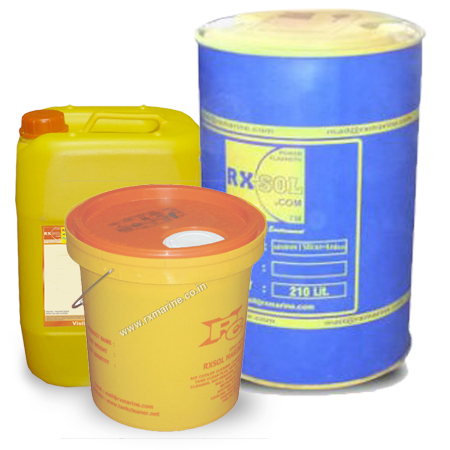
Corrosion Inhibitor for metal RUST Preventive

Metal RUST Prevantiveprotective coating is thin, transparent, clear and slightly oily.

SKU: RXSOL-16-1027-025 Category:

Description

Corrosion Inhibitor for metal RUST Preventive is a general purpose solvent based corrosion preventive. It is an organic rust inhibitor, which has water displacing properties and is a fingerprint neutralizer. The protective coating is thin, transparent, clear and slightly oily.

Application or immersion type dewatering and protective fluid.



Product Details

Application

Corrosion Inhibitor for metal RUST Prevantive  protects all ferrous and non-ferrous metals during processing, indoor storage and wrapped shipment (up to 12 months).

Corrosion Inhibitor for metal RUST Preventive  is a “natural” for the bearing industry. Finished bearings can be dipped in Corrosion Inhibitor for metal RUST Prevantive   to displace water-based metalworking fluids and provide corrosion protection of the highly finished parts during wrapped shipment. It can also be used for automotive parts and other precision and semi-precision parts.

Dosage & Procedure

RECOMMENDED STARTING DILUTIONS

Corrosion Inhibitor for metal RUST Preventive  is to be used as is. Add no other materials to dilute the concentration unless approved by  RX Marine International technical team.

Technical Specifications

TYPICAL PHYSICAL AND CHEMICAL PROPERTIES:

Physical State : Liquid
Solubility in Water : Insoluble
Boiling Point : >190°F
Flash Point, COC : 190°F
Total Chlorine/Chloride, wt% : 0.00/0.00ppm
Appearance and Odor : Opaque/Chemical
Specific Gravity : 0.82
VOC Content (ASTM D2369) : 58%
pH Concentrate : NA
Total Sulfur, wt% : 0.00
 

Notes & Precautions

FEATURES & BENEFITS

VERSATILE:
Corrosion Inhibitor for metal RUST Preventive   rapidly displaces water from metal surfaces leaving a continuous polar protective film between the metal and water.

Corrosion Inhibitor for metal RUST Prevantive  is applied with in-process spray or dip tank application where fluid run-off is collected for reuse, water will settle quickly to the bottom of the rust preventative reservoir. The water can then be drained periodically from the bottom. 

Corrosion Inhibitor for metal RUST Prevantive  can be applied to wet or dry parts. It neutralizes fingerprint residues and protects ferrous and non-ferrous metals from corrosion.

Active Matter

94-98

Generic / Chemical Name

Metal RUST Preventive Vapor Phase Corrosion Inhibitor VpCI

Areas of Use

Key Features of Corrosion and Rust Inhibitor for Metals

  • Solvent-based formula for fast drying and easy application
  • Polymerized technology for superior film adhesion and rust prevention
  • Provides long-term protection during storage and transport
  • Compatible with ferrous and non-ferrous metals

Supply Locations

Corrosion Inhibitor for metal RUST Preventive manufacturer supplier distributor in Mumbai, Kandla, Kolkata, Vizag, Chennai, India, Fujairah, Dubai UAE, Muscat Oman, Kenya Africa. Get the best quality of Corrosion Inhibitor for metal RUST Preventive at a competitive price from us. We have ready stock of Corrosion Inhibitor for metal RUST Preventive in India, UAE Gulf, Oman, Kenya Africa. Contact us for bulk as well as small orders.

Industry Applications

Oil-Based Vapor Phase Corrosion Inhibitor for Outdoor Multi-Metal Protection

This RXSOL Corrosion Inhibitor for metal RUST Preventiveoil-based Vapor Phase Corrosion Inhibitor (VpCI) is specially formulated to provide long-lasting corrosion protection for ferrous and non-ferrous metals during storage, transportation, and outdoor exposure. It creates a tacky, translucent protective film that combines contact protection with vapor-phase corrosion inhibition, safeguarding metal surfaces even in hard-to-reach areas.

The product is ideal for edge spraying of cold-rolled steel coils and sheets, as well as protecting formed sheet metal components, pistons, cylinders, gears, bearings, machinery, and precision-engineered parts. Its excellent lubricating properties also make it suitable for moving and sliding metal surfaces, reducing wear while preventing rust and oxidation.

Under sheltered outdoor storage conditions, the protective coating provides up to 24 months of corrosion protection, making it an ideal solution for manufacturers, exporters, equipment suppliers, and maintenance professionals.

Key Features

  • Oil-based Vapor Phase Corrosion Inhibitor (VpCI) technology

  • Provides up to 24 months of outdoor corrosion protection under sheltered conditions

  • Protects ferrous and non-ferrous metals

  • Forms a tacky, translucent protective film

  • Excellent for cold-rolled steel coils, sheets, and fabricated metal parts

  • Suitable for pistons, cylinders, gears, bearings, and machinery

  • Offers excellent lubricity for moving and sliding surfaces

  • Protects against moisture, humidity, salt-laden air, and atmospheric corrosion

  • Easy to apply by spraying, brushing, dipping, or roller coating

  • Ideal for storage, export packaging, and transportation

Applications

  • Steel coils and sheet edges

  • Automotive components

  • Industrial machinery

  • Hydraulic cylinders

  • Machine tools

  • Bearings and gears

  • Fabricated metal parts

  • Marine and offshore equipment

  • Export packaging and long-term storage

This advanced corrosion inhibitor helps extend equipment life, reduce maintenance costs, and ensure reliable protection of valuable metal assets in demanding industrial and marine environments.

Safety Data (MSDS)

Product Name : RXSOL-16-1027
Product Type : RUST Preventive Metal Corrosion Inhibitor

Company Details:

RX MARINE INTERNATIONAL
105, A wing , BSEL , TECH PARK.
VASHI ,NEW BOMBAY 400703 INDIA

Stock Point :::  Kandla, Mumbai, Chennai, Visakhapatnam, Kolkata, Fujairah, Muscat, Canada

Phone : +91 22 27815540 / 41 / 42
Fax : +91 22 2781 1318 :::AOH :0091 9821214367
Email : mail@rxmarine.com


Ingredient(s)

CAS Number

by Weight

Aliphatic Hydrocarbons (Stoddard Type)

8052-41-3

20-30

Aliphatic Petroleum Distillates

64742-47-8

9-19
Zinc Chloride 7645-85-7 10-20
2-Phosphonobutane-1,2,4-tricarboxylic Acid 37971-36-1 10-20
Nitrite 7632-00-0 10-20
Mercaptobenzothiazole (MBT) 149-30-4 5-10
Metasilicate as a Aluminium protector 6834-92-0 10-15
Borate 1330-34-4 6-10

Potential Health Effects

Eye Can cause eye irritation. Symptoms include stinging, tearing, redness, and swelling of eyes.
Skin Can cause skin irritation. Prolonged or repeated contact may dry the skin. Symptoms may include redness, burning, and drying and cracking  of skin, burns and other skin damage. Passage of this material into the body through the skin is possible, and may add to toxic effects from breathing  or swallowing.
Swallowing Swallowing small amounts of this material during normal handling is not likely to cause harmful effects. Swallowing large amounts may be harmful. This material can enter the lungs during swallowing or vomiting and cause lung inflammation and/or damage.
Inhalation Breathing of vapor or mist is possible. Breathing small amounts of this material during normal handling is not likely to cause harmful effects. Breathing large amounts may be harmful.
Symptoms of Exposure  stomach or intestinal upset (nausea, vomiting, diarrhea), irritation (nose, throat, airways), central nervous system depression (dizziness, drowsiness, weakness, fatigue, nausea, headache, unconsciousness), and death.
Target Organ Effects Overexposure to this material (or its components) has been suggested as a cause of the following effects in laboratory animals, and may aggravate preexisting disorders of these organs in humans: blood abnormalities, liver abnormalities, anemia, spleen damage, testis damage, kidney damage, lung damage, Overexposure to this material (or its components) has been suggested as a cause of the following effects in humans, and may aggravate preexisting disorders of these organs: central nervous system effects.
Developmental Information This material (or a component) has been shown to cause harm to the fetus in laboratory animal studies. Harm to the fetus occurs only at exposure levels that harm the pregnant animal. The relevance of these findings to humans is uncertain.
Cancer Information No data
Other Health Effects No data
Primary Route(s) of Entry Inhalation, Skin absorption, Skin contact.

Eyes If symptoms develop, immediately move individual away from exposure and into fresh air. Flush eyes gently with water for at least 15 minutes while holding eyelids apart; seek immediate medical attention. Skin Remove contaminated clothing. Wash exposed area with soap and water. If symptoms persist, seek medical attention. Launder clothing before reuse.
Skin Remove contaminated clothing. Wash exposed area with soap and water. If symptoms persist, seek medical attention. Launder clothing before reuse.
Swallowing Do not induce vomiting. This material is an aspiration hazard. If individual is drowsy or unconscious, place on left side with the head down. Seek medical attention. If possible, do not leave individual unattended.
Inhalation If symptoms develop, immediately move individual away from exposure and into fresh air. Seek immediate medical attention; keep person warm and quiet. If person is not breathing, begin artificial respiration. If breathing is difficult, administer oxygen.
Note to Physicians No data 

Flash Point  106.0     F (41.1      C) PMCC
Explosive Limit (for component) Lower 1.0   Upper 7.0 %  
Autoignition Temperature No data
Hazardous Products of Combustion May form:  carbon dioxide and carbon monoxide, various hydrocarbons
Fire and Explosion Hazards Vapors are heavier than air and may travel along the ground or be moved by ventilation and ignited by heat, pilot lights, other  flames and ignition sources at locations distant from material      handling point.  Never use welding or cutting torch on or near  drum (even empty) because product (even just residue) can ignite   explosively.
Extinguishing Media regular foam, carbon dioxide, dry chemical.
Fire Fighting Instructions  Water or foam may cause frothing which can be violent and possibly  endanger the life of the firefighter.  Wear a self-contained breathing apparatus with a full facepiece operated in the positive  pressure demand mode with appropriate turn-out gear and chemical resistant personal protective equipment.  Refer to the personal protective equipment section of this MSDS.
NFPA Rating Health - 1, Flammability - 2, Reactivity - 0

Small Spill Absorb liquid on vermiculite, floor absorbent, or other absorbent material and transfer to hood.
Large Spill  Eliminate all ignition sources (flares, flames including pilot lights, electrical sparks). Persons not wearing protective equipment should be excluded from area of spill until clean-up has been completed. Stop spill at source. Prevent from entering drains, sewers, streams or other bodies of water.  Prevent from spreading.  If runoff occurs, notify authorities as required.Pump or vacuum transfer spilled product to clean containers for recovery.  Absorb unrecoverable product. Transfer contaminated  absorbent, soil and other materials to containers for disposal. Prevent run-off to sewers, streams or other bodies of water. If run-off occurs, notify proper authorities as required, that a spill has occured. 

Handling Containers of this material may be hazardous when emptied.  Since  emptied containers retain product residues (vapor, liquid, and/or solid), all hazard precautions given in the data sheet must be observed.  All five gallon pails and larger metal containers including tank cars and tank trucks should be grounded and/or bonded when material is transferred.
Storage Not applicable

Eye Protection Chemical splash goggles in compliance with OSHA regulations are advised; however, OSHA regulations also permit other type safety  glasses.  Consult your safety representative.
Skin Protection Wear resistant gloves such as:  neoprene, nitrile rubber, To  prevent repeated or prolonged skin contact, wear impervious clothing and boots..
Respiratory Protections  If workplace exposure limit(s) of product or any component is  exceeded (See Exposure Guidelines), a NIOSH/MSHA approved air supplied respirator is advised in absence of proper environmental  control.  OSHA regulations also permit other NIOSH/MSHA              respirators (negative pressure type) under specified conditions (consult your industrial hygienist).  Engineering or  administrative controls should be implemented to reduce exposure. 
Engineering Controls Provide sufficient mechanical (general and/or local exhaust)  ventilation to maintain exposure below TLV(s).
Exposure Guidelines Component  ALIPHATIC HYDROCARBONS (STODDARD TYPE) (8052-41-3)        OSHA VPEL 100.000 ppm - TWA                                              
ACGIH TLV 100.000 ppm - TWA                                              
                                                                           
ALIPHATIC PETROLEUM DISTILLATES (64742-47-8)                             
No exposure limits established


Boiling Point (for component) 315.0 F (157.2 C) @ 760 mmHg
Vapor Pressure (for component) 2.000 mmHg @ 68.00 F
Specific Vapor Density No data
Liquid Density 7.420 lbs/gal @ 60.00 F                                             
.891 kg/l @ 15.60 C
Percent Volatiles (Including Water) 42.0      - 48.0      %
Volitile Organic Compounds (VOC) (Maximum)  3.150 lbs/gal
Evaporation Rate SLOWER THAN ETHYL ETHER
Appearance No data
State LIQUID
Physical Form No data
Color No data
Odor No data
pH No data
   

Hazardous Polymerization  Product will not undergo hazardous polymerization. 
Hazardous Decomposition May form:  carbon dioxide and carbon monoxide, various hydrocarbons.
Chemical Stability Stable
Incompatibility  Avoid contact with:  strong oxidizing agents.


- No Data 


- No Data 

- Waste Management Information                                             
- Destroy by liquid incineration.  Dispose of in accordance with all  
- applicable local, state and federal regulations.   

DOT Information : 49 CFR 172.101
DOT Description : Not Regulated 
Container/Mode : DRUMS/SURFACE - NO EXCEPTIONS
NOS Component : PETROLEUM NAPHTHA
RQ (Reportable Quantity) - 49 CFR 172.101 : Not applicable

US Federal Regulations TSCA (Toxic Substances Control Act) Status  
TSCA (UNITED STATES) The intentional ingredients of this product are listed.  
CERCLA RQ 40 CFR 302.4 None
SARA 302 Components 40 CFR 355 Appendix A None
Section 311/312 Hazard Class 40 CFR 370.2 Immediate(X)   Delayed(X)   Fire(X)   Reactive( )   Sudden     
Release of Pressure( )
SARA 313 Components 40 CFR 372.65 None
International Regulations Inventory Status Not determined
State and Local Regulations California Proposition 65 None
New Jersey RTK Label Information STODDARD SOLVENT 8052-41-3
Pennsylvania RTK Label Information STODDARD SOLVENT 8052-41-3

The information accumulated herein is believed to be accurate but   is not warranted to be whether originating with the company or  not. Recipients are advised to confirm in advance of need that the  information is current, applicable, and suitable to their circumstance.

DISCLAIMER OF LIABILITY :The information in this SDS was obtained from sources which we believe are reliable. However, the information is provided without any warranty, express or implied, regarding its correctness. The conditions or methods of handling, storage, use or disposal of the product are beyond our control and may be beyond our knowledge. For this and other reasons, we do not assume responsibility and expressly disclaim liability for loss, damage or expense arising out of or in any way connected with the handling, storage, use or disposal of the product. This MSDS was prepared and is to be used only for this product. If the product is used as a component in another product, this MSDS information may not be applicable.

top