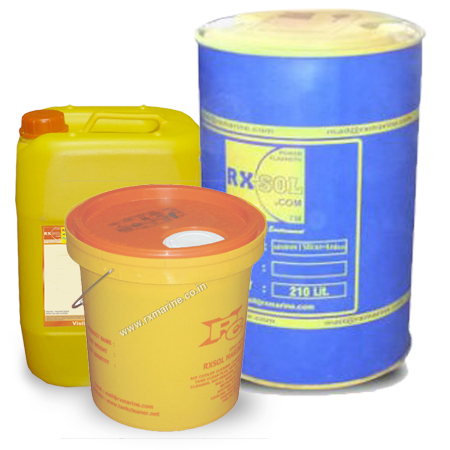
Citrus Auto Degreaser C.A.D

C.A.D is useful for degrease heavily soiled concrete floors. Automobiles, trucks, tractors, farm equipment

SKU: RXSOL-10-1734-025 Category:

Description

Citrus Auto Degreaser (C.A.D.) is a high-performance, biodegradable cleaner formulated with natural citrus solvents and advanced surfactants to effectively remove grease, oil, tar, carbon deposits, wax, road grime, and other stubborn contaminants. Designed for automotive, marine, industrial, and commercial applications, it provides exceptional cleaning power while being safer for users and the environment than conventional petroleum-based solvents.

Its fast-penetrating formula emulsifies heavy grease and oil, making it ideal for engine cleaning, machinery maintenance, workshop floors, and equipment degreasing.

This is heavy duty, emulsifiable solvent degreaser which is composed of both petroleum solvents PLUS citrus solvents, dispersing agents, emulsifiers, wetting agents, and corrosion inhibitors. This product is intended to be used for the removal of stubborn soils such as grease, oils, dirt, waxes, tar and asphalt. Due to the chemical composition of this product, it may be used as a spray-on/flush off degreaser, as an immersion tank cleaner, or to degrease Heavily soiled concrete floors. Automobiles, trucks, tractors, farm equipment,


Construction equipment, tar and asphalt equipment, motors, metal parts, and any surface not harmed by kerosene may be cleaned and degreased with this product. 


Product Details

Application

Maintenance shops, garages, industrial plants, commercial building and equipment maintenance, or virtually anywhere economical degreasing is a must.

Dosage & Procedure

Based on deposition and degree of soil, dilute product as indicated above. Spray or brush on solution to area to be cleaned. Allow to penetrate for 10 to 20 minutes, then flush off with water under pressure. For immersion tank cleaning of parts, use the same solvent dilution ratios above. Soak parts for 10 to 20 minutes, then flush away soil with water under pressure. For cleaning of concrete floors, spray or mop solution on floor. Agitate with a stiff brush. Flush clean with water.

Technical Specifications

According to degree of soil, Dilute product as indicated above. Spray or brush on solution to area to be cleaned. Allow to penetrate for 10 to 20 minutes, then flush off with water under pressure. For immersion tank cleaning of parts, use the same solvent dilution ratios above. Soak parts for 10 to 20 minutes, then flush away soil with water under pressure. For cleaning of concrete floors, spray or mop solution on floor. Agitate with a stiff brush. Flush clean with water.

Active Matter

81-85%

Generic / Chemical Name

Heavy Soil Cleaner

Supply Locations

Citrus Auto Degreaser C.A.D effectively used to clean to degrease heavily soiled concrete floors. Automobiles, trucks, tractors, farm equipment, construction equipment, tar and asphalt equipment, motors, metal parts, and any surface not harmed by kerosene may be cleaned and degreased with this product, RXSOL CITRUS AUTO Dgreaser manufacturer and supplier in Mumbai, Kandla, Surat, Kolkata, Chennai, Visakhapatnam, Fujairah, Dubai, Sharjah, Abudhabi, Ajman, UAE Middle East, Sohar, Muscat Barka Oman, Nairobi Kenya Africa Sudan

Industry Applications

Citrus Auto Degreaser (C.A.D.) – Powerful Citrus-Based Industrial Degreaser

Citrus Auto Degreaser (C.A.D.) is a high-performance, biodegradable cleaner formulated with natural citrus solvents and advanced surfactants to effectively remove grease, oil, tar, carbon deposits, wax, road grime, and other stubborn contaminants. Designed for automotive, marine, industrial, and commercial applications, it provides exceptional cleaning power while being safer for users and the environment than conventional petroleum-based solvents.

Its fast-penetrating formula emulsifies heavy grease and oil, making it ideal for engine cleaning, machinery maintenance, workshop floors, and equipment degreasing.

Key Features

  • Powerful citrus-based degreasing action

  • Rapidly removes oil, grease, tar, wax, and carbon deposits

  • Biodegradable and environmentally responsible formulation

  • Pleasant citrus fragrance

  • Suitable for manual and pressure washing applications

  • Safe for most painted and metal surfaces when used as directed

  • Leaves minimal residue after rinsing

  • Reduces cleaning time and labor costs

Applications

  • Automotive engine cleaning

  • Marine engine room degreasing

  • Industrial machinery cleaning

  • Workshop and garage floor cleaning

  • Heavy equipment maintenance

  • Manufacturing plants

  • Oil and grease removal from metal components

  • Equipment and tool cleaning

Benefits

  • Removes stubborn grease and oil quickly

  • Restores machinery and equipment appearance

  • Helps improve maintenance efficiency

  • Reduces dependence on harsh petroleum solvents

  • Easy to dilute for light- or heavy-duty cleaning

  • Suitable for routine preventive maintenance

Typical Directions for Use

  • Heavy-duty cleaning: Use undiluted or dilute 1:1 with water.

  • General degreasing: Dilute 1:5 to 1:10 with water.

  • Light cleaning: Dilute up to 1:20 with water.

Apply by spray, brush, mop, or pressure washer. Allow 2–5 minutes of contact time, scrub if necessary, and rinse thoroughly with clean water.

Technical Information

Property Typical Value
Appearance Clear to amber liquid
Odor Citrus
pH Neutral to mildly alkaline
Solubility Completely miscible with water
Biodegradability Readily biodegradable

Safety & Storage

  • Wear suitable gloves and eye protection during handling.

  • Avoid prolonged contact with skin and eyes.

  • Store in a cool, dry place away from direct sunlight.

  • Keep the container tightly closed when not in use.

Why Choose Citrus Auto Degreaser (C.A.D.)?

Citrus Auto Degreaser combines the natural cleaning power of citrus extracts with advanced surfactant technology to deliver outstanding degreasing performance. It is an ideal choice for automotive workshops, marine vessels, factories, and maintenance facilities seeking an effective, environmentally responsible cleaning solution.

Technical USE

Citrus Auto Degreaser, Citrus Degreaser, CAD Cleaner, Citrus Engine Degreaser, Industrial Citrus Cleaner, Biodegradable Degreaser, Marine Degreaser, Automotive Degreaser, Heavy Duty Degreaser, Oil and Grease Remover, Citrus Solvent Cleaner, Machinery Degreaser, Eco-Friendly Degreaser.

Safety Data (MSDS)


Product Name : Citrus Auto Degreaser C.A.D
Part Number : RXSOL-10-1734-025

Company Details:
RX MARINE INTERNATIONAL
105, A wing , BSEL , TECH PARK.
VASHI ,NEW BOMBAY 400703 INDIA

Branch : Kandla, Mumbai , Chennai, Vizag, Kolkata, UAE , OMAN , CANADA and KENYA  

Phone +91 22 20871200 - 1400
Fax +91 22 2761 2100 :::AOH :0091 9821214367
Email 123@rxmarine.com
Website www.rxmarine.com

 CAS-no)  (Einecs nr)  ≥ 60
D-LIMONENE (CAS-no) 5989-27-5 (Einecs nr) 227-813-5 20 – 30
Dodecylbenzene Sulphonate Isopropylamine Salt (CAS-no) 26264-05-1 (Einecs nr) 247-556-2 1 – 3


Name     of        Substance                                         Cas Number EC  No Wt.% Symbol
Premium White Spirit / Odourless Kerosine 64742-47-8 265-149-8 ≥ 60 - 70  Xi


Classification of the substance or mixture Classification according to Regulation (EC) No 1272/2008
Flammable liquids                         Category 3
Acute toxicity (Oral)                       Category 4
Acute toxicity (Dermal)                  Category 3
Skin corrosion/irritation                  Category 1C
Serious eye damage/eye irritation Category 1
Long-term aquatic hazard              Category 3
Signal Word                        Danger
Hazard Statements

H226-Flammable liquid and vapour.
H302-Harmful if swallowed.
H311-Toxic in contact with skin.
H314-Causes severe skin burns and eye damage.
H412-Harmful to aquatic life with long lasting effects.

Precautionary statements - prevention

P260-Do not breathe dusts or mists.
P301+P330+P331+P310-IF SWALLOWED: Rinse mouth. Do NOT induce vomiting. Immediately call a POISON CENTER or doctor.
P303+P361+P353+P310+P363-IF ON SKIN (or hair): Take off immediately all contaminated clothing. Rinse skin with water or shower. Immediately call a POISON CENTER or doctor. Wash contaminatedclothing before reuse.
P304+P340+P310-IF INHALED: Remove person to fresh air and keep comfortable for breathing.Immediately call a POISON CENTER or doctor.
P305+P351+P338+P310-IF IN EYES: Rinse cautiously with water for several minutes. Remove contactlenses, if present and easy to do. Continue rinsing. Immediately call a POISON CENTER or doctor.
P370+P378-In case of fire: Use dry chemical or dry sand to extinguish.

Other Hazard This substance/mixture contains no components considered to be either persistent, bioaccumulative and toxic (PBT), or very persistent and very bioaccumulative (vPvB) at levels of 0.1% or higher.


Eye Contact Get medical attention immediately. Call a poison center or physician. Immediately flush the eye(s) continuously with lukewarm, gently flowing water for at least 20-60 minutes while holding the eyelid(s) open. Check for and remove any contact lenses. Chemical burns must be treated promptly by a physician
Skin Contact Get medical attention immediately. Call a poison center or physician. Wash affected area with soap and mild detergent for at least 20 - 60 minutes. Wash with plenty of soap and water. Remove contaminated clothing and shoes. Wash contaminated clothing thoroughly with water before removing it, or wear gloves. Chemical burns must be treated promptly by a physician. Wash clothing before reuse. Clean shoes thoroughly before reuse.
Inhalation:              Remove victim to fresh air and keep at rest in a position comfortable for breathing. If not breathing, if breathing is irregular or if respiratory arrest occurs, provide artificial respiration or oxygen by trained personnel. If unconscious, place in recovery position and get medical attention immediately. Maintain an open airway.
Ingestion: Call a poison center or physician. Wash out mouth with water. If material has been swallowed and the exposed person is conscious, give small quantities of water to drink. Do not induce vomiting unless directed to do so by medical personnel. If vomiting occurs, the head should be kept low so that vomit does not enter the lungs. Chemical burns must be treated promptly by a physician. Never give anything by mouth to an unconscious person. If unconscious, place in recovery position and get medical attention immediately. Maintain an open airway
Note to Physician Treat symptomatically. Contact poison treatment specialist immediately if large quantities have been ingested or inhaled.
Protection of first-aiders No action shall be taken involving any personal risk or without suitable training. If it is suspected that fumes are still present, the rescuer should wear an appropriate mask or self-contained breathing apparatus. It may be dangerous to the person providing aid to give mouth-to-mouth resuscitation. Wash contaminated clothing thoroughly with water before removing it, or wear gloves.


Suitable extinguishing media Dry powder Dry sand.
Unsuitable extinguishing media Do not use water jet
Protective  Equipment                       Wear suitable fire fightin suit.
Specific hazards arising
from the chemical
Carbon oxides, Nitrogen oxides (NOx), Combustible.
Special protective actions
for fire-fighters
Promptly isolate the scene by removing all persons from the vicinity of the incident if there is a fire. No action shall be taken involving any personal risk or without suitable training. Move containers from fire area if this can be done without risk. Use water spray to keep fire-exposed containers cool.
Special protective
equipment for fire-fighters
Fire-fighters should wear appropriate protective equipment and self-contained breathingapparatus (SCBA) with a full face-piece operated in positive pressure mode.


Personal precautions, protective equipment and emergency procedures

Wear respiratory protection. Avoid breathing vapours, mist or gas. Ensure adequate ventilation. Remove all sources of ignition. Evacuate personnel to safe areas. Beware of vapours accumulating to form explosive concentrations. Vapours can accumulate in low areas.
For personal protection see section 8.

Enviromental  Precaution  Avoid dispersal of spilled material and runoff and contact with soil, waterways, drains and sewers. Inform the relevant authorities if the product has caused environmental pollution (sewers, waterways, soil or air).
Methods and materials for
containment and cleaning up

Stop leak if without risk. Move containers from spill area. Contain spillage, and then collect with non-combustible absorbent material, (e.g. sand, earth, diatomaceous earth, vermiculite) and place in container for disposal according to local / national regulations (see section 13).


Advice on safe handling Handling is performed in a well ventilated place. Wear suitable protective equipment. Prevent generation of vapour or mist. Keep away from heat/sparks/open flame/hot surfaces. -No smoking. Takemeasures to prevent the build up of electrostatic charge. Use explosion-proof equipment. Wash handsand face thoroughly after handling. Use a closed system if possible. Use a ventilation, local exhaust ifvapour or aerosol will be generated. Avoid contact with skin, eyes and clothing.
Storage                            Keep container tightly closed. Store in a cool, dark and well-ventilated place. Store under inert gas. Store locked up. Store away from incompatible materials such as oxidizing agents. Air-sensitive
Specific end use(s) No further relevant information available.


Control parameters Components with workplace control parameters
Exposure controls

Install a closed system or local exhaust. Also install safety shower and eye bath.

Personal   Protection

Eye protection : Tightly fitting safety goggles. Faceshield (8-inch minimum). Use equipment for eye protection tested and approved under appropriate government standards such as NIOSH (US) or EN 166(EU).

Skin protection : Handle with gloves. Gloves must be inspected prior to use. Use proper glove removal technique (without touching glove's outer surface) to avoid skin contact with this product. Dispose of contaminated gloves after use in accordance with applicable laws and good laboratory practices. Wash and dry hands. The selected protective gloves have to satisfy the specifications of Regulation (EU) 2016/425 and the standard EN 374 derived from it.
Full contact
Material: butyl-rubber
Minimum layer thickness: 0,3 mm
Break through time: 480 min

Body Protection : Complete suit protecting against chemicals, Flame retardant antistatic protective clothing., The type of protective equipment must be selected according to the concentration and amount of the dangerous substance at the specific workplace.

Respiratory protection : Where risk assessment shows air-purifying respirators are appropriate use a fullface respirator with multi-purpose combination (US) or type ABEK (EN 14387) respirator cartridges as a backup to engineering controls. If the respirator is the sole means of protection, use a full-face supplied air respirator. Use respirators and components tested and approved under appropriate government standards such as NIOSH (US) or CEN (EU).

Hygiene measures Handle in accordance with good industrial hygiene and safety practice. Remove and wash contaminated clothing before re-use. Wash face, hands and any exposed skin thoroughly after handling. Provide suitable facilities for quick drenching or flushing of the eyes and body in case of contact or splash hazard.

       gloves                suit                

 Gloves                   Suit            


Physical State         Liquid
Colour Almost Clear
Odour No Data Available
Odor threshold Not Available
pH                                                          No Data Available
Boiling Point 169°C
Initial Boiling Point Not Available
Freezing Point/ Melting Point Not Available
Flash Point 53°C
Burning Time Not Applicable
Burning Rate Not Applicable
Evaporation rate Not Applicble
Flammability (solid, gas) No data available
Upper explosion limit No data available
Lower explosion limit 0.70%
Explosive properties 10.8%
Vapor pressure No data available
Vapor density No data available
Relative Density 0.790
Water solubility No data available
Partition coefficient: octanol No data available
Autoignition temperature  295°C
Thermal decomposition No data available
Viscosity, kinematic No data available
Explosive properties No data available
Oxidizing properties No data available
Dynamic viscosity No data available
VOC (%)  No data available
Pour point No information available


Recativity                                             No data available
Stability Stable under normal  conditions and recommended use.
Possibility of hazardous reactions No data available
Incompatible materials No data available
Hazardous Decomposition

Hazardous decomposition products formed under fire conditions. - Carbon oxides, Nitrogen oxides (NOx)

Condition to Avoid Heat , Flame & Spark
Polymerization Hazardous polymerization does not occur.


Acute toxicity

LD50 Oral - Rat - 450 mg/kg
LD50 Oral - Rat - 310 mg/kg
Remarks: (External MSDS)
LC50 Inhalation - Rat - 4 h - < 1,548 mg/l
(OECD Test Guideline 403)
LD50 Dermal - Rat - 600 mg/kg
Remarks: (External MSDS)
LD50 Dermal - Rabbit - 474 mg/kg

Irritation/Corrosion No applicable toxicity data
Sensitization                                

No applicable toxicity data

Mutagenicity

No applicable toxicity data.

Carcinogenicity IARC: No component of this product present at levels greater than or equal to 0.1% is identified as probable, possible or confirmed human carcinogen by IARC.
Reproductive toxicity No applicable toxicity data

Teratogenicity

No applicable toxicity data
Germ cell mutagenicity Germ cell mutagenicity
Ames test
Salmonella typhimurium
Result: negative
(National Toxicology Program)
Specific target organ toxicity No Data Available
Aspiration hazard No Data Available
Additional Information RTECS: MQ5250000
Material is extremely destructive to tissue of the mucous membranes and upper respiratory tract, eyes, and skin., spasm, inflammation and edema of the larynx, spasm, inflammation and edema of the bronchi, pneumonitis, pulmonary edema, burning sensation, Cough, wheezing, laryngitis, Shortness of breath, Headache, Nausea To the best of our knowledge, the chemical, physical, and toxicological properties have not been thoroughly investigated.


Toxicity to Fish                                     LC50 - Leuciscus idus (Golden orfe) - 16 mg/l - 48 h
LC50 - Leuciscus idus (Golden orfe) - > 46 - < 68 mg/l - 96 h
(DIN 38412 part 15)
Remarks: (External MSDS)
Toxicity to  daphnia  and  other  aquatic EC50 - Daphnia magna (Water flea) - 2,2 mg/l - 24 h
Remarks: (ECOTOX Database) invertebrates
EC5 - E.sulcatum - 12 mg/l - 72 h
Remarks: (maximum permissible toxic concentration)(Lit.)
Toxicity to bacteria EC5 - Pseudomonas putida - 67 mg/l - 16 h
Remarks: (maximum permissible toxic concentration) (External MSDS)
Persistence and degradability

Biodegradability Result: > 60 % - Readily eliminated from water
(OECD Test Guideline 302B)
Result: 70 - 80 % - Readily biodegradable.
(ISO 14593)

Other adverse effects Harmful to aquatic life.
Bioaccumulative potential Bioaccumulation is unlikely.
Results of PBT and vPvB assessment

This substance/mixture contains no components considered to be either persistent, bioaccumulative and toxic (PBT), or very persistent and very bioaccumulative (vPvB) at levels of 0.1% or higher.

Mobility in soil No data available


Remarks Please consider the relevant national or regional provisions. Waste shall be separated into the categories that can be handled separately by the local or national waste management facilities.
Waste Disposal Offer surplus and non-recyclable solutions to a licensed disposal company. Waste material must be disposed of in accordance with the Directive on waste 2008/98/EC as well as other national and local regulations. Leave chemicals in original containers. No mixing with other waste. Handle uncleaned containers like the product itself.


Transport hazard class(es)                     
  DOT  TDG Classification IMDG IATA
UN        Number UN2276 UN2276 UN2276 UN2276
Proper shipping name 2-ETHYLHEXYLAMINE 2-ETHYLHEXYLAMINE 2-ETHYLHEXYLAMINE 2-ETHYLHEXYLAMINE
Transport
hazard class(es)
3 (8) 3 (8) 3 (8) 3 (8)
Packing Group III III III III
Environmental
hazards
NO NO NO NO
Marine pollutant No


Safety, health and environmental regulations/legislation specific for the substance or mixture This safety datasheet complies with the requirements of Regulation (EC) No. 1907/2006.
REACH - Restrictions on the manufacture, placing on the market and use of certain dangerous substances, preparations and articles (Annex XVII)
Chemical safety assessment For this product a chemical safety assessment was not carried out
Full text of H-Statements referred to under sections  3. H226 Flammable liquid and vapour.
H302 Harmful if swallowed.
H311 Toxic in contact with skin.
H314 Causes severe skin burns and eye damage.
H318 Causes serious eye damage.
H330 Fatal if inhaled.


Other Information  

The information above is believed to be accurate and represents the  best information   currently    available  to us.  However,   we   make no warranty of merchantability or any other warranty, express or implied, with respect to such information, and  we assume  no liability resulting from its use. Users should make  their  own  investigations  to determine the suitability of the information for their particular purposes. In no event shall be liable for any claims, losses, or damages of any third party or for lost profits or any special, indirect, incidental, consequential or exemplary damages, howsoever arising, even if RX Marine International  has been advised of the possibility of such damages.

DISCLAIMER OF LIABILITY :The information in this SDS was obtained from sources which we believe are reliable. However, the information is provided without any warranty, express or implied, regarding its correctness. The conditions or methods of handling, storage, use or disposal of the product are beyond our control and may be beyond our knowledge. For this and other reasons, we do not assume responsibility and expressly disclaim liability for loss, damage or expense arising out of or in any way connected with the handling, storage, use or disposal of the product. This MSDS was prepared and is to be used only for this product. If the product is used as a component in another product, this MSDS information may not be applicable.


top