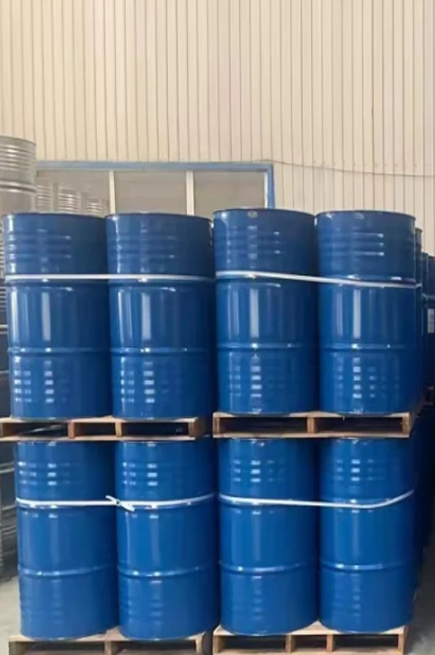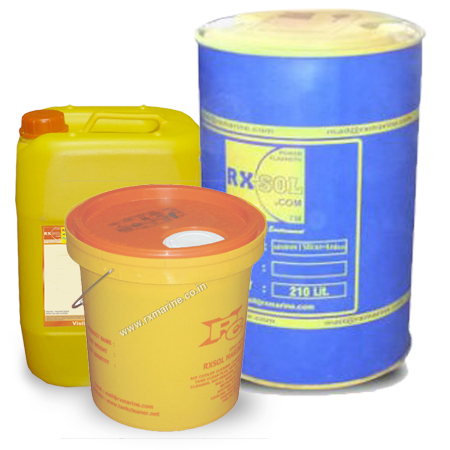
Corrosion Inhibitor Carbon Dioxide and H2S

To Prevent H2S Corrosion in distillation Columns overhead system. H2S Scavengers and Speaciality Chemicals to Reduce Hydrogen Sulfide Exposure

SKU: RXSOL-16-2065-210 Category:

Description

To Prevent H2S Corrosion in distillation Columns overhead system. Hydrogen Sulfide Scavenger –RXSOL-16-2065-210  corrosive and Acidic GAS Remover.

A highly effective, film-forming corrosion control agent specifically designed for oil and gas production and transmission systems operating under sour gas (H₂S) and acid gas (CO₂) conditions. This RXSOL Corrosion Inhibitor has exceptional film persistency and ability to adhere to metal surfaces even under high turbulence and wet gas conditions.

Proprietory blends improve solvent penetration and spreading across pipeline surfaces, enhancing the delivery of the active corrosion-inhibiting molecules. It assists in reducing surface tension, allowing better wettability and contact with metal substrates, especially in two-phase flow lines (liquid + gas). It is carefully formulated to ensure complete compatibility with hydrocarbon fluids, high solubility, and fast film formation on carbon steel surfaces.


The active components in this product form a mono-molecular film that adsorbs onto metal surfaces, acting as a barrier to prevent corrosive agents (such as CO₂, H₂S, and water) from coming into contact with the metal. This product is designed for continuous or batch injection through injection quills, downhole tubing, or pipeline drips. It has been field-tested under various pressure and flow regimes and has demonstrated consistent corrosion rate reductions in both onshore and offshore applications.



Product Details

Application

Hydrogen sulfide (H2S) naturally occurs and may already by present information can be the result of sulphate reducing bacteria (SRB) in your process systems. Ones established, it can potentially be carried in hydrocarbon streams, resulting in servere gatharing lines, creating high failure rates in your production.

Through strategic H2S scavenger applications and speciality chemicals, RX Marine International chemicals experts can help reduce H2S levels and lower overall solids in your system, reducing any gas or fluid souring while controlling corrosion.

If you encounter hydrogen sulfide in your system, RX Marine International can perform a fluid compatibility test to determine H2S levels and customize a chemical solution to fit your production needs.

Oil & Gas Production Systems

  • Protection of production tubing and casing in CO₂/H₂S-rich wells
  • Downhole batch treatment for sour wells to prevent tubing corrosion
  • Injection in annular spaces or tubing/casing strings for corrosion protection

Pipeline and Gathering Systems

  • Internal protection of transmission pipelines carrying crude oil, wet gas, or multiphase flow
  • Used in gas gathering systems where H₂S is present in high ppm concentrations
  • Pigging-compatible; product can be applied before or after mechanical cleaning
  • Effective in top-of-the-line corrosion (TLC) scenarios in wet gas pipelines

Water Injection and Disposal Wells

  • Corrosion protection for produced water reinjection lines
  • Compatible with sulfate-reducing bacteria (SRB) treatment programs
  • Prevents localized corrosion and pitting due to oxygen or microbial influence

Storage Tanks & Facilities

  • Inhibits corrosion in hydrocarbon storage systems, especially those exposed to H₂S-laden vapors
  • Suitable for slug dosing during shutdown or mothballing of equipment

Offshore Platforms

  • Used in offshore flowlines, risers, and topsides process equipment where H₂S and CO₂ are common
  • Resistant to washout in high flowrate and high-pressure environments
  • Compatible with high TDS (Total Dissolved Solids) process waters

Dosage & Procedure

Hydrogen Sulfide Scavenger is works as a corrosive Acidic GAS Remover from system as well as from working station. which is not only damaging precious instrument but also creating Worker Health  problem by attacking on respiratory system.

The neutralizing effect of H2S is the result of a simple chemical reaction between the components of an RXSOL-11-5014-210 molecule and an offensive, toxic odour molecule. 

       Hydrogen Sulfide (H2S) + RXSOL-11-5014-210  =  Bi Sulfide salt
       
The resultant products in the above equations are safe and stabilized compounds, which are neutral, harmless, and odour free. They dissolve in water and will not be re-released into the atmosphere in normal conditions.

Technical Specifications

Hydrogen Sulfide Scavenger Manufacturer, supplier, Exporter. Product Code :  RXSOL-11-5014-210 is very effective  corrosive and Acidic GAS Remover. H2S Scavengers and Speaciality Chemicals to Reduce Hydrogen Sulfide Exposure from atmosphere.

Notes & Precautions

Benefits:

  • Improved safety due to reduced H2S content
  • Meet contract sales limit for H2S content
  • Removal of hydrogen sulfide gas from process systems, therefore reducing corrosion
  • The reaction products can be easily removed from the process systems
  • Maintains asset integrity and reduces the need for new equipment
Feature Benefit
Dual Corrosion Protection Effective against both CO₂ and H₂S corrosion in pipelines
Strong Film Formation Forms a durable hydrophobic layer on metal surfaces
Non-Emulsifying Nature Maintains separation efficiency in oil-water systems
Solvent-Based & Flow-Friendly Easily disperses in hydrocarbons and performs well in high-flow environments

Active Matter

95-98

Generic / Chemical Name

H2S and Carbon Dioxide Corrosion Inhibitor

Supply Locations

Carbon Dioxide and H2S Corrosion Inhibitor manufacturer and supplier in Mumbai, Kandla, Chennai, Visakhapatnam, Kolkata, Dubai, Fujairah, Sharjah, Abudhabi, Muscat, Sohar, Barka RUWI, Oman, Nairobi Kenya Africa, Canada

Safety Data (MSDS)

Part Number RXSOL-16-2065-210
Product Name Corrosion Inhibitor for Carbon Dioxide and H2S

Company Details:

RX MARINE INTERNATIONAL
105, A wing , BSEL , TECH PARK.
VASHI ,NEW BOMBAY 400703 INDIA

Stock Point : Mumbai, Muscat, Fujairah, Nairobi, Kolkata, Vizag, Chennai, Gandhidham, Canada

Phone +91 22 27815540 / 41 / 42
Fax +91 22 2781 1318 ::: AOH :0091 9821214367
Email mail@rxmarine.com

This product is classified as dangerous in accordance with the Preparations Directive 1999/45/EC.

Hazardous Substance

EINECS /

ELINCS NO

SYMBOL

R-PHRASES /

NOTAS

% (w/w)

Imidazoline Salts

Proprietary

Xi

R38, R41,R52/53

5 - 10

Quaternary Ammonium compound

Proprietary

C, N

R22, R34, R50

1 - 5

Proprietory Blend Non Hazardous Mixture ...... .... ..... 81-90

Refer to Section 16 for descriptions of relevant risk phrases and Notas.

HAZARD CLASSIFICATION :


Toxic by inhalation, in contact with skin and if swallowed. Irritating to eyes and skin

HUMAN HEALTH HAZARDS - ACUTE :


INHALATION :

Toxic by inhalation. Repeated or prolonged exposure may irritate the respiratory tract.

SKIN CONTACT :

Contact with skin can cause moderate irritation

EYE CONTACT

 Irritating, and will injure eye tissue if not removed promptly

INGESTION :

Not a likely route of exposure. Toxic if swallowed

PHYSICAL AND CHEMICAL HAZARDS

Combustible

INHALATION :

Remove to fresh air, treat symptomatically. If symptoms develop, seek medical advice

SKIN CONTACT

Immediately flush with plenty of water for at least 15 minutes. If symptoms develop, seek medical advice.

 EYE CONTACT

Immediately flush eye with water for at least 15 minutes while holding eyelids open. If symptoms develop, seek medical advice.

INGESTION

Do not induce vomiting without medical advice. If conscious, washout mouth and give water to drink. If reflexive vomiting occurs, rinse mouth and repeat administration of water.

NOTE TO PHYSICIAN

Based on the individual reactions of the patient, the physician's judgement should be used to control symptoms and clinical condition

FLASH POINT :

Not applicable

EXTINGUISHING MEDIA 

Not expected to burn. Use extinguishing media appropriate for surrounding fire.

FIRE AND EXPLOSION HAZARD

 Not flammable or combustible.

SPECIAL PROTECTIVE EQUIPMENT FOR FIRE FIGHTING

In case of fire, wear a full face positive-pressure self contained breathing apparatus and protective suit

PERSONAL PRECAUTIONS

Restrict access to area as appropriate until clean-up operations are complete. Use personal protective equipment recommended in Section 8 (Exposure Controls/Personal Protection). Stop or reduce any leaks if it is safe to do so. Ventilate spill area if possible. Ensure clean-up is conducted by trained personnel only. Do not touch spilled material. Have emergency equipment (for fires, spills, leaks, etc.) readily available. Notify appropriate government, occupational health and safety and environmental authorities.

METHODS FOR CLEANING UP

SMALL SPILLS: Soak up spill with absorbent material. Place residues in a suitable, covered, properly labeled container. Wash affected area. LARGE SPILLS: Contain liquid using absorbent material, by digging trenches or by diking. Reclaim into recovery or salvage drums or tank truck for proper disposal.

ENVIRONMENTAL PRECAUTIONS

Do not contaminate surface water

HANDLING

Do not get in eyes, on skin, on clothing. Do not take internally. Use with adequate ventilation. Do not breathe vapors/gases/dust. Keep the containers closed when not in use. Have emergency equipment (for fires, spills, leaks, etc.) readily available. Ensure all containers are labeled

STORAGE CONDITIONS

Store in suitable labeled containers. Store the containers tightly closed. Amine and sulphite products should not be stored within close proximity or resulting vapors may form visible airborne particles. Avoid direct sunlight. At temperatures greater than 50'C may decompose exothermically with release of sulphur dioxide. 12 month shelf life under given storage conditions

SUITABLE CONSTRUCTION MATERIAL

Teflon, Perfluoroelastomer, PTFE, TFE, FEP (encapsulated), HDPE (high density polyethylene), Viton, Neoprene, Polypropylene, Stainless Steel 304, Stainless Steel 316L, Nitrile, EPDM

UNSUITABLE CONSTRUCTION MATERIAL

Brass, Aluminum, Mild steel, Carbon Steel C1018

SPECIFIC USE(S)


OXYGEN SCAVENGER

For specific dosages and customized applications please contact your representative

 MONITORING MEASURES

A small volume of air is drawn through an absorbant or barrier to trap the substance(s) which can then be desorbed or removed and analyzed as referenced below 

ENGINEERING MEASURES

The use of local exhaust ventilation is recommended to control emissions near the source. Laboratory samples should be handled in a fumehood. Provide mechanical ventilation of confined spaces

PERSONAL PROTECTION 


  GENERAL ADVICE

The use and choice of personal protection equipment is related to the hazard of the product, the workplace and the way the product is handled. In general, we recommend as a minimum precaution that safety glasses with side-shields and workclothes protecting arms, legs and body be used. In addition any person visiting an area where this product is handled should at least wear safety glasses with side-shields. The applicable European standard can be found in EN 166 .

  RESPIRATORY PROTECTION

Where concentrations in air may exceed the limits given in this section, the use of a half face filter mask or air supplied breathing apparatus is recommended. A suitable filter material depends on the amount and type of chemicals being handled. Consider the use of filter type: E The applicable European standard can be found in EN 140, EN 137, EN 143 and EN 14387. In event of emergency or planned entry into unknown concentrations a positive pressure, full-facepiece SCBA should be used. If respiratory protection is required, institute a complete respiratory protection program including selection, fit testing, training, maintenance and inspection

 HAND PROTECTION


When handling this product, the use of chemical gauntlets is recommended. The choice of work glove depends on work conditions and what chemicals are handled, but we have positive experience under light handling conditions using gloves made from PVC Gloves should be replaced immediately if signs of degradation are observed. Breakthrough time not determined as preparation, consult PPE manufacturers. The applicable European standard can be found in EN 374

 SKIN PROTECTION

When handling this product, the use of overalls, a chemical resistant apron and rubber boots is recommended. The applicable European standard can be found in EN ISO 20345

EYE PROTECTION

Wear chemical splash goggles. The applicable European standard can be found in EN 166

HYGIENE RECOMMENDATIONS

Use good work and personal hygiene practices to avoid exposure. Keep an eye wash fountain available. Keep a safety shower available. If clothing is contaminated, remove clothing and thoroughly wash the affected area. Launder contaminated clothing before reuse. Always wash thoroughly after handling chemicals. When handling this product never eat, drink or smoke

 PHYSICAL STATE  Liquid
 APPEARANCE  Yellow Clear
 ODOR  Pungent
 FLASH POINT  Not applicable
 SPECIFIC GRAVITY  1.035 (16 °C)
 SOLUBILITY IN WATER  Insoluble
 pH  Alkaline

VISCOSITY

Calculated 10cst

 MELTING POINT

-20 °C

INITIAL BOILING POINT

100 °C Calculated

VAPOR PRESSURE

3.2 kPa (25 °C)

EVAPORATION RATE

1.5 (BuAc = 1)

Note: These physical properties are typical values for this product and are subject to change

 STABILITY This material is unstable at elevated temperatures, which may cause exothermal decomposition
 HAZARDOUS POLYMERIZATION  Hazardous polymerization will not occur
 CONDITIONS TO AVOID  At temperatures greater than 50°C may decompose exothermically with release of Sulphur dioxide gas

MATERIALS TO AVOID

SO2 may react with vapors from neutralizing amines and may produce a visible cloud of amine salt particles., Contact with strong acids (e.g. sulfuric, phosphoric, nitric, hydrochloric, chromic, sulfonic) may generate heat, splattering or boiling and toxic vapors

HAZARDOUS DECOMPOSITION PRODUCTS


Under fire conditions

Amine

No toxicity studies have been conducted on this product 

 SENSITIZATION  Sulfites can cause an allergic reaction in sensitive individuals
 CARCINOGENICITY  None of the substances in this product are listed as carcinogens by the International Agency for Research onCancer (IARC),
the National Toxicology Program (NTP) or the American Conference of Governmental Industrial Hygienists (ACGIH).

 For additional information on the hazard of the preparation, please consult section 2 and 12.


ECOTOXICOLOGICAL EFFECTS

 MOBILITY  The environmental fate was estimated using a level III fugacity model embedded in the EPI (estimation program interface) Suite TM , provided by the US EPA. The model assumes a steady state condition between the total input and output. The level III model does not require equilibrium between the defined media. The information provided is intended to give the user a general estimate of the environmental fate of this product under the defined conditions of the models. If released into the environment this material is expected to distribute to the air, water and soil/sediment in the approximate respective percentages (Air-<5%, Water- 30 - 50%, Soil/Sediment- 50 - 70%) The portion in water is expected to be soluble or dispersible

PERSISTENCY AND DEGRADATION

The organic portion of this preparation is expected to be readily biodegradable

BIOACCUMULATION POTENTIAL

This preparation or material is not expected to bioaccumulate

If this preparation becomes a waste, the final user must define and assign the appropriate European Waste Catalogue code. Use only authorized contractors. Ensure compliance with EC, national and local regulations.

Dispose of wastes in an approved incinerator or waste treatment/disposal site, in accordance with all applicable regulations. Do not dispose of wastes in local sewer or with normal garbage. This product is ashless and can be burned directly in appropriate equipment. This product is NOT suitable for disposal via municipal sewers, drains, natural streams or rivers.

Empty drums should be taken for recycling, recovery, or disposal through a suitably qualified or licensed contractor.

 EUROPE WASTE CODE 16 03 03* - OFF SPECIFICATION BATCHES AND UNUSED PRODUCTS - Inorganic wastes containing dangerous substances. If this product is used in any further processes, the final user must redefine and assign the most appropriate European Waste Catalogue Code

NATIONAL REGULATIONS FRANCE


Waste Code

Relevant

The information in this section is for reference only and should not take the place of a shipping paper (bill of lading) specific to an order. Please note that the proper Shipping Name / Hazard Class may vary by packaging, properties, and mode of transportation. Typical Proper Shipping Names for this product are as follows.

 LAND TRANSPORT  
 Proper Shipping Name  PRODUCT IS NOT REGULATED DURING TRANSPORTATION.

AIR TRANSPORT (ICAO/IATA)


Proper Shipping Name

PRODUCT IS NOT REGULATED DURING TRANSPORTATION

MARINE TRANSPORT (IMDG/IMO)


Proper Shipping Name

PRODUCT IS NOT REGULATED DURING TRANSPORTATION


 CLASSIFICATION AND LABELLING  
 GOVERNING DIRECTIVE(S):  Dangerous Substances Directive 67/548/EEC and Dangerous Preparations Directive 1999/45/EC.
 HAZARD SYMBOLS  IRRITANT
 

Contains:.Amine

 RISK PHRASES  

R31

Contact with acids liberates gas.

R36/37/38 -

Irritating to eyes, respiratory system and skin

SAFETY PHRASES


S23 -

Do not breathe vapor

S24/25 -

Avoid contact with skin and eyes.

S26 -

In case of contact with eyes, rinse immediately with plenty of water and seek medical advice

S28

After contact with skin, wash immediately with plenty of water

S37/39 -

Wear suitable gloves and eye/face protection.

NATIONAL REGULATIONS FRANCE

Table of occupational diseases, Article L461-4. Social Security Code- Decree 11/2/2003: Not-applicable.

Dangerous or Poisonous Substances and Preparations: Relevant.

Special medical supervision - Decree of 11 July 1977: Not-applicable.

Work Restrictions:

Fair labor standards act, Article R234-9 and 10 (women): Not-applicable.

Fair labor standards act, Article R234-16, 20 and 21 (young workers): Relevant.

Fair labor standards act, Decree of the 8/10/90 (temporary work and contract last given): Not-applicable.

LIST OF RELEVANT R-PHRASES AND NOTAS IN SECTION 3

R23 - Toxic by inhalation.

R36/37/38 - Irritating to eyes, respiratory system and skin.

This product material safety data sheet provides health and safety information. The product is to be used in applications consistent with our product literature. Individuals handling this product should be informed of the recommended safety precautions and should have access to this information. For any other uses, exposures should be evaluated so that appropriate handling practices and training programs can be established to insure safe workplace operations.

DISCLAIMER OF LIABILITY :The information in this SDS was obtained from sources which we believe are reliable. However, the information is provided without any warranty, express or implied, regarding its correctness. The conditions or methods of handling, storage, use or disposal of the product are beyond our control and may be beyond our knowledge. For this and other reasons, we do not assume responsibility and expressly disclaim liability for loss, damage or expense arising out of or in any way connected with the handling, storage, use or disposal of the product. This MSDS was prepared and is to be used only for this product. If the product is used as a component in another product, this MSDS information may not be applicable.

top