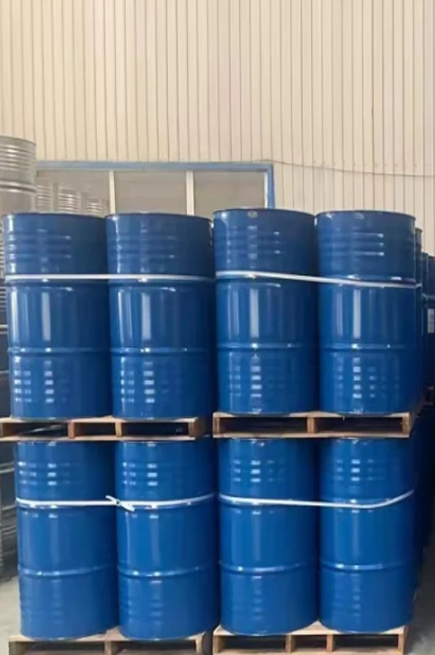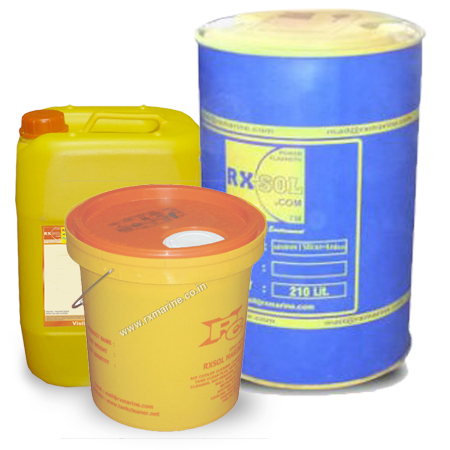
Sewage Defoamer

It controls foaming in sewage and waste water systems and collecting tanks in vaccum toilet systems.


SKU: RXSOL-19-1016-025 Category:

Description

Sewage Defoamer – High-Performance Foam Control Solution for Sewage Treatment Plants

Foam formation is a common challenge in sewage treatment plants (STPs), wastewater treatment plants (WWTPs), industrial effluent treatment plants (ETPs), and marine sewage systems. Excessive foam can reduce treatment efficiency, interfere with aeration, cause overflow, and increase maintenance costs. Sewage Defoamer is a specially formulated antifoaming agent designed to provide rapid and long-lasting foam control in sewage and wastewater treatment applications.

This is a non- silicone based water dispersible, liquid emulson. It controls foaming in sewage and waste water systems and collecting tanks in vaccum toilet systems.







Product Details

Application

RXSOL-16-2066-210 is antifoam emulsion and its more concentrated antifoam emulsion. It has excellent candidates for controlling foam in amine and glycol dehydration units. This is suitable products for gas plants and have excellent stability in the presence of salts, resulting in reduced deposits on the plant’s equipment. RXSOL-16-2066-210  help preserves foam control under the severe conditions of a dehydrating unit. These conditions can remove water from other antifoam emulsions, rendering them immediately inactive.

Antifoam Defoamer is a very efficient and stable emulsion designed for a variety of aqueous systems. It may be used as received or dilute for specific applications.

Dosage & Procedure

Typical dosage is 10 to 30 ml / ton, but proper dosage rate to be found out on site testing. The recommended dosing method for sewage system is to premix 1 part of RXSOL-19-1016  with 5 parts of fresh water and pump this into the EVAC ejector tank . The dosing is done about 1/2 hour before top load.

Notes & Precautions

This antifoam compound are targeted for gas recovery plants, where natural gas must be washed, or scrubbed, before distribution, and for liquefied natural gas (LNG) plants that must achieve high gas purity before liquefaction.

In many amine units, foam can be problematic. Proper line control without antifoam is, generally, extremely difficult.

Food Processing & Agribusiness

Water Treatment

Paint Inks and Coatings, & Adhesives (PICA)

Chemical Manufacturing

Cleaning Compounds

Processes Pulp Paper

Oil and gas

Mining

Recycle mills, sulfite mills, and kraft mills all rely on antifoams and defoamers. Foam buildup can lead to slower production rates, low-quality output, increased use of bleaching, inefficient washing, and maintenance problems.

Active Matter

100

Supply Locations

Sewage Defoamer manufacturer supplier distributor in Mumbai, Kandla, Kolkata, Vizag, Chennai, India, Fujairah, Dubai UAE, Muscat Oman, Kenya Africa. Get the best quality of Sewage Defoamer at a competitive price from us. We have ready stock of Sewage Defoamer in India, UAE Gulf, Oman, Kenya Africa. Contact us for bulk as well as small orders.

Industry Applications

Sewage Defoamer – High-Performance Foam Control Solution for Sewage Treatment Plants

Foam formation is a common challenge in sewage treatment plants (STPs), wastewater treatment plants (WWTPs), industrial effluent treatment plants (ETPs), and marine sewage systems. Excessive foam can reduce treatment efficiency, interfere with aeration, cause overflow, and increase maintenance costs. Sewage Defoamer is a specially formulated antifoaming agent designed to provide rapid and long-lasting foam control in sewage and wastewater treatment applications.

What is Sewage Defoamer?

Sewage Defoamer is a high-performance liquid antifoam formulated to eliminate and prevent foam formation in biological and industrial wastewater treatment systems. It quickly penetrates foam bubbles, causing them to collapse while preventing new foam from forming.

Suitable for both continuous dosing and shock treatment, it ensures smooth plant operation without affecting the biological treatment process when used as recommended.

Key Features

  • Rapid foam knockdown action

  • Long-lasting foam suppression

  • Effective in biological and industrial wastewater

  • Suitable for aerobic and anaerobic treatment systems

  • Easy to dose and disperse

  • Compatible with automatic dosing systems

  • Helps improve operational efficiency

  • Reduces maintenance and cleaning requirements

Applications

  • Sewage Treatment Plants (STPs)

  • Wastewater Treatment Plants (WWTPs)

  • Effluent Treatment Plants (ETPs)

  • Marine sewage treatment systems

  • Industrial wastewater treatment

  • Equalization tanks

  • Aeration tanks

  • Clarifiers

  • Sludge processing units

  • Biogas and anaerobic digesters

Benefits

Fast Foam Elimination

Instantly breaks down excessive foam and prevents overflow.

Improves Treatment Efficiency

Maintains proper aeration and enhances biological treatment performance.

Reduces Maintenance

Prevents foam-related operational problems and minimizes downtime.

Cost-Effective

Low dosage requirements provide economical and reliable foam control.

Easy to Use

Can be added manually or through automated dosing systems.

Typical Dosage

The recommended dosage depends on foam intensity and wastewater characteristics:

  • Initial dosage: 10–100 ppm

  • Maintenance dosage: Adjust according to system requirements

For optimum performance, conduct a small-scale trial before full-scale application.

Typical Properties

Property Typical Value
Appearance White to off-white liquid
Type Silicone-based or Non-silicone (available as required)
Solubility Easily dispersible in water
pH Neutral
Application Foam control in wastewater treatment

Industries Served

  • Municipal sewage treatment plants

  • Marine and shipping

  • Food processing industries

  • Chemical manufacturing

  • Textile processing

  • Paper and pulp mills

  • Pharmaceutical plants

  • Petrochemical industries

  • Dairy and beverage processing

Why Choose Our Sewage Defoamer?

Our Sewage Defoamer is engineered to deliver fast, efficient, and long-lasting foam control in demanding wastewater treatment environments. It helps maintain stable plant operation, improves treatment efficiency, and reduces operating costs, making it the ideal solution for municipal, marine, and industrial wastewater systems.

Sewage Defoamer, Wastewater Defoamer, STP Defoamer, ETP Antifoam, Wastewater Antifoam Chemical, Sewage Treatment Foam Control, Silicone Defoamer for Sewage, Marine Sewage Defoamer, Foam Control Chemical, Industrial Wastewater Defoamer, Biological Treatment Defoamer, Wastewater Treatment Chemicals.


38249090

CHEMICAL VALUABLE WORD : 
ACGIH is the American Conference of Governmental Industrial Hygienists. It recommends upper limits (called TLVs) for exposure to workplace chemicals.
 
carcinogen is a substance that causes cancer.
 
The CAS number is assigned by the Chemical Abstracts Service to identify a specific chemical.
 
combustible substance is a solid, liquid or gas that will burn.
 
corrosive substance is a gas, liquid or solid that causes irreversible damage to human tissue or containers.
 
DEP is the Department of Environmental Protection.
 
DOT is the Department of Transportation, the federal agency that regulates the transportation of chemicals.
 
EPA is the Environmental Protection Agency, the federal agency responsible for regulating environmental hazards.
 
fetus is an unborn human or animal.
 
flammable substance is a solid, liquid, vapor or gas that will ignite easily and burn rapidly.
 
The flash point is the temperature at which a liquid or solid gives off vapor that can form a flammable mixture with air.
 
HHAG is the Human Health Assessment Group of the federal EPA.
 
IARC is the International Agency for Research on Cancer, a scientific group that classifies chemicals according to their cancer-causing potential.
 
miscible substance is a liquid or gas that will evenly dissolve in another.
mg/m3 means milligrams of a chemical in a cubic meter of air. It is a measure of concentration (weight/volume).
 
mutagen is a substance that causes mutations. A mutation is a change in the genetic material in a body cell. Mutations can lead to birth defects, miscarriages, or cancer.
 
NAERG is the North American Emergency Response Guidebook. It was jointly developed by Transport Canada, the United States Department of Transportation and the Secretariat of Communications and Transportation of Mexico. It is a guide for first responders to quickly identify the specific or generic hazards of material involved in a transportation incident, and to protect themselves and the general public during the initial response phase of the incident.
 
NCI is the National Cancer Institute, a federal agency that determines the cancer-causing potential of chemicals.
 
NFPA is the National Fire Protection Association. It classifies substances according to their fire and explosion hazard.
 
NIOSH is the National Institute for Occupational Safety and Health. It tests equipment, evaluates and approves respirators, conducts studies of workplace hazards, and proposes standards to OSHA.
 
NTP is the National Toxicology Program which tests chemicals and reviews evidence for cancer.
 
OSHA is the Occupational Safety and Health Administration, which adopts and enforces health and safety standards.
 
PEL is the Permissible Exposure Limit which is enforceable by the Occupational Safety and Health Administration.
 
PIH is a DOT designation for chemicals which are Poison Inhalation Hazards.
 
ppm means parts of a substance per million parts of air. It is a measure of concentration by volume in air.
 
A reactive substance is a solid, liquid or gas that releases energy under certain conditions.
 
A teratogen is a substance that causes birth defects by damaging the fetus.
 
TLV is the Threshold Limit Value, the workplace exposure limit recommended by ACGIH.
 
The vapor pressure is a measure of how readily a liquid or a solid mixes with air at its surface. A higher vapor pressure indicates a higher concentration of the substance in air and therefore increases the likelihood of breathing it in.

Safety Data (MSDS)

Product Name RXSOL-19-1016-025
Product Type Defoamer

Company Details:

RX MARINE INTERNATIONAL
105, A wing , BSEL , TECH PARK.
VASHI ,NEW BOMBAY 400703 INDIA

Phone +91 22 65113333 / 5555 / 9999 / 27611360
Fax +91 22 2781 1318 :::AOH :0091 9821214367
Email 123@rxmarine.com

Chemical Name

Concentration

CAS Number

EC Number

R Phrases*

Symbols

Polymer Formulated 30 - 35 Proprietory --- --- ---

Etheralcohol

<25

98072-31-2

308-482-7

53

-

*See Section 16

Odour

Characteristic odour.

Appearance

Liquid, colourless to yellow, dispersible in water.

Contact with eyes

Mildly irritating to eyes.

Contact with skin

Incases of severe exposure, irritation may develop.

Inhalation

Vapours or aerosols may cause irritation of eyes, nose and respiratory tract.

Ingestion

May cause gastro-intestinal disturbances.

Contact with skin

Remove contaminated clothing immediately and drench  affected skin with plenty of water. Then wash with soap and water. Seek medical attention if irritation  persists

Contact with eyes

If sub stance has got into eyes, immediately wash out with plenty of water for at least 15minutes. Seek medical advice

Ingestion

Never make an unconscious person vomit or drink  fluids.Do not induce vomiting.Give water or milk to drink. Seek medical advice

Inhalation

In halation is unlikely to occur.Remove patient  to fresh air

General

In case of accident or if   you  feel unwell, seek medical advice  immediately (show the label where possible)  ( S45 )

- Decomposition  productsmay include carbondi oxide
- In case of fire use water spray or fog, alcohol resistant  foam, dry chemical or carbon dioxide ( S43 )
- Wear Breathing   Apparatus

Personal Precautions

Wear protective clothing  as per section 8.Spillage causes  slippery surface.

Environmental Precautions

Use   appropriate   containment  to avoid environmental contamination ( S57 ).

Immediate Actions

Shut off source of leak if safe to do so

Clean Up Actions

Absorb spillage in inert material and shovel up.Ventilate the are a and wash spill site after material pick- up is complete.

Special  Precautions

Wear protective clothing as per section 8.

Handling

The usual precautions for handling chemicals should be observed

Storage

Keep only in the   original container in a cool, well ventilated place ( S3/9/49.Protect  from  frost

Exposure Limits

There are no recommended  or established controls for this  product

Exposure controls

No special


precautions are required for this productOccupational exposure  controls.Wear  suitable protective clothing, including  eye /face protection and gloves ( plastic or rubber are recommended ).No  respiratory protection is required unless subject  to contact with substance  mis t.Respiratory  protection may be required under exceptional circumstances when excessive air.contamination  exists.....Suit

gloves               suit              goggles

Gloves                       Suit                     Goggles

Appearance

Liquid, colour less to yellow, dispersible in water

Boiling point & gt;

100°C at 760m m /Hg

Vapour pressure

not  known

Emulsifies in water

Specific gravity ( water=1 )

0.85

Viscosity

500-1500mPa .sat  20 deg C

No hazardous decomposition products known
Avoid overheating, Keep away  from frost, Keep away from strong oxidizing  substances (S14) 

Toxicological information

LD50 (oral,rat) >2000 mg/kg
LD50 (dermal) : >2000 mg/kg

Inhalation

May cause irritation

Contact with skin

In cases of severe exposure, redness and irritation may develop

Contact with eyes

May cause redness and irritation

Ingestion

The ingestion of significant quantities may cause gastro-intestinal disturbances Aspiration hazard


Ecotoxicity

This product contains components which are classified in the EU as dangerous for the environment.On available data, substance is not harmful to aquatic life.LC50 (fish) >100 mg/l (96 hr)

Mobility

Emulsifies in water

Persistence and Biodegradability

Not readily biodegradable BOD28/COD <60%

Bioaccumulation Potential

No information available

Other Adverse Effects

No environmental problems are expected when the product is used / handled correctly.

Disposal considerations: Do not discharge into drains or the environment, dispose to an authorised waste collection point. Disposal should be in accordance with local, state or national legislation

Not classified as hazardous for transport

Classification and labelling

Not classified as hazardous for users

Risk Phrases

Not applicable

Safety Phrases

Not applicable

Text of R and S phrase codes used in this safety data sheet:-  R53: May cause long term adverse effects in the aquatic environment. The information provided about the product on this Safety Data Sheet has been compiled from knowledge of the individual constituents .The data given here is based on current knowledge and experience. This Safety Data Sheet describes the product in terms of safety requirements and does not signify any warranty with regard to the product's properties The data given here only applies when product used for proper application(s). The product is not sold as suitable for other applications - usage in such may cause risks not mentioned in this sheet. Do not use for other application(s) without seeking advice from manufacturer

DISCLAIMER OF LIABILITY :The information in this SDS was obtained from sources which we believe are reliable. However, the information is provided without any warranty, express or implied, regarding its correctness. The conditions or methods of handling, storage, use or disposal of the product are beyond our control and may be beyond our knowledge. For this and other reasons, we do not assume responsibility and expressly disclaim liability for loss, damage or expense arising out of or in any way connected with the handling, storage, use or disposal of the product. This MSDS was prepared and is to be used only for this product. If the product is used as a component in another product, this MSDS information may not be applicable.

top