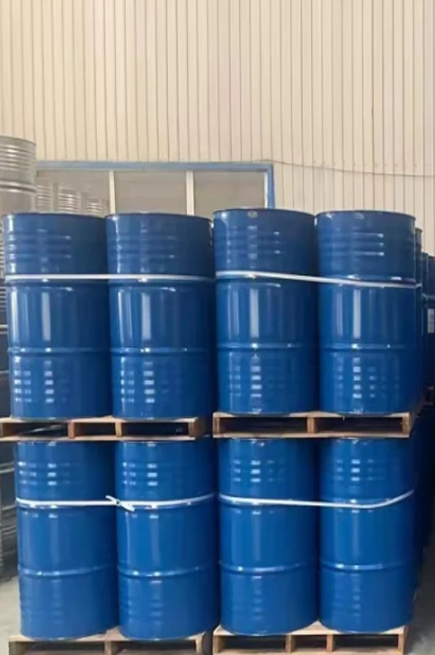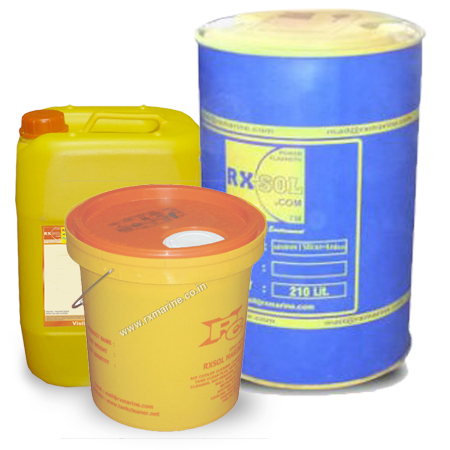
Silica Sand AFS 20/25

Silica Sand chemically inert and relatively hard mineral making it ideal for use as filtration media and Sand Blasting

SKU: RXSOL-81-8119-2000 Category:

Description

Silica Sand SiO2 is quartz Hard mineral, SiO2 grades at a 7 out of 10 on Mohs hardness scale making suitable for abrasive blasting sands. And Silica Sand  chemically inert and relatively hard mineral making it ideal for use as filtration media.



Product Details

Application

Silica sand is commonly used as a mineral abrasive for industrial blasting. Though blasting with silica sand can create dangerous dust, exposure is easily avoided by following recommended PPE (personal protective equipment) guidelines and/or by coating the sand with solutions designed to control dust.

Dosage & Procedure

Silica quartz is often white or colourless, it can come in a wide range of shades. The colour of each sand deposit depends largely on the variety of minerals and rock detritus that make up the resource.

Notes & Precautions

Most common uses for silica sand :
 
Golf courses & sports fields
Industrial abrasives
Filtration media
Glassmaking
Paints & coatings
Ceramics
Construction materials

Areas of Use

Why Does Silica Sand Make a Great Pool Filter?
 
Silica sand is made up of the mineral quartz (SiO2) and is
 
Affordable, effective and easy to maintain (even for large pools)
Eco-friendly, chemical-free, and naturally derived
Naturally odorless and stain-free
However, it’s important to select quality silica sand that is properly washed and graded for pool filtration. Industry best practice is to use #20 Silica Sand which is greater than 95% silica and guarantees an effective grain size of 0.45 to 0.55 millimetres, trapping particles with diameters between 20 and 80 microns (the human eye can see down to 50 or 60 microns). This gradation ensures that when water is pulled into the filter via a pool pump, contaminants like dirt, oil and debris will get trapped in minute spaces between sand grains. Only clean water flows back to the pool.
 
The wrong type of sand can destroy filtration systems. Regular/brown sands contain impurities (greater than 5% non-silica minerals) that could contaminate your pool water. Additionally, the wrong gradation (too fine, too coarse, or too uniform) will not effectively trap debris and will end up in your pool.
 
Proper maintenance is important to optimize the life of filtration media and ensure crystal clear pool water. Backwashing your pool filter system at least once a month, and any time the PSI increases to >8-10 lbs over normal baseline, will help extend the life of your filtration sand by preventing contaminant buildup. Regardless, it is recommended to completely replace your filtration sand every 3 to 5 years, as water and contaminants eventually wear down the size and roughness of the sand surface, causing channelling.
 
How do you know when it is time to change your filtration sand?
 
Backwash cycles are getting shorter, or are no longer effective
Cloudy water
Sand in the pool
Check out the calcium hardness and pH balance of your water.

Supply Locations

Silica Sand manufacturer supplier distributor in Mumbai, Kandla, Kolkata, Vizag, Chennai, India, Fujairah, Dubai UAE, Muscat Oman, Kenya Africa. Get the best quality of Silica Sand at a competitive price from us. We have ready stock of Silica Sand in India, UAE Gulf, Oman, Kenya Africa. Contact us for bulk as well as small orders.

Safety Data (MSDS)

Product Name Silica Sand AFS 20/25
Product Type RXSOL-81-8119-2000

Company Details:

RXSOL CHEMO PHARMA INTERNATIONAL
105, A wing , BSEL , TECH PARK.
VASHI ,NEW BOMBAY 400703 INDIA

STOCK POINT : MUMBAI, Kandla, Chennai, Vizag, Kolkata, Fujairah

Phone +91 22 65113333 / 5555 / 9999
Fax +91 22 2781 1318 :::AOH :0091 9821214367
Email mail@rxmarine.com


Name  CAS# % by Weight
Crystalline Silica (quartz) 14808-60-7  99.0 – 99.9
Aluminum Oxide 1344-28-1 <1.0
Iron Oxide  1309-37-1  <0.1
Titanium Oxide 13463-67-7  <0.1


Inhalation:

:- Silicosis: The prolonged repeated inhalation of respirable crystalline silica can cause silicosis, a fibrosis (scarring) of the lungs.

Silicosis may be progressive; it may lead to disability and death.

:- Lung Cancer: Crystalline silica is classified as carcinogenic to humans.

:- Tuberculosis: Silicosis increases the risk of tuberculosis.

:-  Autoimmune and Chronic Kidney Diseases: Some studies show excess numbers of cases of scleroderma, connective tissue disorders, lupus, rheumatoid arthritis, chronic kidney diseases and end-stage kidney disease in workers exposed to respirable crystalline silica.

:- Non-Malignant Respiratory Diseases (other than silicosis): Some studies show an increased incidence in chronic bronchitis and emphysema in workers exposed to respirable crystalline silica.

Ingestion  Not applicable.
Skin contact

Not applicable.

Eye contact: Crystalline silica (sand or ground silica) may cause abrasion of the cornea.


Eye Contact

Wash immediately with plenty of water. If irritation persists, seek medical attention.

Skin Contact

Not applicable

Inhalation

No specific first-aid  is  necessary  since  the  adverse  health  effects  associated  with  inhalation  of  respirable crystalline  silica   result   from  chronic  exposures.  If there  is  a  gross  inhalation  of  crystalline  silica, remove  the person immediately to fresh air, give artificial respiration as needed, seek medical attention as needed.
Ingestion Not applicable

Extinguishing Media : Product is not flammable, combustible or explosive. Use extinguishing media appropriate for surrounding fire.
Special Fire Fighting Procedures  : Not applicable

Personal precautions:

Avoid generating dust. If the concentration of respirable silica dust exceeds the OSHA PEL or other applicable limit (if lower than the PEL), wear respirator specified in Section 8 of this Safety Data Sheet.

Environmental precautions:

No specific precautions. Discard any product, residue, disposable container or liner in compliance with regulatory requirements. Methods for

cleaning up: Avoid dry sweeping. Do not use compressed air to clean spilled sand or ground silica. Use water spraying/flushing or ventilated

or HEPA filtered vacuum cleaning system. Dispose of in closed containers.

Handling

Avoid generating dust. Do not breathe dust. Do not rely on your sight to determine if dust is in the air. Respirable crystalline silica dust may be in the air without a visible dust cloud.

Use adequate exhaust ventilation and dust collection. Maintain and test ventilation and dust collection equipment. Use all available work practices to control dust exposures, such as water sprays. Practice good housekeeping. Do not permit dust to collect on walls, floors, sills, ledges, machinery, or equipment. Keep airborne dust concentrations below permissible exposure limits.

Storage Use dust collection to trap dust produced during loading and unloading. Keep containers closedand store bags to avoid accidental tearing, breaking, or bursting.

Engineering Controls

Ventilation must be adequate to maintain the crystalline silica concentrations in the workplace air below the exposure limit(s) outlined in Section 8.3.1 of this Safety Data Sheet.

Respiratory Protection

In case of exposure to dust, and in any case if such exposure is above regulatory limits (see above), wear a personal respirator as outlined in Section 8.2 above.

Eye / Face Protection

If eye contact while using product may be anticipated, wear appropriate safety glasses with side shields or chemical goggles [as described by European Standard EN 166].

Skin Protection Maintain good industrial hygiene. Protection recommended for workers suffering from dermatitis or sensitive skin.

Physical State  White or tan sand: granular, crushed or ground to a powder.
Odor None
pH 6 - 8
Specific Gravity 2.65 g/cc
Melting Point 3110°F/1710°C
Freezing Point  Not Applicable
Boiling Point 4046°F/2230°C
Flashpoint Not Applicable
Flammability Not Applicable
Explosive properties Not Applicable
Oxidizing properties contact with powerful oxidizing agents such as fluorine, chlorine trifluoride, and oxygen difluoride may cause fires.
Vapor Pressure None
Relative Density Not Applicable
Solubility Silica will dissolve in hydrofluoric acid and produce a corrosive gas, silicon tetrafluoride
Water Solubility Insoluble
Percent Volatiles by Volume Not Applicable
Viscosity Not Applicable

Chemical Stability

Stable

Conditions to Avoid

Contact with powerful oxidizing agents such as fluorine, chlorine trifluoride, and oxygen difluoride may cause fires.

Materials / Chemicals to Be Avoided

Contact with powerful oxidizing agents, such as fluorine, chlorine trifluoride and oxygen difluoride, may cause fires.

Hazardous Decomposition Products

Will not occur

Hazardous Polymerization

Will not occur

Inhalation:

a. Silicosis: The prolonged repeated inhalation of respirable crystalline silica can cause silicosis, a fibrosis (scarring) of the lungs.

Silicosis may be progressive; it may lead to disability and death.

b. Lung Cancer: Crystalline silica is classified as carcinogenic to humans.

c. Tuberculosis: Silicosis increases the risk of tuberculosis.

d. Autoimmune and Chronic Kidney Diseases: Some studies show excess numbers of cases of scleroderma, connective tissue disorders, lupus, rheumatoid arthritis, chronic kidney diseases and end-stage kidney disease in workers exposed to respirable crystalline silica.

e. Non-Malignant Respiratory Diseases (other than silicosis): Some studies show an increased incidence in chronic bronchitis and emphysema in workers exposed to respirable crystalline silica.

Ingestion  Not applicable.
Skin contact

Not applicable.

Eye contact: Crystalline silica (sand or ground silica) may cause abrasion of the cornea.

Ecotoxicological Information Crystalline silica (quartz) is not known to be ecotoxic; i.e., no data suggests that crystalline silica (quartz) is toxic to birds, fish, invertebrates, microorganisms or plants.

Waste Disposal Method

Discard any product, residue, disposable container or liner in full compliance with national regulations.
Container Handling and Disposal Dispose of container and unused contents in accordance with national regulations.

 NA

 NA                                                                                              

The information above is believed to be accurate and represents the best information currently available to us. However, we make no warranty of merchantability or any other warranty, express or implied, with respect to such information, and we assume no liability resulting from its use. Users should make their own investigations to determine the suitability of the information for their particular purposes. In no event shall ScienceLab.com be liable for any claims, losses, or damages of any third party or for lost profits or any special, indirect, incidental, consequential or exemplary damages, howsoever arising, even if ScienceLab.com has been advised of the possibility of such damages. 

DISCLAIMER OF LIABILITY :The information in this SDS was obtained from sources which we believe are reliable. However, the information is provided without any warranty, express or implied, regarding its correctness. The conditions or methods of handling, storage, use or disposal of the product are beyond our control and may be beyond our knowledge. For this and other reasons, we do not assume responsibility and expressly disclaim liability for loss, damage or expense arising out of or in any way connected with the handling, storage, use or disposal of the product. This MSDS was prepared and is to be used only for this product. If the product is used as a component in another product, this MSDS information may not be applicable.


top