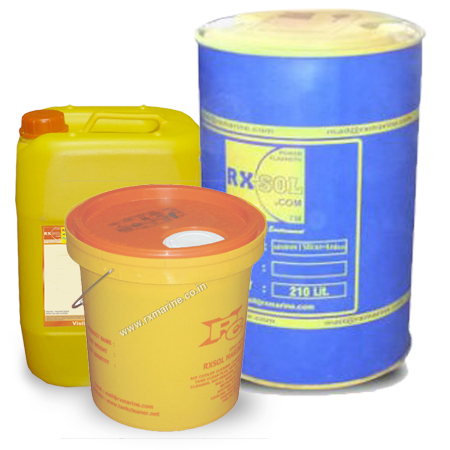
Corrosion Inhibitor for Oil and Gas Processing

Corrosion Inhibitor specially used for inhibiting corrosion in Oil and Gas processing and for other oil field application

SKU: RXSOL-34-1047-210 Category:

Description

Part of a comprehensive range of chemical products and associated integrity management services, RXSOL-34-1047-210 corrosion inhibitors prevent both general and localized (pitting) corrosion by providing high temperature protection, high shear protection, high CO2 O2, and H2S protection and top of the line protection. Corrosion Inhibitor for Oil and Gas Processing is also developed as multifunctional products (e.g. in combination with scale, wax, foamer, etc.), increasing efficiency and reducing costs, and in compliance with the most stringent environmental regulations.
It also inhibits acid attack on copper and brass. It does not contain arsenic, chlorinated hydrocarbons, or lead compounds.

This specialised Corrosion Inhibitor is a water-dispersible film-forming corrosion inhibitor formulated primarily with amine ethoxylates and imidazolines. It is designed to provide effective corrosion protection for carbon steel surfaces exposed to fresh water, produced water, brine systems, hydrotest water, completion fluids, and water injection systems in upstream and midstream oil and gas operations.


The product forms a persistent hydrophobic protective film on metal surfaces, reducing electrochemical corrosion caused by dissolved oxygen, carbon dioxide (CO₂), chlorides, and other corrosive species present in aqueous systems.







Product Details

Application

Application of Corrosion Inhibitor for Oil and Gas Processing:

  • Oil and gas processing
  • Downhole
  • Deepwater
  • Gas lift
  • Midstream and crude transportation
  • Very sour oil and gas production systems, like those in Canada and Turkmenistan
  • Sweet systems, such as those found in Canada and Alaska
  • Oxygen-rich environments caused by ingress or use of oxygenated injection water

Dosage & Procedure

How to protect metal/steel from corrosion during oil and gas processing?

RXSOL Corrosion Inhibitor molecules adsorb strongly onto steel surfaces through the nitrogen atom and polar ethoxylate groups.

The hydrocarbon chains orient away from the metal surface forming a compact hydrophobic barrier which:

  • Reduces oxygen diffusion.
  • Limits water contact with steel.
  • Minimizes anodic and cathodic reactions.
  • Prevents under-deposit corrosion.
  • Reduces CO₂ corrosion rates.

This adsorption mechanism provides both immediate and residual corrosion protection.

Performance Data

Test Medium Dosage Corrosion Reduction
Fresh Water 100 ppm >90%
3% NaCl Brine 200 ppm >85%
Produced Water 200 ppm >80%
CO₂ Saturated Brine 300 ppm

>75%


Actual performance depends on temperature, salinity, flow conditions, CO₂ concentration, and water chemistry.

Technical Specifications

Safety and Handling : 

Before handling the chemical products used in this process, the first aid and handling recommendations on the Material Safety Data Sheet for should be read, understood and followed. The industrial cleaning bath is acid and can burn skin and eyes. Refer to the Material Safety Data Sheet for recommendations for protective action.

Parameter Specification
Appearance Clear amber liquid
pH 6.0 - 8.5
Specific Gravity @25°C 0.98 - 1.03
Water Solubility Completely Soluble

Notes & Precautions

Why is it better to protect steel from corrosion using RXSOL Corrosion Inhibitor

  • Water-based formulation
  • Low VOC content
  • Excellent steel surface affinity
  • Effective in fresh and saline waters
  • Easy dosing and handling
  • Good film persistence
  • Suitable for continuous and batch treatment
  • Effective under turbulent flow conditions

Generic / Chemical Name

Corrosion Inhibitor for Oil Field

Supply Locations

Corrosion Inhibitor manufacturer and supplier in Mumbai, Gandhidham, Vizag - Visakhapatnam, Chennai, Kolkata, Fujairah, Dubai, Sharjah, Ajman, Abudhabi, Muscat - Oman, Kenya Africa Nairobi, Uganda, Canada

Safety Data (MSDS)

Part Number RXSOL-34-1047-210
Product Name Corrosion Inhibitor for Oil and Gas Processing

Company Details:

RX MARINE INTERNATIONAL
105, A wing , BSEL , TECH PARK.
VASHI ,NEW BOMBAY 400703 INDIA

Stock Points: Mumbai, Kandla, Vishakhapatnam, Kolkata, Chennai, Fujairah, Muscat OMAN, Kenya Africa, Canada

Phone +91 22 65113333 / 5555 / 9999 / 27611360
Fax +91 22 2781 1318 :::AOH :0091 9821214367
Email mail@rxmarine.com

This product is classified as dangerous in accordance with the Preparations Directive 1999/45/EC.

Hazardous Substance(s)

CAS NO

% (w/w)

Ethylene Glycol

107-21-1

10-30

Mono ethanol amine

141-43-5 <=1

Quaternary Ammonium compound

Proprietary

1 - 5

Proprietory Blend of Corrosion Inhibitors Proprietory -

Refer to Section 16 for descriptions of relevant risk phrases and Notas.

HAZARD CLASSIFICATION :

This product is classified as dangerous in accordance with the Preparations Directive 1999/45/EC.
Toxic by inhalation, in contact with skin and if swallowed. Irritating to eyes and skin

HUMAN HEALTH HAZARDS - ACUTE :


INHALATION :

Toxic by inhalation. Repeated or prolonged exposure may irritate the respiratory tract.

SKIN CONTACT :

Toxic in contact with skin. Can cause moderate irritation

EYE CONTACT

 Irritating, and will injure eye tissue if not removed promptly

INGESTION :

Not a likely route of exposure. Toxic if swallowed

PHYSICAL AND CHEMICAL HAZARDS

Combustible

INHALATION :

Remove to fresh air, treat symptomatically. If symptoms develop, seek medical advice

SKIN CONTACT

Immediately flush with plenty of water for at least 15 minutes. If symptoms develop, seek medical advice.

 EYE CONTACT

Immediately flush eye with water for at least 15 minutes while holding eyelids open. If symptoms develop, seek medical advice

INGESTION

Do not induce vomiting without medical advice. If conscious, washout mouth and give water to drink. If reflexive vomiting occurs, rinse mouth and repeat administration of water.

NOTE TO PHYSICIAN

Based on the individual reactions of the patient, the physician's judgement should be used to control symptoms and clinical condition

4.1. Description of first aid measures
General information
Remove/Take off immediately all contaminated clothing.
After inhalation
If inhaled, remove immediately to fresh air; if not breathing give artificial respiration; obtain
medical help.
If breathing is difficult, give oxygen.
Call in a physician immediately and show him the Safety Data Sheet.
After contact with skin
Wash off immediately with plenty of water for at least 15 minutes.
Get medical attention immediately.
After contact with eyes
Hold eyelids apart and flush eyes with plenty of water for at least 15 minutes. Get medical
attention.
After ingestion
Rinse mouth with water.
Do NOT induce vomiting.
In case of unconsciousness do not induce vomiting or give anything by mouth.
Call in a physician immediately and show him the Safety Data Sheet.
4.2. Most important symptoms and effects, both acute and delayed
Symptoms:
  • Headache
  • Dizziness
  • Nausea
  • Unconsciousness
  • Central nervous system depression
  • Abdominal pain
Hazards
Possible risk of irreversible effects.
4.3. Indication of any immediate medical attention and special treatment needed
Treatment:
Treat symptomatically.

PERSONAL PRECAUTIONS

Restrict access to area as appropriate until clean-up operations are complete. Use personal protective equipment recommended in Section 8 (Exposure Controls/Personal Protection). Stop or reduce any leaks if it is safe to do so. Ventilate spill area if possible. Remove sources of ignition. Ensure clean-up is conducted by trained personnel only. Do not touch spilled material. Have emergency equipment (for fires, spills, leaks, etc.)readily available. Notify appropriate government, occupational health and safety and environmental  Authorities

METHODS FOR CLEANING UP

SMALL SPILLS: Soak up spill with absorbent material. Place residues in a suitable, covered, properly labeled container. Wash affected area. LARGE SPILLS: Contain liquid using absorbent material, by digging trenches or by diking. Reclaim into recovery or salvage drums or tank truck for proper disposal. Clean contaminated surfaces with water or aqueous cleaning agents. Contact an approved waste hauler for disposal of contaminated recovered material. Dispose of material in compliance with regulations indicated in Section 13(Disposal Considerations)..

ENVIRONMENTAL PRECAUTIONS

Do not contaminate surface water

HANDLING

Do not get in eyes, on skin, on clothing. Do not take internally. Use with adequate ventilation. Do not breathe vapors/gases/dust. Keep the containers closed when not in use. Have emergency equipment (for fires, spills, leaks, etc.) readily available. Ensure all containers are labelled. Do not use, store, spill or pour near heat, sparks or open flame

STORAGE CONDITIONS

Store in suitable labelled containers. Store the containers tightly closed. Store away from heat and sources of ignition. Have appropriate fire extinguishers available in and near the storage area. Connections must be grounded to avoid electrical charges

SUITABLE CONSTRUCTION MATERIAL

HDPE (high density polyethylene), Stainless Steel 304, Stainless Steel 316L, MDPE (medium density polyethylene), Nitrile, PTFE, Perfluoroelastomer, Compatibility with Plastic Materials can vary; we therefore recommend that compatibility is tested prior to use

UNSUITABLE CONSTRUCTION MATERIAL

Viton, Neoprene, Carbon Steel C1018


 MONITORING MEASURES

A small volume of air is drawn through an absorbant or barrier to trap the substance(s) which can then be desorbed or removed and analyzed as referenced below 

  Substance(s)

Method

 Analysis

Absorbant

 Thioglycolic Acid

US OSHA: CIM

 High pressure liquid chromatography

Impinger containing De-ionised water


ENGINEERING MEASURES

General ventilation is recommended. The use of local exhaust ventilation is recommended to control emissions near the source. Laboratory samples should be handled in a fumehood. Provide mechanical ventilation of confined spaces

PERSONAL PROTECTION 


  GENERAL ADVICE

The use and choice of personal protection equipment is related to the hazard of the product, the workplace and the way the product is handled. In general, we recommend as a minimum precaution that safety glasses with side-shields and workclothes protecting arms, legs and body be used. In addition any person visiting an area where this product is handled should at least wear safety glasses with side-shields.

RESPIRATORY PROTECTION

Where concentrations in air may exceed the limits given in this section, the use of a half face filter mask or air supplied breathing apparatus is recommended. A suitable filter material depends on the amount and type of chemicals being handled.

 HAND PROTECTION

 When handling this product, the use of chemical use PVC Gloves should be replaced immediately if signs of degradation are observed. Breakthrough time not determined as preparation, consult PPE manufacturers.

 SKIN PROTECTION

When handling this product, the use of overalls, a chemical resistant apron and rubber boots is recommended. A full slicker suit is recommended if gross exposure is possible.

EYE PROTECTION

Wear chemical splash goggles.

HYGIENE RECOMMENDATIONS

Use good work and personal hygiene practices to avoid exposure. Keep an eye wash fountain available. Keep a safety shower available. If clothing is contaminated, remove clothing and thoroughly wash the affected area. Launder contaminated clothing before reuse. Always wash thoroughly after handling chemicals. When handling this product never eat, drink or smoke

Physical state : liquid
Form : Liquid
Colour : brown
pH value : 5 - 8 (25 °C)
Melting point : not determined
Boiling point : not determined
Flash point : not tested.
Evaporation rate : not tested.
Lower explosion limit : Not applicable
Upper explosive limit : Not applicable
Combustion number : Not applicable
Vapour pressure : not tested.
Solubility in water : not tested.
Note: These physical properties are typical values for this product and are subject to change


 STABILITY  Stable under normal conditions.
 HAZARDOUS POLYMERIZATION

Hazardous polymerization will not occur

 CONDITIONS TO AVOID

Heat and sources of ignition including static discharges

MATERIALS TO AVOID

Contact with strong acids (e.g. sulfuric, phosphoric, nitric, hydrochloric, chromic, sulfonic) may generate heat, splattering or boiling and toxic vapors., Contact with strong oxidizers (e.g. chlorine, peroxides, chromates, nitric acid, perchlorate, concentrated oxygen, permanganate) may generate heat, fires, explosions and/or toxic vapors., Avoid contact with SO2 or acidic bisulfite products, which may react to form visible airborne amine salt particles., Certain amines in contact with nitrous acid, organic or inorganic nitrites or atmospheres with high nitrous oxide concentrations may produce N-nitrosamines, many of which are cancer-causing agents to laboratory animals

HAZARDOUS DECOMPOSITION PRODUCTS


Under fire conditions

Oxides of carbon, Oxides of nitrogen, Oxides of sulfur, ammonia

No toxicity studies have been conducted on this product

 SENSITIZATION

This product is not expected to be a sensitizer

 CARCINOGENICITY

None of the substances in this product are listed as carcinogens by the International Agency for Research on Cancer (IARC), the National Toxicology Program (NTP) or the American Conference of Governmental Industrial Hygienists (ACGIH).

 For additional information on the hazard of the preparation, please consult section 3 and 12

 ECOTOXICOLOGICAL EFFECTS


 MOBILITY  The environmental fate of this product under the defined conditions of the models. If released into the environment this material is expected to distribute to the air, water and soil/sediment in the approximate respective percentages (Air-<5%, Water- 30 - 50%, Soil/Sediment- 50 - 70%) The portion in water is expected to be soluble or dispersible

PERSISTENCY AND DEGRADATION

The organic portion of this preparation is expected to be readily biodegradable

BIOACCUMULATION POTENTIAL

Component substances have a low potential to bioconcentrate

 Use  authorized contractors and ensure compliance with EC, national and local regulations.

Dispose of wastes in an approved incinerator or waste treatment/disposal site, in accordance with all applicable regulations. Do not dispose of wastes in local sewer or with normal garbage. This product is ashless and can be burned directly in appropriate equipment. This product is NOT suitable for disposal via municipal sewers, drains, natural streams or rivers.

Empty drums should be taken for recycling, recovery, or disposal through a suitably qualified or licensed contractor.

 EUROPE WASTE CODE  16 03 05*- OFF SPECIFICATION BATCHES AND UNUSED PRODUCTS - Organic wastes containing dangerous substances. If this product is used in any further processes, the final user must redefine and assign the most appropriate European Waste Catalogue Code.

Not classified as hazardous . Can easly transport by Land, Air and sea. Typical Proper Shipping Names for this product are as follows. 

 LAND TRANSPORT  
 Proper Shipping Name  PRODUCT IS NOT REGULATED DURING TRANSPORTATION.

AIR TRANSPORT (ICAO/IATA)


Proper Shipping Name

PRODUCT IS NOT REGULATED DURING TRANSPORTATION

MARINE TRANSPORT (IMDG/IMO)


Proper Shipping Name

PRODUCT IS NOT REGULATED DURING TRANSPORTATION


15.1. Safety, health and environmental regulations/legislation specific for the substance or
mixture
---
The product contains the following substance/impurity, which, according to annex XIV and
XV of the REACH Regulation 1907/2006/EC, is an SVHC:
4-Nonylphenol, branched, ethoxylated
15.2. Chemical safety assessment
Chemical Safety Assessments (CSAs) are available for one or more of the component
substances contained in this product.

The information provided about the product on this Safety Data Sheet  has  been  compiled  from  knowledge of the individual constituents The data given here is based on current knowledge and experience. This Safety Data Sheet describes the product in terms of safety requirements and does not signify any warranty with regard to the product's properties.The data given here only applies  when  product  used for proper application(s). The productis not sold as suitable for other  applications -  usage  in  such  may  cause  risks  not mentioned in this sheet. Do not  use for other application(s) without seeking advice from manufacturer.

top